

The Reserve Bank will be closely watching these job trends, along with upcoming inflation data, ahead of its August rate announcement.
Articles on Youth employment
Displaying 1 - 20 of 46 articles

Until now, there has been little evidence of how young people in middle- and low-income countries use and feel about AI.

Juggling, sword swallowing, contorting: What I heard in interviews and research with students studying and working to get ahead shaped using circus arts metaphors to understand and analyze their experiences.

Canada can’t afford to leave young people on the sidelines of its economy or in the fight for Canadian sovereignty.
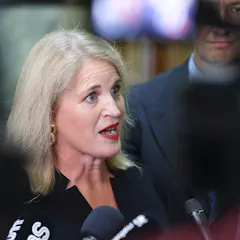
The Jobseeker changes assume there are enough jobs for young New Zealanders looking for work – when one in eight are already not in a job, training or education.

It’s not a straight path from education to making a living, and universities should prepare graduates to find their way.

The pandemic has had a lasting impact on their career paths, financial independence, and mental wellbeing.

Today’s youth are navigating a perfect storm of persistent inflation, global trade tensions, a saturated labour market and restructuring driven by automation and AI.

The Albanese government wants to see 80% of Australian workers have a TAFE or uni qualification by 2050, up from the current 60%.

Regulations protecting children in hazardous jobs are insufficient or non-existent, leaving, a significant part of the Australian workforce open to exploitation.

Ontario almost joined Manitoba and Québec in eliminating the under-18 minimum wage 30 years ago. Then Bob Rae reneged on an election promise.

New research from The Smith Family tracks a group of young people, two years after finishing high school.

Ghana’s government should shift to a community-based and voluntary approach to forest restoration and conservation

Recognizing and accrediting students’ prior learning and competencies is one way universities can tweak business-as-usual approaches.
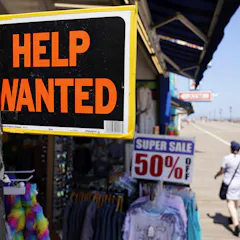
Young workers are particularly vulnerable in the workplace because they tend to do short-term work, often lack training and safety education, and may see injury as just “part of the job.”

Nigerian youth have increasingly been resisting and expressing their dissatisfaction with toxic workplaces.

There is enough momentum for Australia’s unemployment rate to go lower than 4.2% in 2022. Keeping it low is another matter.
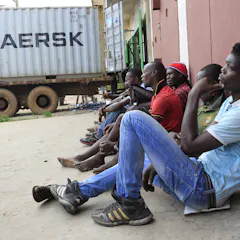
Since 1999, extreme poverty has declined while rates of young people in education and employment have risen. Without investment though, the impact of the pandemic could see this progress imperilled,

Clear and consistent safety messaging in workplaces is imperative for employees both young and old.

LSAY is one of the biggest and oldest surveys of its kind in the world. It follows young Australians from the age of 15 to 25 to find out what helps and hinders them along the way.
Top contributors
-

Former Senior Lecturer, UTS Business School, University of Technology Sydney
-
Professorial Fellow, University of Canberra
-
Professor of Economics, University of Canberra
-
Professor of Education Policy and Practice, Youth Studies, Monash University
-
Professor of Economics, The University of Melbourne
-
Professor of Work and Organisation, Queensland University of Technology
-
Professor of Management, University of the Sunshine Coast
-
Professor of Political Sociology, Institute for Culture and Society, Western Sydney University
-
Research Scientist in Public Policy, The University of Texas at Austin
-
Professiorial Fellow, The University of Melbourne
-
Director of the Center for Human Resource Research, The Ohio State University
-
Head of the Centre for Education & Industry, University of Warwick
-
Economist, UNSW
-
Professor Tristram Hooley, Professor of Career Education and Head of International Centre for Guidance Studies, University of Derby
-
Associate Professor in Managing People and Organisations, University of Sydney