

Reducing the number of people on student and graduate visas may reduce migration numbers, but it could also weaken demand for Australian goods and services.
Articles on Labour markets
Displaying 1 - 20 of 29 articles

AI promises more productive, more enjoyable “augmented work.” Our survey of 4,595 Quebec employees shows otherwise: uneven, ambivalent, poorly managed effects.

Youth employment programmes need to be built around real jobs, capable institutions and the young people they are meant to serve.

A just transition to a green economy with broad growth in employment will require deliberate efforts.

The Harvard professor was awarded the Nobel prize for economics for her work on women in the workforce.

With dads being the primary earners in many heterosexual households, it was often the mother who gave up work to manage extra work at home during the pandemic. But what about heterosexual households where the mother was the primary earner?

New legislation could strengthen the social contract between workers and platforms.

An ageing labour force and ongoing border closures will put severe pressure on
New Zealand’s economic reliance on immigration.

Past research has possibly overstated the likelihood of climbing up the income ladder for low-paid workers.

The system is well-resourced for urban and well-off families, but leaves the poor and mostly rural youth inadequately prepared.

For women with a bachelor of arts degree, teaching is one of the highest paying jobs. The opposite is true for men.

At least in the short term, employment opportunities for graduates seem to be increasing.

No longer can young people invest in their education and work their way into secure employment. The health impacts of this job insecurity are profound.

If Labor is to once again uncap university funding, vocational education reform is a vital.

So-called experts say there are several practical reasons why so few women are in STEM. Any insider will tell you that the real issue is that women are still victims of outdated stereotypes and abuse.

The government claims university degrees are failing businesses, but analysis of the latest graduate outcome and employer satisfaction surveys tells us the problem is with underemployment.

Flexible working reduces the likelihood that women cut their hours or leave the labour market after childbirth.
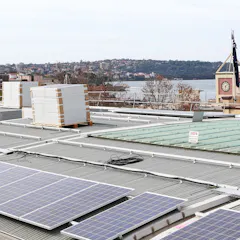
Estimates released by the Australian Bureau of Statistics suggest that the number of direct full-time equivalent jobs in renewable energy activities has continued to fall from its 2011-12 peak.

The answer to job losses is not economic protectionism, but a strengthening of workers’ rights.

Job prospects are not good for newly arrived refugees in Sweden. But better integration programmes will help.
Top contributors
-

Professor of Higher Education Policy, Monash University
-
Research Fellow, The University of Melbourne
-
Professor, Malmö University
-
Professor, Department of Economics, University of Delhi
-
Associate professor, Dalla Lana School of Public Health, University of Toronto
-
Professor in the Department of Economics, UCL
-
Senior Lecturer in Economics, Stellenbosch University
-
Innovation Lab Director and Professor, Educational Technology and Innovation Mindset, Concordia University
-
Professor of Economics, University of Canberra
-
Director of the Jackson Institute for Global Affairs, Charles W. Goodyear Professor in Global Affairs & Professor of Economics and Management, Yale University
-
Director, Centre of Policy Studies, Victoria University
-
Associate Professor, Bankwest Curtin Economics Centre, Curtin University
-
Professor of Public Policy, University of Brighton
-
Director of the King's Global Institute for Women's Leadership, Professor of Work and Employment, King's College London
-
Willy Brandt Research Fellow, Malmö University