

When elephants leave Kruger National Park, they are sometimes killed and their meat is shared with nearby communities. This policy may have unintended consequences.
Articles on Kruger National Park
Displaying 1 - 20 of 22 articles
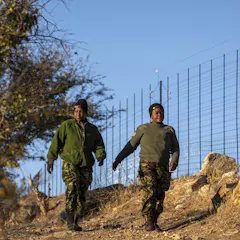
Nature reserve fences can protect wildlife and people, but they also break up natural landscapes, restrict animal movement, and affect nearby communities.
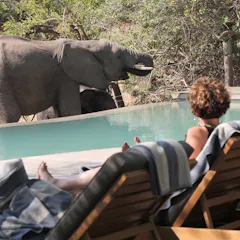
For low-income communities living on the borders of game reserves, the benefits of trophy hunting are few. There are 10 better ways that they could earn a living.
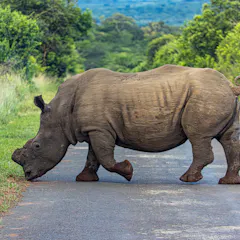
A new Kruger National Park study has conclusively found that dehorning rhino can save most from poachers, but some will still be killed for their stumps.
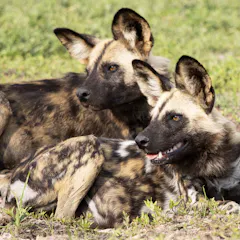
African wild dogs are carnivores always thought to hunt in packs. But new DNA analysis has found they also eat small birds and hares and may hunt alone.
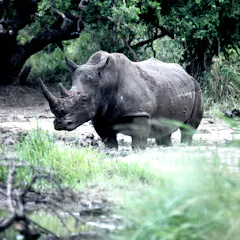
To what extent should the costs of protecting globally valued rhinos be carried by their local custodians?
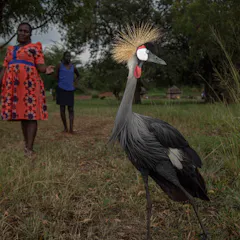
The reduction of foreign tourism is an opportunity for Africans to experience many of the continent’s premier parks at a discount.
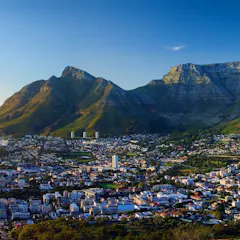
Researchers have come up with a new framework that assigns an invasive species threat score to World Heritage Sites. This will improve how these species monitored and managed.
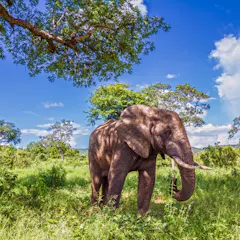
In large ecosystems, managing elephant populations so they don’t exceed a certain threshold number is arbitrary.
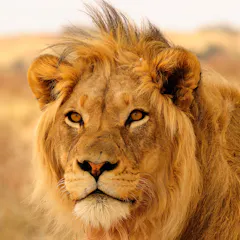
A billion dollars a year would secure Africa’s lions and its landscapes as well as millions of people living nearby.

Translocations have become more frequent in Africa. Elephants are the biggest animals to be moved.

A new way for leopard biologists to monitor this elusive and iconic species has been developed.
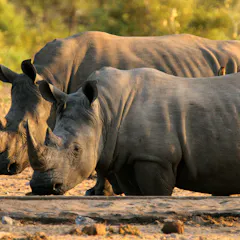
Poaching is changing focus by moving from the Kruger National Park to other provinces and reserves.
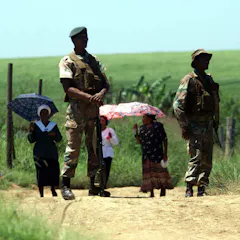
The military is not tactically trained for community protection and crime fighting and South Africa should not deploy soldiers in urban communities.
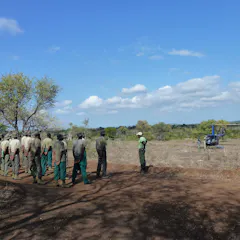
Military style anti-poaching is often criticised because it alienates communities living around protected areas. But these initiatives give them an incentive to protect the species.
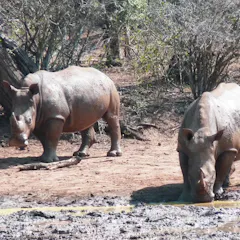
South Africa’s KwaZulu-Natal province is bearing the brunt of renewed rhino poaching efforts. This is a result of increased security and anti-poaching in the Kruger National Park.
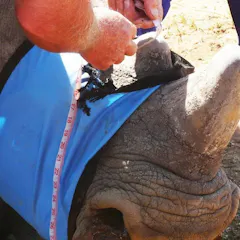
A few national parks and reserves want to dehorn rhinos and there is a lobby for a regulated and closely monitored legal trade in rhino horn. But this is met by opposition from many.

More and more Africans are becoming citizen scientists – and the benefits are huge both for them as individuals and for science on the continent.
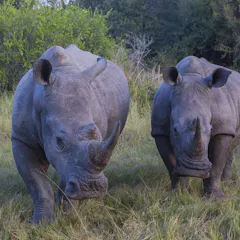
There are very violent confrontations in southern Africa’s peace parks. This is partly due to a violent history dating back to the apartheid era that has never been adequately addressed.
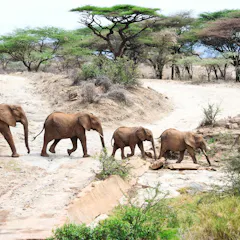
Elephant numbers are increasing in parts of sub-Saharan Africa. Their search for food is leading them into conflict with farmers living adjacent to game parks. Bees could prove to be the answer to the problem.
Top contributors
-

Visiting Professor, University of Kent
-
Visiting Research Fellow, Manchester Metropolitan University
-
Senior Lecturer, University of Pretoria
-
Visiting Research Fellow, Manchester Metropolitan University
-
Senior research associate, University of KwaZulu-Natal
-
Professor of Conservation Science, University of Newcastle
-
Senior Lecturer in tourism at Tourism Research in Economic Environs & Society(TREES), North-West University
-
Postdoctoral research fellow, Northumbria University, Newcastle
-
Science Communication Researcher, Stellenbosch University
-
Professor in Environmental & Geographical Science, University of Cape Town
-
Associate Professor in Conservation Geography, University of Helsinki
-
Oppenheimer-Jamma Research Chair in African Wildlife Economies, Stellenbosch University
-
Research Fellow at the Centre for Planetary Health and Resilient Conservation Group, Griffith University
-
Freelance conservation ecologist, Nelson Mandela University
-
Professor of Geography, Environmental Management and Energy Studies, University of Johannesburg; Research Associate, Stellenbosch University; Professor of Sociology of Development and Change, Wageningen University