
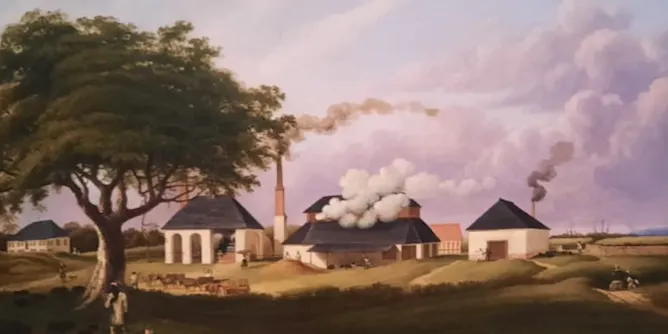
In the late 1600s, hundreds of Irish people were transported to Jamaica as labourers.
Articles on Jamaica
Displaying 1 - 20 of 47 articles

Emerging from a swirl of sonic influences, reggaeton began as Panamanian protest music long before Puerto Rican artists turned the genre into a global phenomenon.
The search for Apongo is a small part of historians’ ongoing work to recreate the lives of Africans taken in the transatlantic slave trade.

Wealthy countries promised billions of dollars to help developing nations adapt to climate change, but the result rests on a shaky foundation of fuzzy accounting.
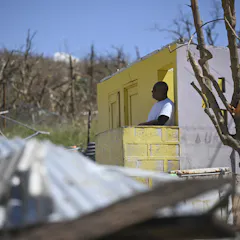
Melissa was just the latest blow, following close on the heels of Beryl. Many islands today have little time to recover before the next disaster hits.
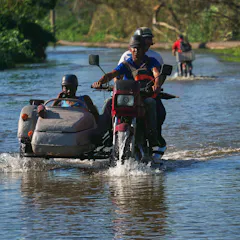
As the Caribbean recovers from the hurricane, Cuba’s response offers lessons for a region facing stronger storms.

Disaster recovery is much harder on isolated islands, and people may migrate away if it’s too slow. Support from Jamaicans in the US, UK and Canada to rebuild for a better future can help.
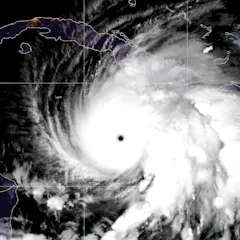
In a single day, Melissa exploded from a moderate storm into a major hurricane with 170mph winds.

Jamaicans have re-elected Andrew Holness for a third consecutive term.

Whether it was spent feasting or plotting escapes, the week between Christmas and the new year offered a rare opportunity for enslaved men, women and children to reclaim their humanity.

The islands’ vulnerability has roots deep in the exploitative systems forced on them by colonialism, from slave-based land policies to ill-suited development that put lives in harm’s way.

Presidential candidate’s potential ties to an Irish slave owner complicate narratives around colonial legacies and the proper place of Black Irish identity in history.

Not all reparations involve money. Returning unique scientific resources is also a way of showing respect and righting past harms.
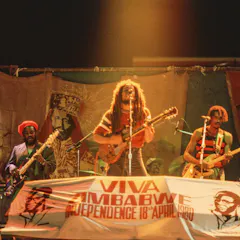
How did a musician whose songs were suffused with messages of anti-capitalism and anti-imperialism become so commercialized?
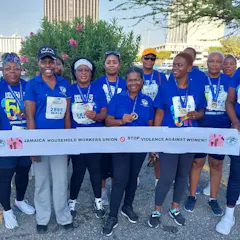
Domestic workers in Jamaica often experience low pay, poor working conditions and informal work arrangements. Here’s how unionization could change their situation.
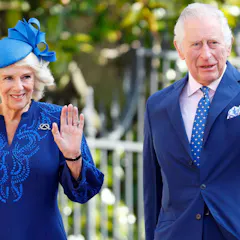
The visit will acknowledge the more painful aspects of the UK and Kenya’s colonial history.
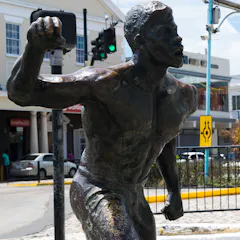
Britain’s industrial revolution was built on slavery: both black labour and intellectual property.
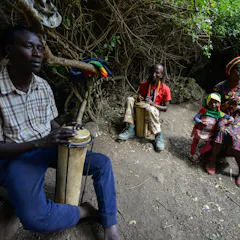
The first Rastafarian communities emerged around 1931 in eastern Jamaica. Today, there are over 700,000 Rastafarian communities located on almost every continent.
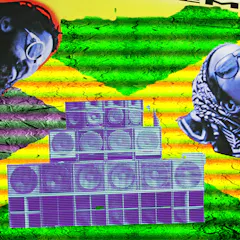
Nights out dancing! How African and Caribbean music and dance have shaped British culture.
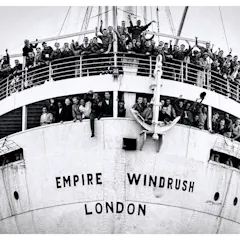
The Windrush generation has a long and storied history encompassing empire, war, migration, multiculturalism, racism and scandal – a history that has transformed British society and culture.
Top contributors
-

Visiting Research Fellow, Birmingham School of Media, Birmingham City University
-
Assistant Professor of Emergency and Disaster Health Systems, University of Maryland, Baltimore County
-
Lecturer in Anthropology, Catholic University of Malawi
-
Post-doctoral researcher, cultural studies, University of Eastern Finland
-
Reader & Associate Professor in English & Postcolonial Literatures, York St John University
-
Professor of Communications Policy and Digital Media, University of the West Indies, Mona Campus
-
Professor Emeritus, Labour Studies and Political Science, McMaster University
-
Senior Lecturer, Department of Anthropology and Archaeology, University of Bristol
-
Assistant Professor of Politics and Policy Studies, Elon University
-
Senior researcher, University of Cape Town
-
Professor of Religious Studies, Michigan State University
-
Reader in American history, University of Warwick
-
Deputy Director for Creative Writing, University of Nottingham
-
Assistant Professor in Architectural Engineering, Heriot-Watt University
-
Associate Professor of Health Studies, Research Associate, International Migration Research Centre, Wilfrid Laurier University