

Fusion companies claim they can deliver power in a decade or less – but the reality may be more difficult.
Articles on ITER
Displaying all articles
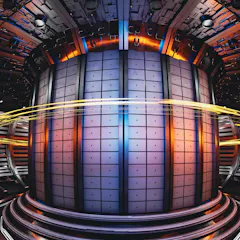
Some processes that support fusion energy fuel climate change and may harm the environment.
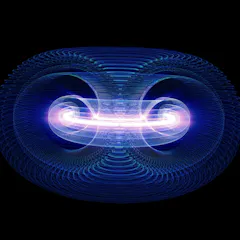
In January 2022, the JET fusion experiment produced more power over a longer period of time than any past attempt. Two physicists explain the engineering advancements that made the result possible.
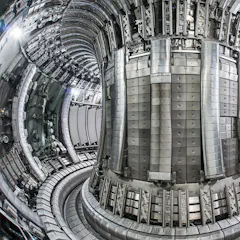
Fusion seems nearer than ever - but it won’t be the silver bullet to stop climate change.
Plus, the social pressure some people feel to be happy in the world’s happiest countries. Listen to The Conversation Weekly.
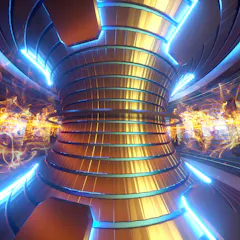
Fusion produces more energy per gram of fuel than any other process that could be achieved on Earth.
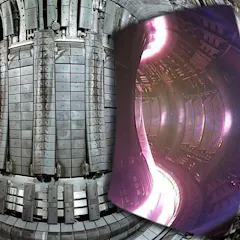
Despite recent reports, nuclear fusion-powered energy isn’t mere years from solving our clean energy needs. But physicists are making encouraging strides nonetheless.

As fusion becomes more technically viable, it’s time to assess whether it’s worth the money because breakthroughs in the lab don’t guarantee success in the marketplace.
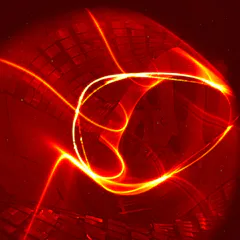
Fusion power, if it works, offers vast amounts of clean energy and almost zero carbon emissions. A new experimental fusion reactor has come online, and it uses a curious twisted stellarator design.
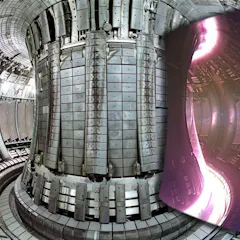
Why don’t we have nuclear fusion power yet? Because it involves taming plasmas at temperatures far hotter than the Sun’s core. But the good news is that physicists are slowly but surely figuring out how.
Top contributors
-

Professor, Mathematical Sciences Institute and School of Computing, Australian National University
-
Assistant Professor of Nuclear Engineering, Zinkle Faculty Fellow, University of Tennessee
-
Emeritus Professor, School of Environment and Science, Griffith University
-
Professor, Melbourne School of Psychological Sciences, The University of Melbourne
-
Senior Lecturer in Nuclear Physics, University of Birmingham
-
Head of Physics and Astronomy, Curtin University
-
Profesor de Investigación Tecnologias para la Fusión, Centro de Investigaciones Energéticas, Medioambientales y Tecnológicas (CIEMAT)
-
Lecturer in International Studies, University of Washington
-
Applied Radiation Physics Section Leader, Culham Centre for Fusion Energy
-
PhD Candidate in Politics and Environment, University of York
-
Host, The Conversation Weekly Podcast, The Conversation
-
Associate Professor of Nuclear Engineering, University of Tennessee
-
Associate Science Editor & Co-Host of The Conversation Weekly Podcast, The Conversation