
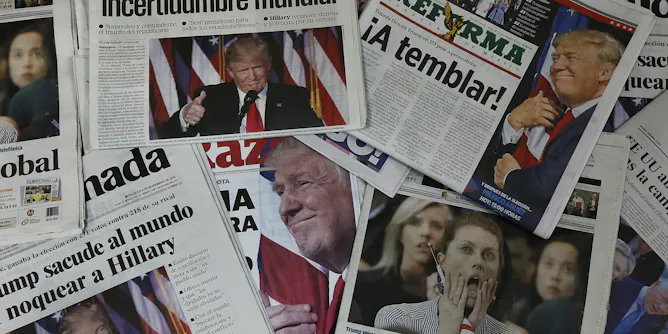
America appears as divided over key aspects of foreign policy as it is at home. So how does President-elect Trump hope to handle that divide, and what will be the major issues facing him?
Articles on Iraq War
Displaying 101 - 120 of 170 articles
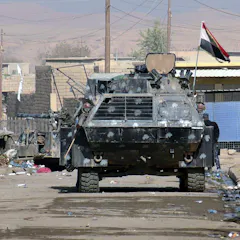
Guerrilla tactics are hampering the advance into Iraq’s northern capital.
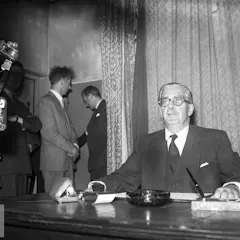
British prime minister Anthony Eden justified attacking Egypt as necessary to restrain the country’s ‘dangerous’ leader. We still hear similar things before every Western intervention.
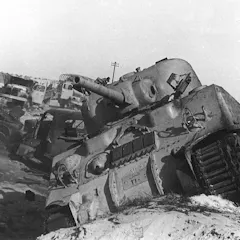
There are striking parallels between Eden’s handling of Suez and Blair’s march into the Iraq War.

British armed forces have to adapt to a changing threat. Small, highly-trained units will be a key part of that.
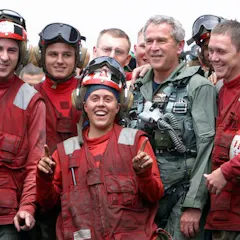
Journalists call it the ‘dark arts’, and public relations is more powerful than ever.
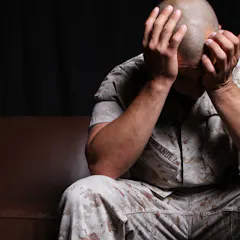
We need to know how many people have PTSD to figure out what policies can reduce the burden.
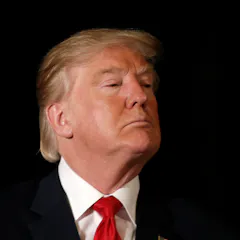
The research is strong that the atrocities of war cause mental health issues. A clinical psychologist walks us through the research and tells of her personal experience treating those with PTSD.
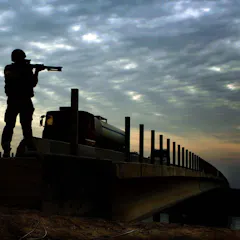
The UK government plans to suspend parts of the European Convention on Human Rights in future conflicts.
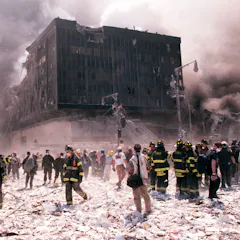
Scarred by disastrous wars and thousands of deaths caused by terrorism, the world is still reeling from the events of September 2001.

Does including torture or other human rights violations in video games trivialize the actions? Or might it force us to think more critically about them?
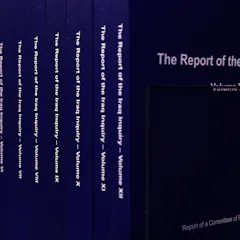
As the world picks over the Iraq Inquiry’s final report, three fascinating character portraits have emerged.

When Attorney-General George Brandis was asked on Q&A about a parliamentary vote on the decision to go to war, he said that was not part of the Westminster tradition. Is that right?
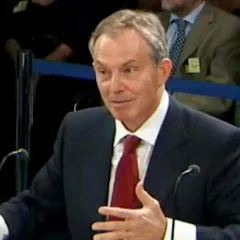
Iraq’s supposedly sky-high child mortality rate was a key part of Blair’s case for war, and he was still making it years later – but it seems to have been based on a single dubious study.
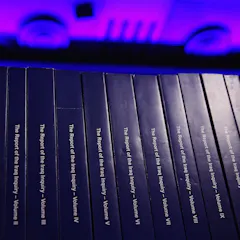
What has the Chilcot Inquiry actually achieved? Here’s what the experts had to say.
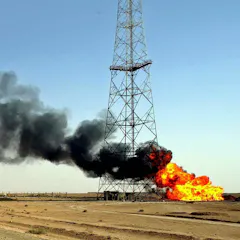
Iraq’s oil industry is a window into the troubled period that followed regime change.
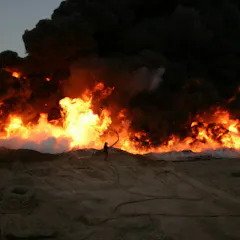
Oil wasn’t the conspiracy behind the Iraq War, but it was always in the mix.
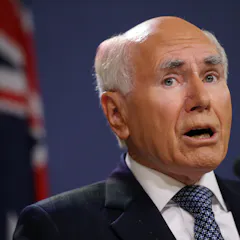
Former prime minister John Howard has stood by his decision to commit troops to the war in Iraq.
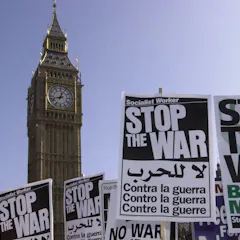
The anti-war movement was visible everywhere in the run-up to the invasion of Iraq – but it made fundamental mistakes that hamstrung its campaign.
Compared with other attempts to mend deep wounds after wars and conflicts, the Chilcot Report falls depressingly short.
Top contributors
-

Professor of Peace Studies, University of Bradford
-
Professor in the Department of Government, University of Essex
-
Assistant Professor of International Relations, University of Nottingham
-
Senior Lecturer in Security Studies, Birmingham City University
-
Professor in The Division of Global Affairs and The Department of Political Science, Rutgers University - Newark
-
Professor Emeritus, American University School of International Service
-
Associate Professor of History, UNSW
-
Director of Undergraduate Studies, School of Journalism, Media and Cultural Studies, Cardiff University
-
Professorial Fellow, University of Canberra
-
Senior Lecturer in International Human Rights Law at Queen Mary University of London, Queen Mary University of London
-
Associate Lecturer, Department of Politics, University of York
-
Assistant researcher, University of Sydney
-
Professor of International Relations, University of Leeds
-
Professor of Economics, Royal Holloway, University of London
-
Lecturer in Politics, Kingston University