
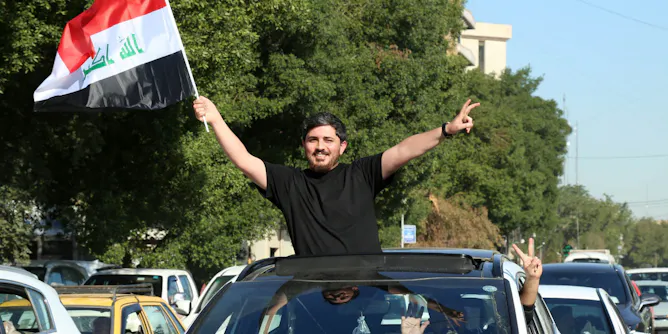
Iraq’s media landscape has undergone profound change over the past two decades.
Articles on Saddam Hussein
Displaying 1 - 20 of 44 articles

Each year, millions of Shiite Muslims walk to Karbala to honor Husayn, the prophet’s grandson, whose death continues to shape their faith.

Pyrrhus was said to have remarked that one more victory would leave his kingdom ‘utterly ruined.’ Some see echoes in US interventions in the Middle East.
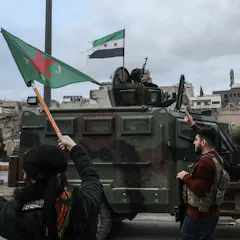
Despite risks, Kurds in Syria have the best chance in a generation to protect their national rights. Their success may hinge on the international community.
The war that began Feb. 28 hews to a familiar, dangerous pattern, writes an Iran expert, from deep, historical mistrust and incompatible strategic interests to miscommunication and misperception.
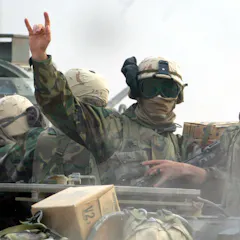
More than 20 years after the US military success in Iraq, the outcome of the US effort at regime change wasn’t as expected, and authoritarians with close ties to Iran now rule the country.

Talk of regime change brings up uncomfortable memories of the chaos after the overthrow of Iraq’s Saddam Hussein.
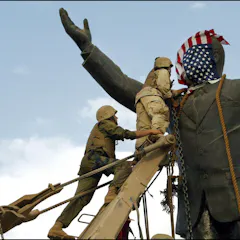
University students today are too young to remember the March 2003 start of the Iraq War, which has future foreign policy implications, especially in light of conflict over Iran’s nuclear sites.

Nonproliferation experts believe Iraq’s nuclear program went underground after Israel destroyed its reactor just outside Baghdad.
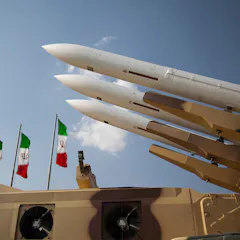
Iran’s attack on Israel may have failed, but its timing was orchestrated to create maximum division.
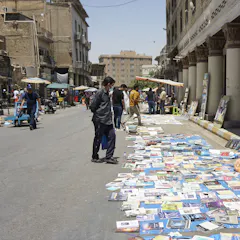
The short stories of modern Iraqi writers Hassan Blasim and Diaa Jubaili show that the 2003 invasion and subsequent war in Iraq are not at the heart of contemporary Iraqi literature.
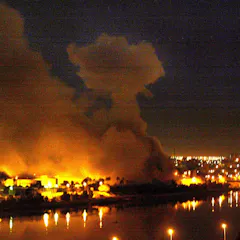
Iraq Body Count has kept a close tally of people killed in Iraq since the invasion started in March 2003.
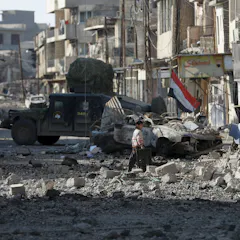
While some progress has been made, the coalition forces abjectly failed to achieve their central goals. But Australia has an opportunity now to make good on its promises.
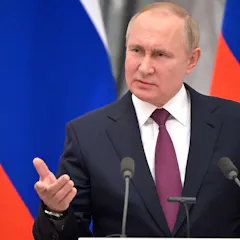
In recent years, Western governments have, in effect, aided the rise of personalist dictators in Russia, Iraq, Libya, North Korea and Venezuela.

The US frequently chooses to put its own interest ahead of its professed values. That approach to foreign policy is called ‘realpolitik’ and it may lead to an unsatisfying peace deal in Ukraine.
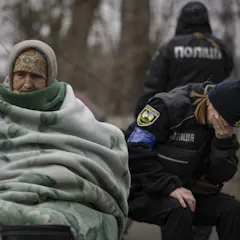
It’s difficult for regimes to galvanize public opinion or maintain people’s willingness to accept the sacrifices associated with a war waged for questionable reasons.
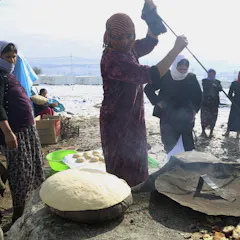
In 2019 a scholar visited the Iraqi Kurdistan, where Yazidis have been resettled. He explains their religious beliefs and their current conditions.
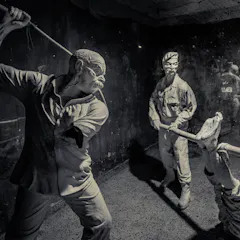
Interviews with former torturers in Saddam Hussein’s regime in Iraq reveal what it takes to be a torturer – which could help explain how to reduce the number of people who get tortured around the world.
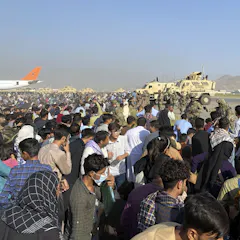
Secretary of State Antony Blinken said that the US Afghanistan pullout is not a repeat of failures in other recent wars. “This is not Saigon,” he said. A seasoned foreign policy expert disagrees.
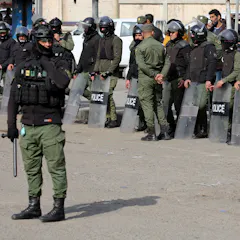
More than 14,000 Iraqi police officers have been killed since the US invasion in 2003.
Top contributors
-

Professor Emeritus, American University School of International Service
-
Professor of the Practice of Political Science and International Relations, USC Dornsife College of Letters, Arts and Sciences
-
Senior Lecturer in Security Studies, Birmingham City University
-
Professor of Political Science, Macalester College
-
Professor at the School of International Service and Visiting Senior Fellow, Council on Foreign Relations, American University School of International Service
-
Professor in Political Science and International Relations, Durham University
-
Professor of Political Science, University of Connecticut
-
Professor of International Law and Director, Sydney Centre for International Law, University of Sydney
-
Research Associate at the One Earth Future Foundation, University of Tennessee
-
Director of programs and research, Institute for the Study of Diplomacy, Georgetown University
-
Lecturer in Politics and International Relations, University of Exeter
-
Professor of Middle Eastern Studies and Public Policy and Director of the Interdisciplinary Studies Institute, UMass Amherst
-
Research Fellow, Cambridge Muslim College & Teaching Fellow, SOAS, University of London
-
Assistant Professor, Florida Atlantic University
-
Professor of International Relations, Lancaster University