
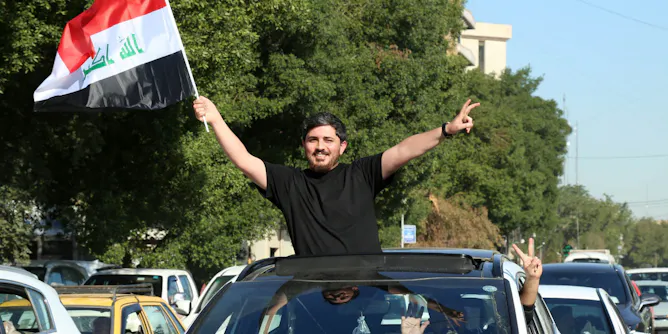
Iraq’s media landscape has undergone profound change over the past two decades.
Articles on Iraq War
Displaying 1 - 20 of 170 articles
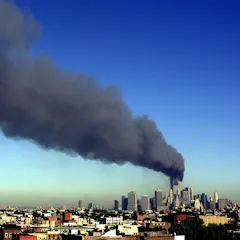
On the 25th anniversary of 9/11, many of the forces now shaping NZ foreign policy can be traced back to how the US responded to the terror attacks.
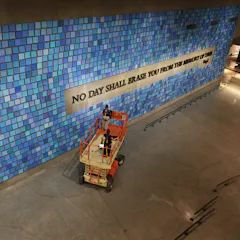
There is a strange nostalgia in realizing that something once so immediate now belongs increasingly to people who know it only as the past.
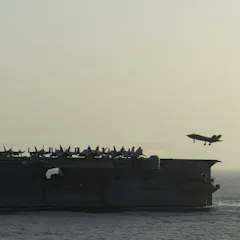
Navy readiness is a finite reserve that has been overstretched by a US military appetite for interventions in the past 50 years that has not tracked with a rise in danger.
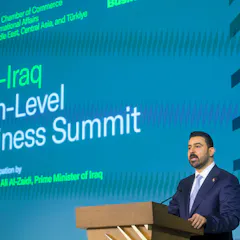
Iraq has pursued friendly relations with many countries who are themselves at odds. The strategy has lots of upside for war-torn Iraq – but holds key risks as well.

European leaders are learning they cannot rely on Washington, and that the US will act against their interests and at their economic expense.
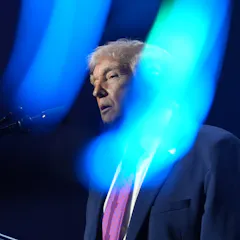
Centuries of American history foreshadow Donald Trump’s strategy of destruction.

Pyrrhus was said to have remarked that one more victory would leave his kingdom ‘utterly ruined.’ Some see echoes in US interventions in the Middle East.

NATO members have been divided before. But the war in Iran could prove particularly troublesome for an alliance founded at the beginning of the Cold War.

Both President Trump and Vice President Vance pronounce Iran as ‘Ih-RAN,’ not ‘Ih-RON.’ A linguist says that how the country’s name is pronounced may be a political choice.
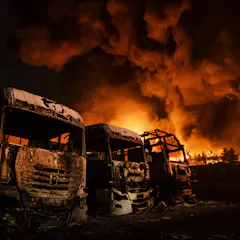
Trump’s Iran war is historically unique in one critically important way: Early on, the war is not popular with the American public.
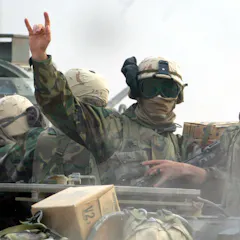
More than 20 years after the US military success in Iraq, the outcome of the US effort at regime change wasn’t as expected, and authoritarians with close ties to Iran now rule the country.
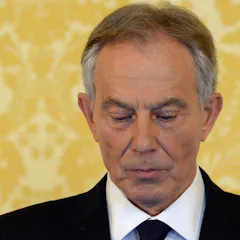
Operation Epic Fury is a US military operation. It will not be possible for the UK to exert any significant influence in planning.
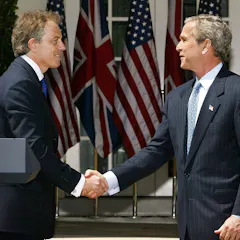
The US president has turned on Keir Starmer over the conflict in Iran.

Talk of regime change brings up uncomfortable memories of the chaos after the overthrow of Iraq’s Saddam Hussein.
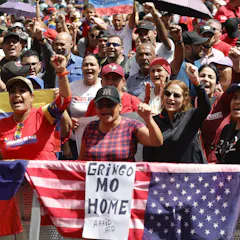
If Washington governs by force in Venezuela, it will repeat the failures of Afghanistan, Iraq and Libya: Power can topple regimes, but it cannot create political authority or legitimacy.
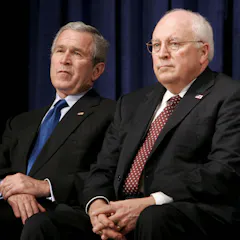
The former US vice-president is widely regarded as the driving force behind George W. Bush’s invasion of Iraq and the US War on Terror.
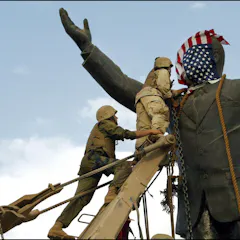
University students today are too young to remember the March 2003 start of the Iraq War, which has future foreign policy implications, especially in light of conflict over Iran’s nuclear sites.
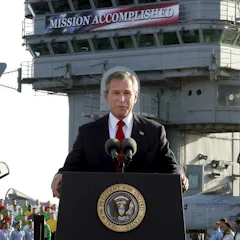
This is not the start of another Iraq, it’s the continuation of a presidency defined by impulsive power, unchecked force and disdain for democratic constraint.
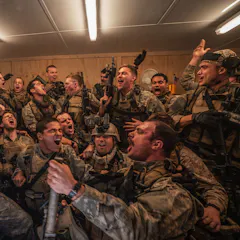
The film is an unrelenting depiction of 21st-century battle.
Top contributors
-

Professor of Peace Studies, University of Bradford
-
Professor in the Department of Government, University of Essex
-
Assistant Professor of International Relations, University of Nottingham
-
Senior Lecturer in Security Studies, Birmingham City University
-
Professor in The Division of Global Affairs and The Department of Political Science, Rutgers University - Newark
-
Professor Emeritus, American University School of International Service
-
Associate Professor of History, UNSW
-
Director of Undergraduate Studies, School of Journalism, Media and Cultural Studies, Cardiff University
-
Professorial Fellow, University of Canberra
-
Senior Lecturer in International Human Rights Law at Queen Mary University of London, Queen Mary University of London
-
Associate Lecturer, Department of Politics, University of York
-
Assistant researcher, University of Sydney
-
Professor of International Relations, University of Leeds
-
Professor of Economics, Royal Holloway, University of London
-
Lecturer in Politics, Kingston University