
Policymakers have generally been extremely slow to do anything about the problem.
Articles on Internet regulation
Displaying 1 - 20 of 27 articles
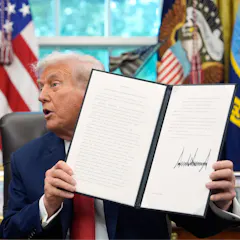
U.S. President Donald Trump signed an executive order approving a deal that allows U.S. businesspeople to acquire ownership of TikTok.

The law is the balance point between limiting hate speech and misinformation and keeping censorship in check. Here’s what could happen if Congress kicks it out from under the internet.

Australia’s proposal to bar young people from social media faces similar issues to the ‘clean feed’ internet filter abandoned in 2012.
Brazil’s attempt to strike a balance between free speech and regulation of online platforms has become politicized – complicating future legislation.

The ban follows a long-running battle between Brazil’s supreme court and Elon Musk. It shows the country will no longer tolerate tech giants ignoring the rule of law.

The new Australian Internet Observatory will shed crucial light on the inner workings of social media platforms.
The eSafety Commissioner has dropped its Federal Court case against Musk’s X (formerly Twitter), but it’s not the end of the attempts to regulate online material - here and abroad.

In a statement on Wednesday the commissioner, Julie Inman Grant, said she had decided to discontinue the federal court proceedings and instead welcomed the opportunity for an independent review.

The long-awaited legislation still has serious gaps.

There’s really no such thing as one global internet – it all depends on your perspective. But the internet is poised to fracturing even more.

Web3 has become a catch-all term for the next iteration of the internet. But what does it mean exactly?
Powers in Bill C-10 will force YouTube and TikTok to make CanCon more discoverable, skewing our searches and streams — but it’s unconstitutional.

The order requires Facebook, Twitter and Google to remove certain content globally, based on it being defamatory under India’s local law.

Internet daemons are the programs that run in the background of our computers. Understanding what they are, and their capacity to benefit or harm us, is crucial for managing the internet.

Internet privacy laws are partially governed by the VPPA, which was implemented to protect consumers renting videos. While the technology has changed, amendments place the consumer at a disadvantage.

A government-imposed internet blackout in Sudan is the latest in a series of internet shutdowns as a means to quell dissent.

The UK Online Harms White Paper outlines possible internet regulation measures, and Canada would do well to study its approach.

Britain’s Online Harms white paper was developed through public consultations and open, democratic processes. It suggests developing regulations that would be implemented by an arms-length entity.
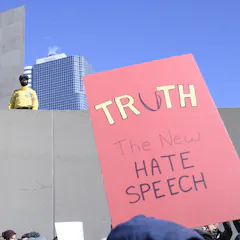
Expecting internet platforms to regulate hate speech is a “worst of both worlds” approach to social media regulation.
Top contributors
-

Associate Professor, Criminology, Department of Social Science, York University, Canada
-
Professor specialising in Internet law, Bond University
-
Associate Professor of Political Science, Brock University
-
Professor of Cybersecurity, Head of School of Computer Science and Informatics, De Montfort University
-
Assistant Professor of Digital Cultures, University of Alberta
-
Senior Lecturer, Communications and Media Studies, Monash University
-
Assistant Professor, Journalism, Toronto Metropolitan University
-
Associate Professor of Law, Member of Deakin Cyber and the Centre for Law as Protection, Deakin University, Deakin University
-
Professor of IT Ethics and Digital Rights, Bournemouth University
-
Professor of History and Public Policy, University of British Columbia
-
Professor, Faculty of Law, Thompson Rivers University
-
PhD candidate; sessional academic, Queensland University of Technology
-
Professor in Information and Communication Technology Policy, Concordia University
-
Lecturer in Law, Deakin University
-
Professeur, École des médias, Université du Québec à Montréal (UQAM)