
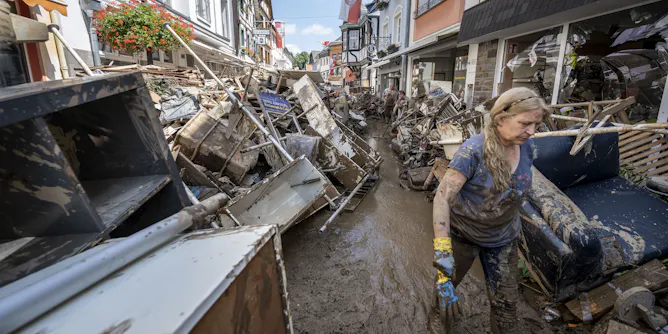
What might sound like small changes – temperatures another tenth of a degree warmer, sea level a few centimeters higher – have big consequences for the world around us.
Articles on Intergovernmental Panel on Climate Change (IPCC)
Displaying 101 - 120 of 243 articles

Anthony Albanese says Afghans in Australia should be given permanent residency
Opposition Leader Anthony Albanese discusses COVID policy, climate change, the Afghanistan withdrawal with Michelle Grattan
Academic research can shed light on crucial questions about what life on Earth will be like under the most plausible emissions scenarios. And a warning: the answers are confronting.
At the bottom of our carbon fears is a big black problem.
IPCC reports are often used as legal tool for bringing the powerful to account. And the more Australia’s governments and businesses lag on climate change, the more litigation we’re likely to see.
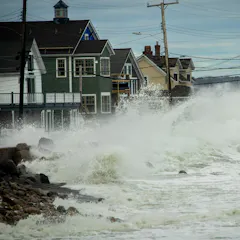
The IPCC report has laid out some alarming sea level projections for the future. But the relationship between sea level rise and real-world risk is complex.
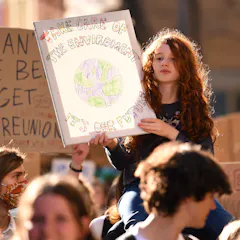
With climate action more crucial than ever, the IPCC needs to communicate clearly and strongly to as many people as possible. So how is it going so far?
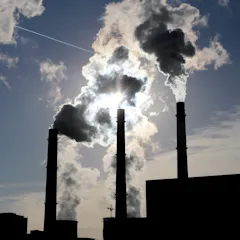
If we’re to avert a climate disaster, we must not underestimate the power of climate misinformation campaigns to undermine this week’s IPCC findings.
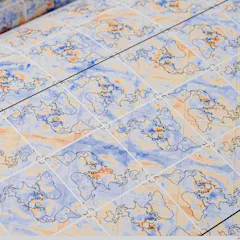
Visualising climate change data in accessible ways can help convince audiences from all backgrounds about the urgency of the climate crisis.
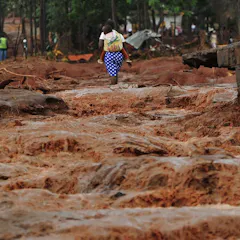
The report projects an increase in mean temperatures and hot extremes across the continent. Worryingly the rate of temperature increase across the continent exceeds the global average.
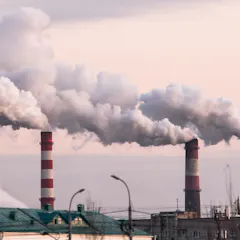
We know how to flatten the curve of rising greenhouse gas emissions. Doing it is another matter.

Some of the climate changes will be irreversible for millennia. But some can be slowed and even stopped if countries quickly reduce their greenhouse gas emissions, including from burning fossil fuels.

Water-related hazards are exceptionally destructive, and the impact of climate change on extreme water-related events is increasingly evident, a lead author of the new report warns.
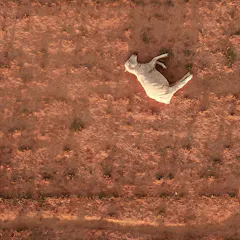
Australia may warm by 4°C or more this century, the IPCC has found. As these IPCC authors explain, there is no going back from some changes in the climate system.

IPCC authors go beyond the headlines to explain how 1.5°C warming is measured – and why there’s still reason to hope, and act, if Earth exceeds that limit.
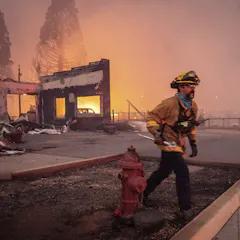
The Intergovernmental Panel on Climate Change has released its long-awaited report. From accelerating emissions to intensifying disasters to rising sea levels, its authors lay out the new findings.
An article in the eminent US magazine Science has triggered debate over whether scientists should use climate models. Here’s what you should know about climate models ahead of today’s IPCC report.
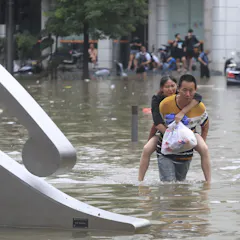
234 scientists from 66 countries reviewed over 14,000 research papers. It was gruelling and it was worth it: the report is the most important global assessment of climate change science yet.
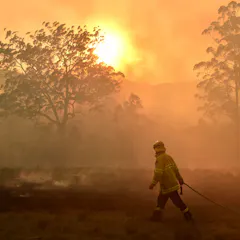
These international climate assessments are used by governments worldwide as they weigh future risks and climate policies.
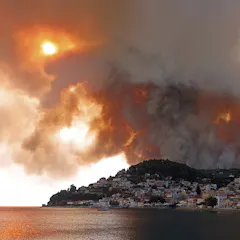
The latest report on climate science comes on the heels of heatwaves, wildfires, flooding and storms. It will help policy-makers act on plans to curb emissions or adapt to climate change.
Top contributors
-

Honorary Associate Professor of Climate Science, The University of Melbourne
-
Host + Producer, The Conversation
-
Director, ANU Institute for Climate, Energy & Disaster Solutions, Australian National University
-
Professorial Research Fellow, Victoria University
-
Professor, Crawford School of Public Policy and Director, Centre for Climate and Energy Policy, Australian National University
-
Chief Research Scientist, CSIRO Environment; Executive Director, Global Carbon Project, CSIRO
-
Associate Professor in the Frederick S Pardee School of Global Studies, Boston University
-
Chief Scientist, Australian Antarctic Division and Professor of Climate Science, Australian National University
-
Professor of Law, The University of Melbourne
-
Emeritus Professor, Fenner School of Environment & Society, Australian National University
-
Deputy Director, Engagement and Impact, The ARC Centre of Excellence for the Weather of the 21st Century, Australian National University
-
ARC Future Fellow and Associate Professor in Climate Science, ARC Centre of Excellence for 21st Century Weather, The University of Melbourne
-
Professor of Atmospheric Sciences, Climate Change Research Centre, UNSW
-
Adjunct Professor of Energy, Murdoch University
-
Associate Professor, ARC Centre of Excellence for Weather of the 21st Century, Monash University