

Southern Québec is warming twice as rapidly as the rest of the world due to the progressive loss of snow cover. An average annual warming of 3 C to 6 C is expected by the end of the century.
Articles on IPCC report 2021
Displaying 1 - 20 of 48 articles
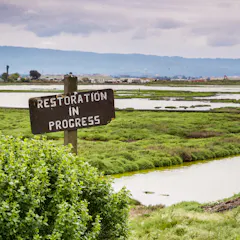
Every five years nations must evaluate their progress towards the goals of the Paris Agreement. But this “stocktake” lacks detail making it difficult to measure progress on climate action.
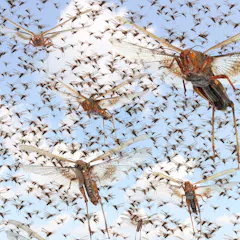
Every increase in one degree of global warming will increase losses of crops to insects from 10% to 25%.
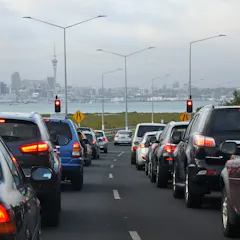
To reduce pressure on cities and the environment, drivers should face a charge that reflects the actual costs of clogged roads, air pollution, climate change, injury and death.
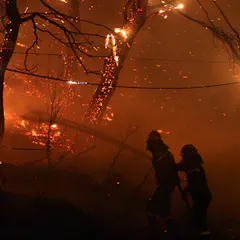
Academic research can shed light on crucial questions about what life on Earth will be like under the most plausible emissions scenarios. And a warning: the answers are confronting.
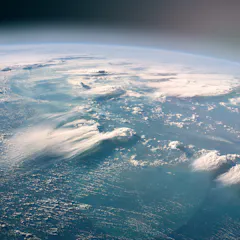
IPCC reports are often used as legal tool for bringing the powerful to account. And the more Australia’s governments and businesses lag on climate change, the more litigation we’re likely to see.
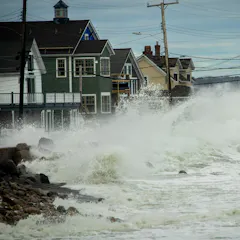
The IPCC report has laid out some alarming sea level projections for the future. But the relationship between sea level rise and real-world risk is complex.
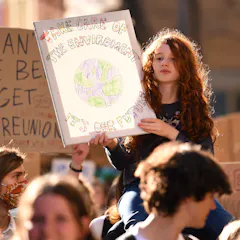
With climate action more crucial than ever, the IPCC needs to communicate clearly and strongly to as many people as possible. So how is it going so far?
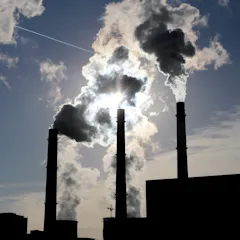
If we’re to avert a climate disaster, we must not underestimate the power of climate misinformation campaigns to undermine this week’s IPCC findings.
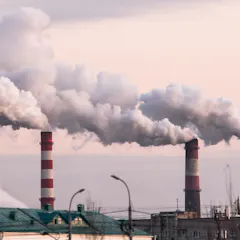
We know how to flatten the curve of rising greenhouse gas emissions. Doing it is another matter.
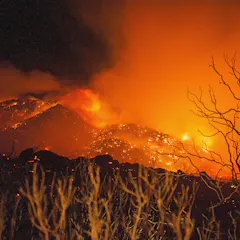
We need specific action now to make net zero emissions by 2050 possible.

Some of the climate changes will be irreversible for millennia. But some can be slowed and even stopped if countries quickly reduce their greenhouse gas emissions, including from burning fossil fuels.

Water-related hazards are exceptionally destructive, and the impact of climate change on extreme water-related events is increasingly evident, a lead author of the new report warns.

New Zealand’s climate has been changing in line with global trends over the last century, warming by 1.1°C. But unless we curb emissions fast, we can brace for more extreme downpours and droughts.
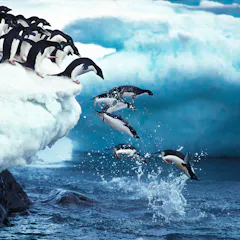
The latest IPCC report makes it clear we can no longer stop the seas from rising, but we can still control how much and how fast sea levels change.
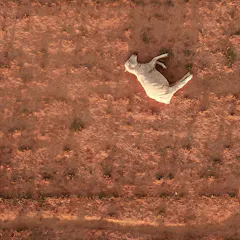
Australia may warm by 4°C or more this century, the IPCC has found. As these IPCC authors explain, there is no going back from some changes in the climate system.

IPCC authors go beyond the headlines to explain how 1.5°C warming is measured – and why there’s still reason to hope, and act, if Earth exceeds that limit.
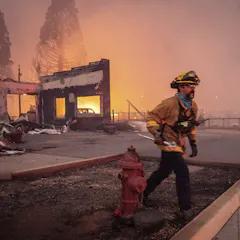
The Intergovernmental Panel on Climate Change has released its long-awaited report. From accelerating emissions to intensifying disasters to rising sea levels, its authors lay out the new findings.
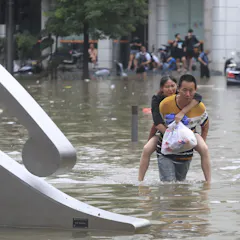
234 scientists from 66 countries reviewed over 14,000 research papers. It was gruelling and it was worth it: the report is the most important global assessment of climate change science yet.
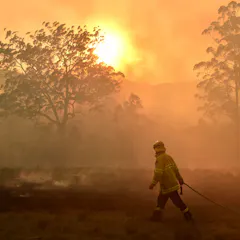
These international climate assessments are used by governments worldwide as they weigh future risks and climate policies.
Top contributors
-

Chief Research Scientist, CSIRO Environment; Executive Director, Global Carbon Project, CSIRO
-
Climate Projections Scientist, CSIRO
-
Chief Scientist, Australian Antarctic Division and Professor of Climate Science, Australian National University
-
Honorary Associate Professor of Climate Science, The University of Melbourne
-
A/Prof., School of Earth Sciences, The University of Melbourne
-
Senior Principal Research Scientist, Environment, CSIRO
-
ARC Future Fellow and Associate Professor in Climate Science, ARC Centre of Excellence for 21st Century Weather, The University of Melbourne
-
Associate Professor in Social Science, Australian National University
-
Associate Professor of Civil, Environmental, and Sustainable Engineering, Arizona State University
-
Canada Research Chair in Climate Change and Health, University of Alberta
-
Professor emeritus, The University of Melbourne
-
Implementation Manager, Indiana University
-
Professeur titulaire, groupe de recherche HC3 - Hydrologie Climat & Changements Climatiques, École de technologie supérieure (ÉTS)
-
Senior Research Engineer, Massachusetts Institute of Technology (MIT)
-
Assistant Professor of Public Health, Indiana University