

Coronavirus is causing religious communities to rethink ways of expressing their faith. In the spirit of finding innovative ways to continue rituals, the pilgrimage to Lourdes was conducted online.
Articles on Innovation
Displaying 221 - 240 of 670 articles
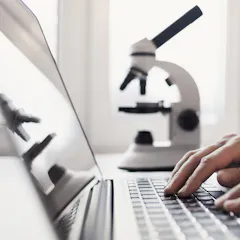
DIY labs have disrupted industries from alcohol to pharmaceuticals. During the coronavirus pandemic, curious people have more opportunities to innovate from home.

COVID-19 has stretched South Africa’s public health services to capacity. In response, the services have increased their capacity through innovation.

South African businesses have typically invested in innovation activities that help them prepare for technological and organisational change.

Inventors in states with more socially liberal laws on the books end up with more diverse collaborators – and more higher-impact patents.
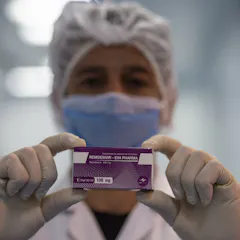
Treatment nationalism is a threat to us all.

During a pandemic, what would MacGyver do? He’d cobble together masks and ventilators from the things around him. Now health-care workers are doing the same. But there are risks.

If fewer students from other countries enroll in US colleges and universities this fall due to COVID-19, the effects would be felt well beyond the campus, an expert warns.

COVID-19 is forcing us to look at business differently.

A team of physicists, virologists and computer scientists are seeking to develop a coronavirus diagnostic tool that could deliver rapid results.

The usefulness of drones to the medical sector has been clear for several years – and well-funded start-ups have been trialling services around the world.

Start-ups in India, many in Kerala, have taken up the challenge of finding innovative solutions to the problems raised by COVID-19.

Innovative ideas during the lockdown could protect democracy and make it stronger and more inclusive.

Many low and middle-income countries are unprepared for the COVID-19 pandemic. But innovation could help.

Many businesses have been rocked by the financial fallout from the coronavirus. Bouncing back from such a consequential event is not enough. Companies must adapt to the disruption.

Tinder was developed as a dating app, but research has found that some find it useful for promotional campaigns and artistic purposes.

More women on corporate boards means more opportunities for women, and better performances by businesses.

The case for carbon pricing is not as ironclad as the case for climate action.

Combining design innovation methods with medical disciplines such as microbiology can help tackle health related challenges.

Machines mostly innovate on narrow dataset, which limits their creativity.
Top contributors
-

Emeritus Professor of Innovation, University of Technology Sydney
-
Director, Melbourne Institute of Applied Economic and Social Research, The University of Melbourne
-
Senior Lecturer and Researcher in Innovation and Digital Leadership, University of Brighton
-
Professor of Advanced Technology Transitions, Arizona State University
-
Innovator in Residence, University of Oxford and Emeritus Professor, School of Business, The University of Queensland
-
Professorial Fellow, University of Canberra
-
Professor of the Practice of International Development, Harvard Kennedy School
-
Professor and Founding Director of QUT Centre for the Digital Economy, Queensland University of Technology
-
Associate Professor of Public Policy and Women's Studies, University of Michigan
-
Visiting Professor, University of Technology Sydney
-
Directeur de l'agence Villes Innovations, Chercheur associé au laboratoire PACTE (Université de Grenoble), Co-fondateur du Laboratoire d’usages culture(s)-art-société (LUCAS), Université Grenoble Alpes (UGA)
-
Winthrop Professor, Entrepreneurship, Innovation, Marketing and Strategy, The University of Western Australia
-
Professor of Natural Philosophy in the Department of Physics, University of York
-
Founding Director, Institute for Sustainability, University of Surrey
-
Productivity Growth Program Director, Grattan Institute