

Taylor Mill cut to the heart of issues in political thought such as patriarchy, socio-economic justice and freedom.
Articles on Injustice
Displaying 1 - 20 of 35 articles

Even when courts are provided with race-informed clinical assessments designed to contextualize trauma and systemic vulnerability, Black youth are still seen as a risk.
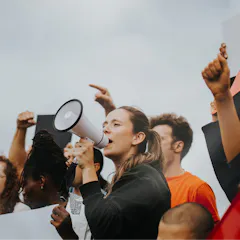
It’s still better to do something rather than nothing.
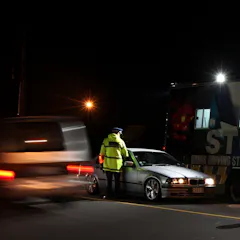
A new analysis of more than 10,000 first-time drink-driving cases reveals a troubling disparity.
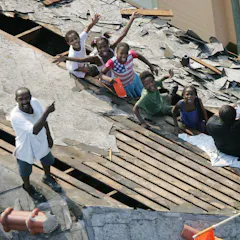
Looking back on New Orleans 20 years after Hurricane Katrina is a reminder that while such hazards may be natural, the death and destruction is largely human-made.

President Yoweri Museveni’s effort to stop evictions didn’t address underlying problems, but it enhanced his political legitimacy.

A recent decision by New Zealand’s highest court means police will need to be extra careful about how they obtain and use evidence in criminal investigations.
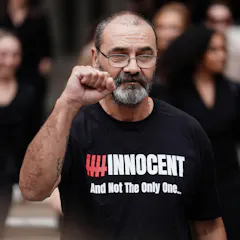
Why are so many innocent people still being convicted of crimes they did not commit?

Limiting exposure to air pollution will have lasting impacts on Colorado communities with the highest exposure.

The wrongful conviction of the Birmingham Six not only devastated their lives but also deepened the anguish of the victims’ families, leaving a legacy of trauma and unanswered questions.
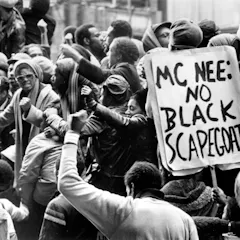
Though dominated by British and US events, Black History for Every Day of the Year shows the connections of people of African descent across the world.

Chartered accounting needs professionals who have gone through some healing from their experiences.

As new climate-related cases are brought to court, our expert outlines key aspects that could change the legal landscape.
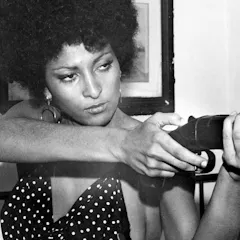
Coffy saw Pam Grier as the main propulsive force in a Blaxploitation movie, breaking ground for later female roles such as Ripley in Alien, Sarah Connor in Terminator and Nakia in Black Panther.

Although anger is often an appropriate response to mistreatment, that doesn’t mean we always identify the source of the wrong or injustice correctly.

Child-engaged research can facilitate new ways of listening to and supporting children as we move toward and through post-pandemic recovery.

Young people might take on a lot of debt without considering its consequences for their older years. A philosopher makes a case for laws to limit that debt as a duty toward self.

Researchers are imagining what the world might look like in 2048 — and the new forms of inequality and injustice that might exist.

For many Americans, law and order has long been as much a private matter as something for the government to handle.
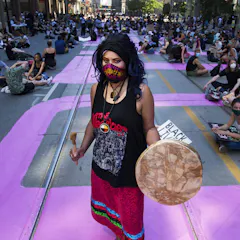
We have seen our ability to act in alignment with public health measures during the pandemic. People’s everyday actions could also make a difference in addressing systemic injustice.
Top contributors
-

Professor Emeritus in Organization Studies, University of Bath
-
Senior Lecturer in Bioethics in Department of Medicine, Faculty of Health Sciences, University of Cape Town
-
Associate Professor of German Studies and Comparative Literature, Dartmouth College
-
Professor of Philosophy, University of Pretoria
-
Professor in department Law, Managment, and Social Sciences, EM Lyon Business School
-
Senior Lecturer, Psychology, Glasgow Caledonian University
-
Senior Lecturer in Sociology, Manchester Metropolitan University
-
Affiliate Professor, GEM
-
Robert S. Lynd Professor of Sociology, Columbia University
-
Professor of Philosophy, Public Policy and Governance, University of Washington
-
Senior Lecturer in American Literature and Film, Loughborough University
-
Assistant Professor of Philosophy, University of Victoria
-
PhD researcher, Trinity College Dublin
-
Research Fellow in Environmental Justice, University of Sussex
-
Senior Research Fellow, New Zealand Policy Research Institute, Auckland University of Technology