

Comparisons between our current era and the societal rot of the Gilded Age abound. But it might be more useful to explore how Americans escaped the crises of the late-19th century.
Articles on Inequality
Displaying 121 - 140 of 1185 articles

Between 2002 and 2018, some groups actually increased their wealth on certain measures. For young people and middle Australians, however, it’s a more sobering picture.
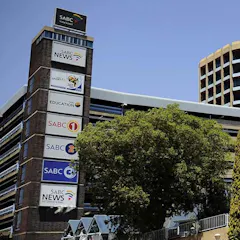
A lack of political will is to blame for failing to find a suitable funding model for the SABC’s public mandate.

Travelling remains time-consuming, precarious, and shockingly dangerous for most South Africans 30 years after apartheid has ended.

Many employers are appointing more women to management and paying fairer salaries, but there is a long way to go before the pay gap is closed – especially if you’re a woman in her 50s.
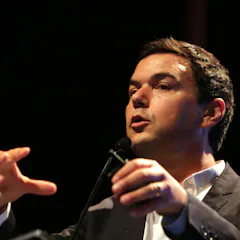
Thomas Piketty’s new book is designed to make his thought available to a wider audience.

South Africa’s government of national unity forged after the 2024 elections refutes the claim that there are two antagonistic political camps.
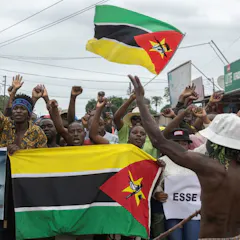
The political unrest in Mozambique reflects discontent with the status quo, including limited opportunities for advancement.
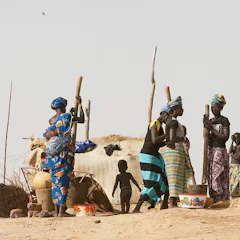
Climate change affects women’s health, livelihoods and security disproportionately because of gender inequality and patriarchal structures.

Economists have traditionally viewed inequality through those directly affected or distant observers. But the informed-consumer perspective offers a path to reduce inequality through purchases.
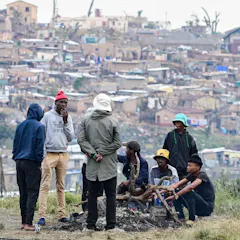
Increasing grant payments to extremely poor South Africans would alleviate poverty and help economic growth, a modelling exercise shows.

A study found that in US counties where friendships with prosperous individuals are more common, investment and savings tend to be higher.
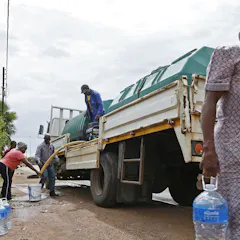
Many people feel unsafe in their homes, and when walking in their neighbourhood during the day or at night.
Despite reassuring messages from the tech sector, concerns are growing about the negative impact of the rapid adoption of AI on society
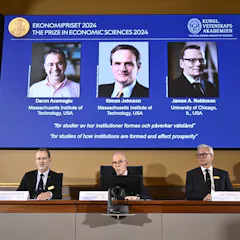
US-based Daron Acemoglu, Simon Johnson and James Robinson were recognised for their work on the vast differences in prosperity between nations.

Communism, Marxism and socialism are all different economic and political ideas. As concepts, they all seek to move toward greater economic equality and public participation in democracy.

Compared to countries we might benchmark against, New Zealand ranks poorly for inequality and the redistributive measures that would fix it. But other countries have shown it is possible to change.
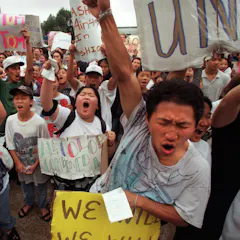
While Americans like to think of themselves as kind, generous people, many refugees would beg to differ.

In a well-functioning market, no one would make excessive profits long enough to become a trillionaire.

Austerity means choosing not to invest in citizens, contrary to the mandate of South Africa’s constitution.
Top contributors
-

Pro Vice-Chancellor, Climate, Sustainability and Inequality and Director, Southern Centre for Inequality Studies, University of the Witwatersrand
-
Professorial Fellow, University of Canberra
-
Professor of Political Studies, University of Johannesburg
-
Professor of Social Development Studies, University of Johannesburg
-
Professorial Fellow, Jumbunna IHL, University of Technology Sydney
-
Professor, Crawford School of Public Policy, Australian National University
-
Senior Researcher, Southern Centre for Inequality Studies, University of the Witwatersrand
-
Visiting Senior Fellow in History, UNSW
-
Part-Time Professor of Economics, The New School
-
Emeritus Professor, Department of Political Economy, University of Sydney
-
Distinguished Reserach Professor, Southern Centre for Inequality Studies, University of the Witwatersrand
-
Program Director, Housing and Economic Security, Grattan Institute
-
Associate Professor of Family Medicine, Charles R. Drew University of Medicine and Science
-
Senior lecturer, University of Edinburgh
-
Halford Mackinder Professor of Geography, University of Oxford