
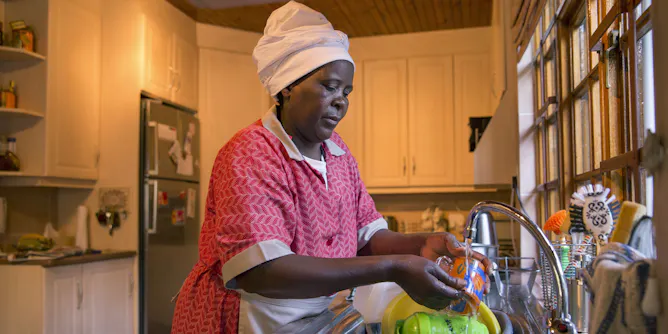
The employment conditions for domestic workers have improved since democracy in 1994. However, some practices from the apartheid era persist.
Articles on Inequality
Displaying 101 - 120 of 1185 articles
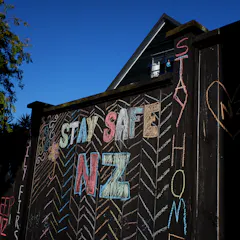
The pandemic – and the emergency responses to it – laid bare fissures in New Zealand society, while permanently shifting the way many live, work and shop.

Wealth inequality in Australia has grown over the past quarter century. Surging house prices that have outpaced incomes are to blame.

Shakespeare was a social entrepreneur and entertainer in a world riven by crises, and much can be learned from bringing him into conversation with policy today.

Study shows polarisation takes different forms depending on the conditions on the ground.
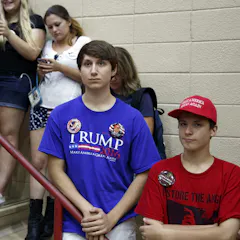
A social scientist tracking adolescents’ beliefs and behaviors over time was uniquely positioned to document changes in teens’ worldviews after Trump’s 2016 election.
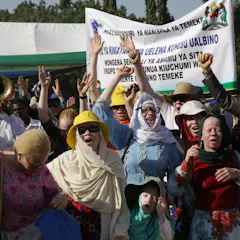
Upholding the rights of people with albinism would ensure that they are treated fairly and with respect.

One of Australia’s most valuable social surveys also found a record number of households have been affected by natural disasters.

Workers and executives are often segregated by income.
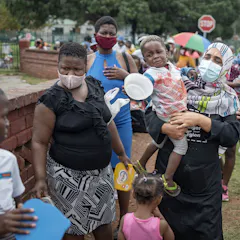
Food shortages are not the cause of hunger in South Africa. The country produces and imports all the food it needs.
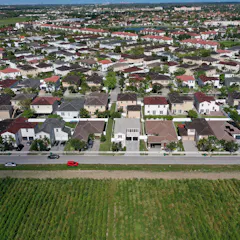
Housing market appreciation has been the primary driver of growing white-Black wealth disparities since the mid-1980s.

Being viewed as a good corporate citizen can be good for the bottom line.
On more than half of 80 economic, social and environmental targets, progress has stagnated or is moving backwards. But modelling shows there’s still time to change course.
For as long as we’ve had democracies, majority rule has left some in the minority worse off. We need to be talking about what’s fair – not just what’s equal.

While overall giving has grown, the ranks of American donors have declined.
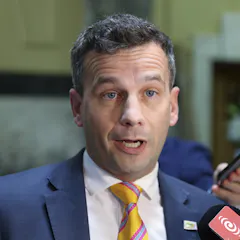
The ACT Party leader believes government assets should provide a return or be sold. But a majority of New Zealanders are consistently opposed to more privatisation.

Climate breakdown and inequality are deeply interwoven, with each crisis exacerbating the other, according to a new report.

Henry James’ ‘The Princess Casamassima’ tells a story of political radicalism in a time of economic inequality. But even James ran up against the limits of putting himself in the mind of a killer.

A handbag becoming a symbol of class strife aptly defines the mood of the online zeitgeist.
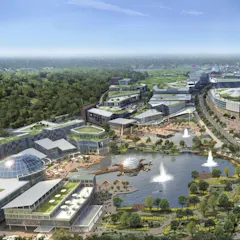
Sherbro Island City’s vision of an elite urban development brings to mind some of the colonial thinking around the construction of Freetown’s Hill Station enclave a century ago.
Top contributors
-

Pro Vice-Chancellor, Climate, Sustainability and Inequality and Director, Southern Centre for Inequality Studies, University of the Witwatersrand
-
Professorial Fellow, University of Canberra
-
Professor of Political Studies, University of Johannesburg
-
Professor of Social Development Studies, University of Johannesburg
-
Professorial Fellow, Jumbunna IHL, University of Technology Sydney
-
Professor, Crawford School of Public Policy, Australian National University
-
Senior Researcher, Southern Centre for Inequality Studies, University of the Witwatersrand
-
Visiting Senior Fellow in History, UNSW
-
Part-Time Professor of Economics, The New School
-
Emeritus Professor, Department of Political Economy, University of Sydney
-
Distinguished Reserach Professor, Southern Centre for Inequality Studies, University of the Witwatersrand
-
Program Director, Housing and Economic Security, Grattan Institute
-
Associate Professor of Family Medicine, Charles R. Drew University of Medicine and Science
-
Senior lecturer, University of Edinburgh
-
Halford Mackinder Professor of Geography, University of Oxford