
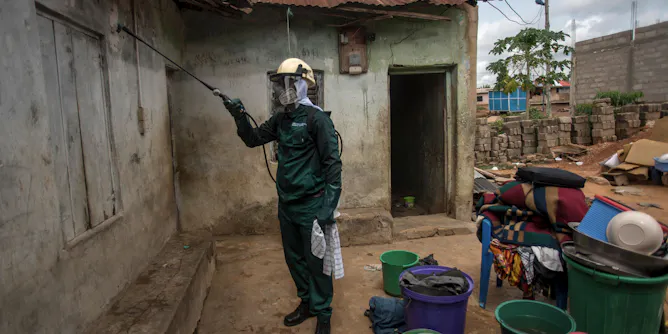
Insecticide resistance is a growing threat to malaria control efforts globally. It is, thus, important to keep a close eye on vector mosquito populations in affected areas.
Articles on Indoor residual spraying
Displaying all articles
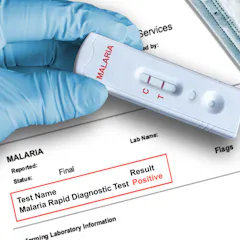
Evidence shows that malaria parasites in some locations have changed their genetic make-up so that they can evade rapid diagnostic tests.

Like the coronavirus causing the current pandemic, both the malaria parasite and mosquito vector are developing ways to avoid control.
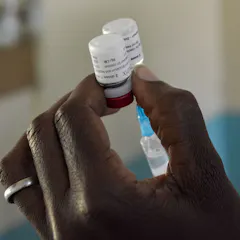
The successful development of an effective vaccine against the deadliest form of malaria that is most common in sub-Saharan Africa is indeed a major achievement.
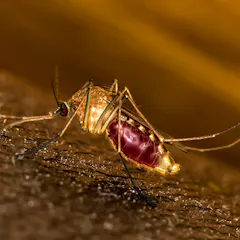
This project may help to eradicate malaria by developing new technologies to prevent mosquitoes from biting people when they are outdoors.
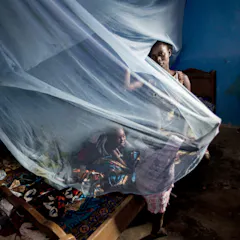
When there are two malaria prevention interventions available people don’t take an either or approach – they consider that the two interventions are complementary.
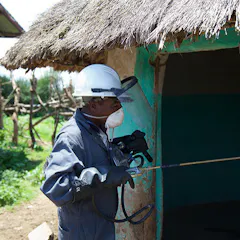
A spike in the number of malaria cases in southern Africa means that the region will not meet its initial target of eliminating malaria by 2018.

Eliminating malaria in Africa has been held back by a range of factors, including a lack of funds and drug and insecticide resistance challenges.
Top contributors
-

Medical scientist, National Institute for Communicable Diseases
-
Principal Medical Scientist and Head of Laboratory for Antimalarial Resistance Monitoring and Malaria Operational Research, National Institute for Communicable Diseases
-
Professor in the Department of Economics, University of South Florida
-
Unit Director of the Office of Malaria Research , South African Medical Research Council
-
Postdoctoral Researcher, University of South Florida
-
Postdoctoral fellow in UP Institute for Sustainable Malaria Control (UP ISMC), University of Pretoria
-
Senior Medical Scientist, National Institute for Communicable Diseases
-
Principal Research Scientist, National Institute for Medical Research (NIMR)
-
Director of Science, Ifakara Health Institute
-
Chercheuse en sciences sociales au CNRS, Paris School of Economics – École d'économie de Paris
-
Associate Professor at the Wits Research Institute for Malaria in the Faculty of Health Sciences, University of the Witwatersrand
-
Country Director I-TECH Kenya, University of Washington