
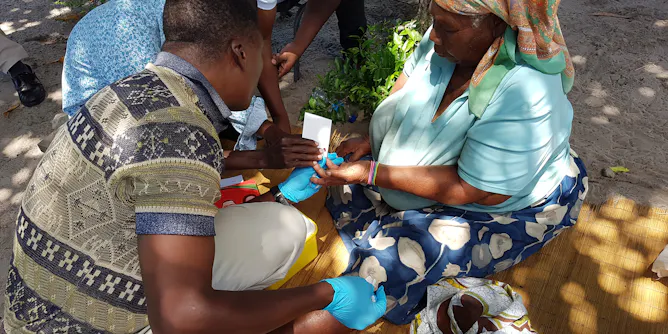
South Africa is one of the few malaria-endemic countries in Africa that did not see a major upsurge in malaria cases caused by COVID-related disruptions.
Articles on Malaria elimination
Displaying all articles
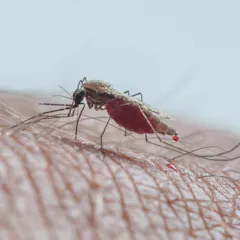
The countries share related populations, economies, ecologies and epidemiologies. This interconnectedness highlights challenges and opportunities for more effective malaria control across the region.
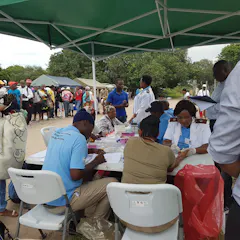
The South African Malaria Control Programme is one of the few on the continent that is entirely funded by government. The stable source of funding has allowed for steady malaria control interventions.
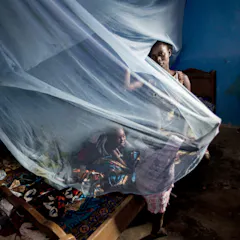
When there are two malaria prevention interventions available people don’t take an either or approach – they consider that the two interventions are complementary.

Epidemiologists and public health managers are looking to complement indoor-based malaria solutions with those that focus on the outdoors. Drones are a crucial part of their armoury.
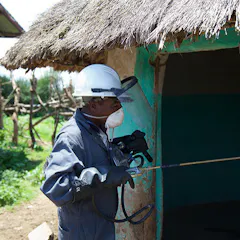
A spike in the number of malaria cases in southern Africa means that the region will not meet its initial target of eliminating malaria by 2018.

Eliminating malaria in Africa has been held back by a range of factors, including a lack of funds and drug and insecticide resistance challenges.
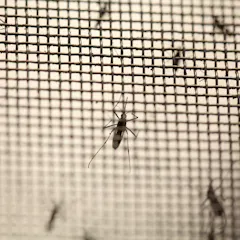
Innovations targeted at mosquito control are good but should not draw focus away from the tried and tested public health measures to control mosquito-borne diseases.

New genetic technology could change the DNA of entire species to prevent them from spreading diseases.
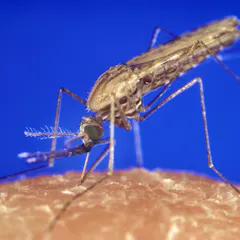
The irritating buzz that rings in your ear in the dead of the night comes from an insect barely traceable with your naked eye. Here are a few facts worth knowing about the mosquito.
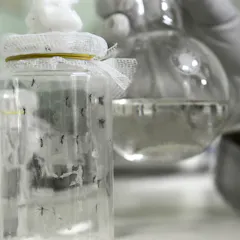
Across the world scientists are trying to find a new drug that the malaria carrying parasite will struggle to develop a resistance to.
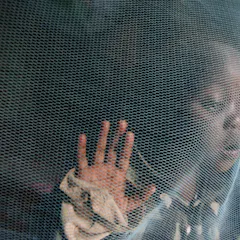
Several countries within southern Africa are on the brink of eliminating malaria. But there are several challenges ahead.
Top contributors
-

Principal Medical Scientist and Head of Laboratory for Antimalarial Resistance Monitoring and Malaria Operational Research, National Institute for Communicable Diseases
-
Research Chair, Integrated Vector Management in the Vector Control Cluster, Centre for Sustainable Malaria Control, University of Pretoria
-
Associate Professor (Biochemistry) DST/NRF South African Research Chair (SARChI) in Sustainable Malaria Control, University of Pretoria
-
Board Certified Internal Medicine Physician and Public Health Scientist, MidMichigan Health, University of Michigan
-
Postdoctoral Research Fellow, Molecular Parasitology, Department of Biochemistry, University of Pretoria
-
Postdoctoral Researcher, University of South Florida
-
Professor in the Department of Economics, University of South Florida
-
Country Director I-TECH Kenya, University of Washington
-
Professor of Mathematical Biology, University of Oxford
-
Lecturer in Remote Sensing and GIS, Aberystwyth University
-
UP ISMC: Project Manager and Coordinator, University of Pretoria
-
Director: UP Institute for Sustainable Malaria Control, University of Pretoria
-
Chercheuse en sciences sociales au CNRS, Paris School of Economics – École d'économie de Paris
-
Medical scientist, National Institute for Communicable Diseases
-
Unit Director of the Office of Malaria Research , South African Medical Research Council