
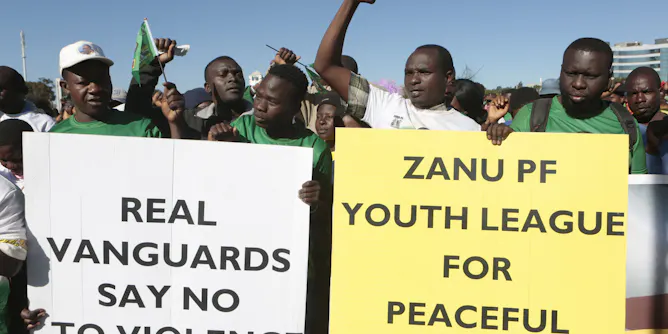
The credibility of Zimbabwe’s elections will depend on issues like political violence and media freedom.
Articles on Indigenous policy
Displaying 21 - 40 of 93 articles
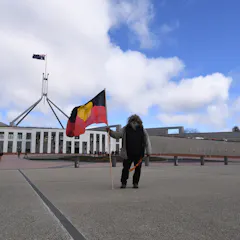
What may appear to be slow progress or steady outcomes for the whole Indigenous population may be masking worsening results.
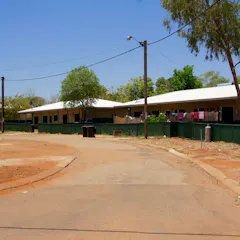
Decent housing underpins the Closing the Gap goals, with a decade-long national remote housing program having made measurable progress. If the Commonwealth pulls out now, hard-won gains could be lost.

Australia is on track to meet its ‘Closing the Gap’ employment target, but more than a decade late.

Care needs to be taken in interpreting progress on closing the gaps between Indigenous and non-Indigenous Australians, and ascribing it to actual policy change.

Politicians make sweeping statements on how to close the gap. But here’s advice from people working directly with Indigenous communities who have evidence for what actually works.
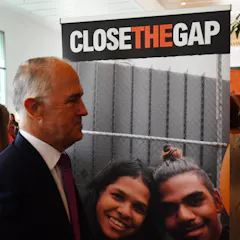
The tenth Closing the Gap report shows only three of the seven targets are on track to be met.

After 1993, Paul Keating became ever-more dominant in cabinet policy discussions to ensure a legacy for the Labor government.
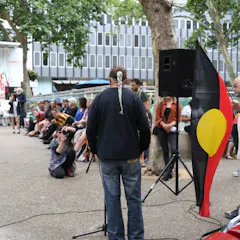
That the Cashless Debit Card continues to be pursued exposes a dogged obsession with implementing punitive policy at the expense of vulnerable people.

The latest census data reveals valuable insights into Closing the Gap targets. While there’s some improvement in school attendance rates, all other indicators suggest a radical rethink is required.
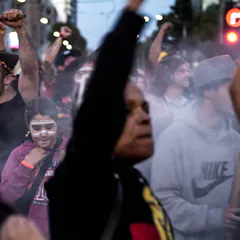
Despite the promise of Black Lives Matter, it has not been taken up as a central political movement by Indigenous Australians.

The Inuit town of Clyde River has won a long battle to stop Arctic seismic testing. The Supreme Court ruled the Inuit weren’t adequately consulted. What does that mean for future consultations?
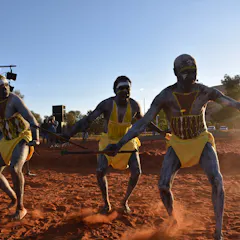
Bodies established around the world to hear ‘black’ voices have an enduring problem: they advise, but are rarely – if ever – heard.
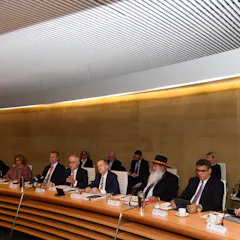
Implicit in Malcolm Turnbull’s and Bill Shorten’s arguments that an Indigenous ‘voice to parliament’ would be a big change is the notion that it may be too difficult.
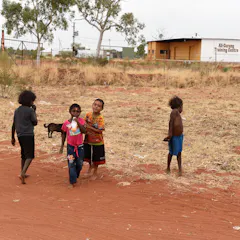
The census mostly delivered a good news story on Indigenous Australian outcomes, but it is unclear to what extent this correlates to improved lives for Indigenous families.
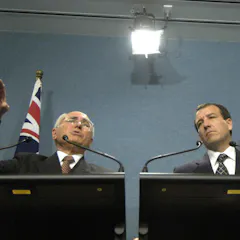
The Northern Territory Intervention implemented coercive measures that would have been unthinkable in other, non-Indigenous communities.

At the same time as it’s become clear that Indigenous people won’t accept a limited change, the right in Australian politics has become more determined to oppose any amendment.
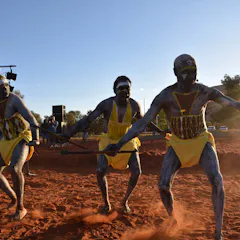
Indigenous Australians have issued a statement calling for constitutional reform that is substantive and meaningful.
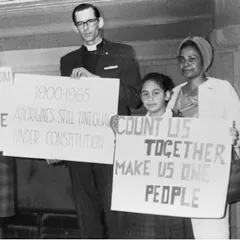
The 1967 referendum was the culmination of a long struggle for both Aboriginal rights and respect, for social esteem as well as equality before the law.
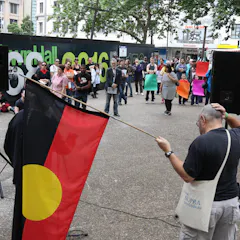
It’s a mystery why another trial of the Cashless Debit Card is necessary – particularly given how it has led to further economic and social harm among its participants.
Top contributors
-

Professor of Economics and Public Policy, ANU College of Arts and Social Sciences, Australian National University
-
Professorial Fellow, Jumbunna IHL, University of Technology Sydney
-
Associate Professor of Public Policy, Crawford School of Public Policy, Australian National University
-
ARC DECRA Fellow, Australian National University
-
Professorial Fellow, University of Canberra
-
Senior Lecturer in Social Research and Policy, UNSW
-
Senior Lecturer In Public Policy, School of Social and Political Sciences, The University of Melbourne
-
Professor of Indigenous Health, Executive Director, Carumba Institute, Queensland University of Technology
-
Associate Professor, UNSW
-
Advisor, Author and Researcher, The University of Queensland
-
Pro Vice-Chancellor Indigenous UNSW and Professor of Law, UNSW ; University of Pennsylvania
-
Professor, School of Social and Political Sciences, Director, The (so-called) Australian Centre, The University of Melbourne
-
Lecturer, Faculty of Health Sciences, Australian Catholic University
-
Associate Professor, Macquarie University
-
Senior Lecturer in Criminology and Social Policy, The University of Queensland