
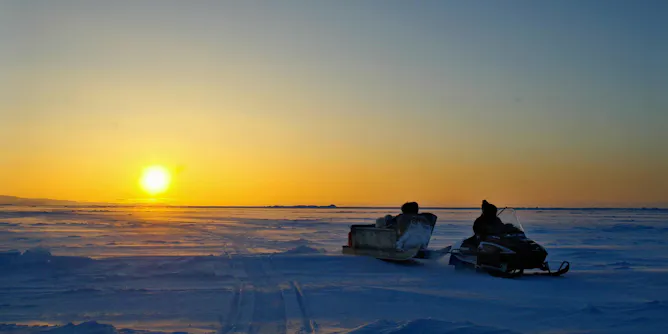
All over the world, the territories of Indigenous peoples map onto regions of the richest and most persistent biodiversity. A book about hunter-gatherer Arctic peoples shows why.
Articles on Indigenous peoples
Displaying 101 - 120 of 355 articles
When public services don’t work for Indigenous peoples, it’s more than just a case of policy failure. As long as colonial assumptions are embedded in the system, there can never be real progress.

Beyond revamping misleading terminology, some library science scholars and Indigenous knowledge holders are looking at how to index library materials in ways that reflect Indigenous knowledge.

Pope Francis’ visit concerns all Canadians. It’s about our relationship to history and the construction of a state that marginalized Indigenous people and tried to assimilate them.
The population size of smaller communities is declining, and racism and discrimination are hindering its growth.
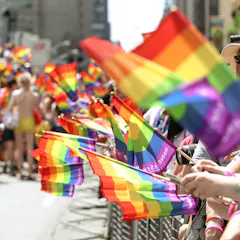
Pride Toronto has the opportunity to change its relationship with Indigenous and racialized people.

Newcomers to Canada tend to be more supportive of Indigenous Peoples and reconciliation than other Canadians.
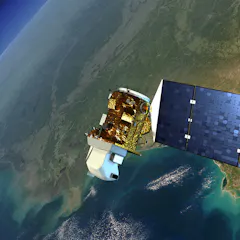
When Indigenous peoples lose their river flow to dams, satellite programs like Landsat – which is celebrating its 50th anniversary – can help them fight for their resources.
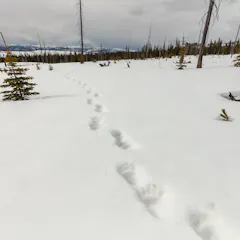
Parks and refuges are important for conservation, but without connections, they’re like islands. Linking them by protecting land in between makes it possible for wildlife to move over bigger areas.
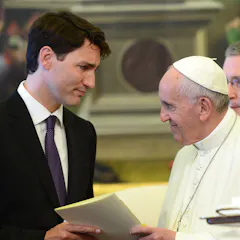
It is worth considering whether efforts to enlist the church in reconciliation have been helped or hindered by how settlers think about early written records.
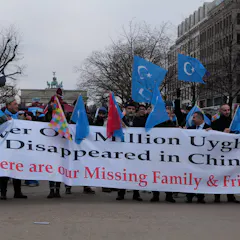
Is history really a triumphant march of progress? It depends on your point of view.

Privileged people don’t get to unilaterally decide that their behaviour isn’t racist. Real change must involve more humility (I’m looking at you, Joe).

By raising the Mauritian flag on the Chagos Islands, the east African nation has reasserted – if only symbolically – its claim to sovereignty.
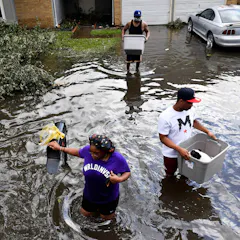
The most vulnerable communities are being pushed deeper into poverty with each climate-related disaster. Part of the problem is that government aid helps the wealthiest people most.
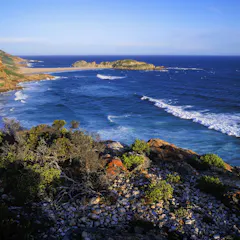
If the local context and priorities of those who most directly rely on natural resources for their survival isn’t considered, conservation efforts will continue to fail.
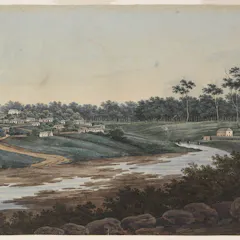
A review of studies of Parramatta demonstrates an extensive deep-time archive of Indigenous activity extending over 14,000 years.
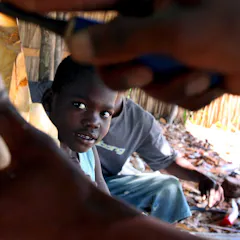
More than 100 nations have pledged to end deforestation by 2030. But there’s no mention of the need for Indigenous people to give their prior informed consent.
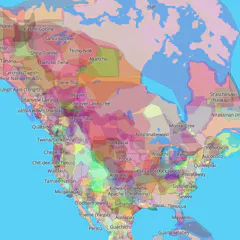
Land acknowledgments state that activities are taking place on land previously owned by Indigenous peoples. They’re popular – but they may harm more than they heal, say three anthropologists.

The aim of transitional justice is to usher in a peaceful society after mass atrocity, periods of systemic human rights violations and violent authoritarian regimes. It should be a Canadian priority.

Indigenous people and communities are not monolithic. How they react to and deal with tragedy will be different. Acknowledging that will help us all heal.
Top contributors
-

Professor of History, University of Illinois Urbana-Champaign
-
Professor of Economics and Public Policy, ANU College of Arts and Social Sciences, Australian National University
-
Professor Emeritus of Latin American Studies and Geography, University of Florida
-
Adjunct Professor, Stout Research Centre, Victoria University of Wellington and Auckland University of Technology, Professor of Political Science, Charles Sturt University
-
Professor, School of Social and Political Sciences, Director, The (so-called) Australian Centre, The University of Melbourne
-
Professor of Archaeology and Biological Anthropology, School of Social Science, The University of Queensland
-
Partner Investigator, ARC Centre of Excellence for Indigenous and Environmental Histories and Futures, James Cook University
-
Researcher in ethnobiology, Universitat Autònoma de Barcelona
-
Professor of Indigenous Health, Executive Director, Carumba Institute, Queensland University of Technology
-
Professor of Law, University of Technology Sydney
-
PhD student of law, Universidade do Estado do Rio de Janeiro (UERJ)
-
Professor of Geography, School of Law and Society, University of the Sunshine Coast
-
Professor, Griffith Business School, Griffith University
-
UN Expert Mechanism on the Rights of Indigenous Peoples (EMRIP) and Professor in Political Science, Global Affairs and Public Policy, University of Toronto
-
Distinguished Professor, Charles Sturt University