

You might not know you’ve had it. Or perhaps your immune system or genes have given you a boost. Or maybe you’re just lucky.
Articles on Immunity
Displaying 41 - 60 of 177 articles
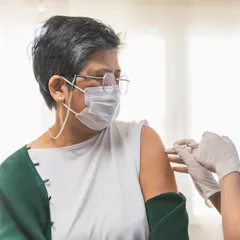
Lagging booster vaccine uptake in England means millions of people may not be optimally protected ahead of winter.
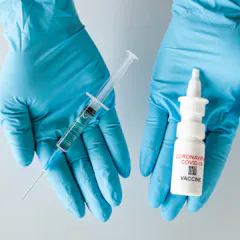
These types of vaccines could offer certain advantages over conventional COVID shots. But we need more data to show us they’re effective.
New research adds to scientists’ understanding of how invading pathogens can change the way our genes switch on and off.
German doctors have reported success in treating patients with severe lupus, using cell treatments like those used for some forms of blood cancer.

Evidence is growing there are changes to your immune system that may put you at risk of other infectious diseases.

New Zealand has done better than most countries by taking decisive action at the start of the COVID pandemic. Now is the time to build on this with a science-based strategy to manage the next stages.
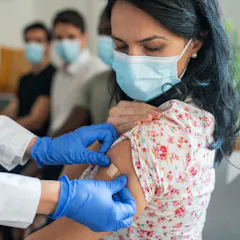
The CDC’s endorsement of the reformulated COVID-19 booster shots represents a major step in the effort to get more Americans boosted.
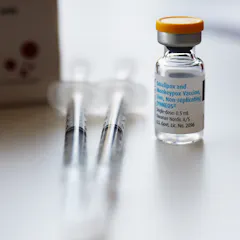
There are two approved monkeypox vaccines in the US. Both use a related poxvirus called vaccinia to produce an immune response that protects against smallpox and monkeypox.
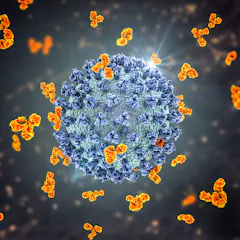
A new COVID variant, BA.2.75, has been detected in the UK and several other countries. But the data we have at the moment doesn’t suggest there’s any reason to panic.

Intuitively, we would assume that subsequent infections should be less severe. But this won’t always be the case.
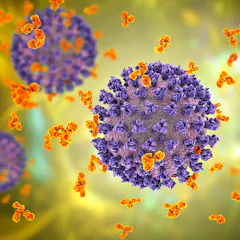
‘Hybrid immunity’ is the term for immunity acquired from both prior infection and vaccination.

To help people make informed decisions about ongoing COVID-19 risks, public health messaging needs to adapt as the pandemic evolves, just as immune systems adapt to new viruses and variants.

Achieving herd immunity via vaccination was always going to be a hard ask. Now it’s mathematically impossible.

The COVID-19 vaccines continue to be effective against severe illness leading to hospitalization and death in all age groups, including children ages 5 to 11.
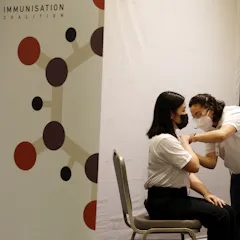
A yet-to-be-verified study found health-care workers who’d had a flu shot were a third less likely to test positive for COVID – and 90% less likely to develop severe COVID symptoms.

Scientists are working on intranasal COVID vaccines. Not only are these vaccines delivered differently – but they also target a different part of our immune system.
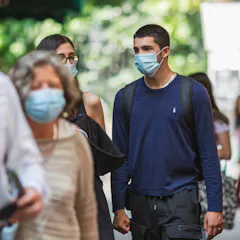
Even taking into account people who have had COVID but didn’t know it, there’s still likely to be a group of people who have never been infected.

Sales of vitamins are booming in pandemic times. But is there any evidence that vitamin and mineral supplements can protect you from COVID or help you recover from infection?

Are you due your third or fourth dose? What about your parents? What about your kids? It can be hard to keep track, so here’s the current advice.
Top contributors
-

Associate Pro Vice-Chancellor: Innovation and Knowledge Exchange, University of Nottingham
-
Associate Professor and Research Leader in Virology and Infectious Disease, Griffith University
-
Honorary Associate Professor
-
Professor of Pathology, Microbiology and Immunology, University of South Carolina
-
Associate Professor of Biology, Rochester Institute of Technology
-
Distinguished Professor, Professor of Immunology, RMIT University
-
Professor, School of Biomedical Sciences and Pharmacy, University of Newcastle
-
Professor of Pathology, Microbiology and Immunology, University of South Carolina
-
Vice-Chancellor's Research Fellow, School of Health and Biomedical Sciences, RMIT University
-
Professor, Discipline of Paediatrics and Child Health, University of Sydney
-
Professor of Medicine, University of Virginia
-
Research Fellow, Institute for Molecular Bioscience, The University of Queensland
-
Vice Chancellors Senior Research Fellow in Immunology, RMIT University
-
Research associate, Warren Alpert Medical School, Brown University, Brown University
-
Senior Lecturer; MD, Victoria University