
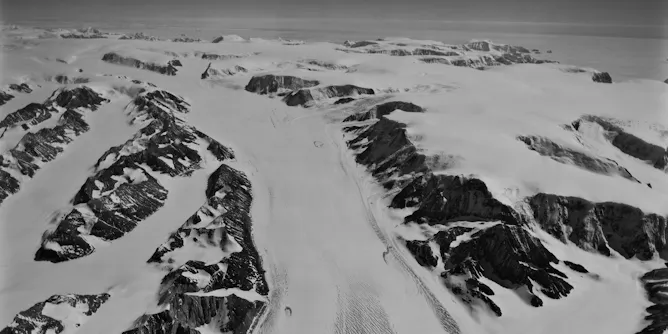
Few observations exist from before the 2002 Larsen B Ice Shelf collapse. We’ve now estimated how many billions of tons of glacier ice were lost – and what it means for the future.
Articles on Ice shelves
Displaying all articles
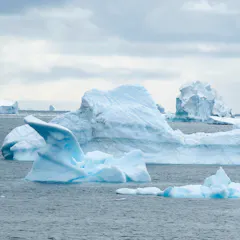
Icebergs don’t just pose a risk to ships – they have a profound impact on the natural world and human societies.
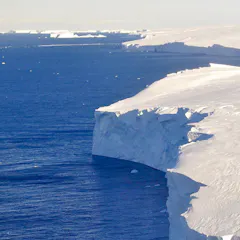
Thwaites Glacier’s ice shelf appears to be splintering, and scientists fear it could give way in the next few years. A polar scientist takes us on a tour under the ice to explain the forces at work.
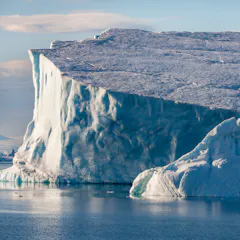
For the first time since satellites started studying the continent, East Antarctica has lost an entire ice shelf.
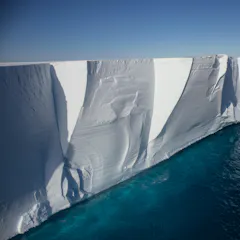
In a new study, we found that a third of Antarctica’s ice shelves could collapse at 4°C of global warming.

How sea water circulates underneath Antarctic ice shelves is a vital missing link in climate change projections.
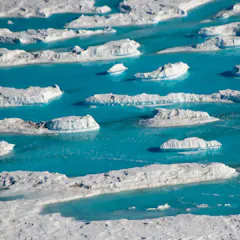
These lakes could threaten the future stability of parts of the Antarctic ice sheet.
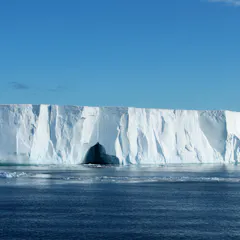
Since 1995, several ice shelves off the Antarctic Peninsula have abruptly disintegrated. A new analysis suggests that these events are triggered when ice shelves lose their buffer of floating ice.
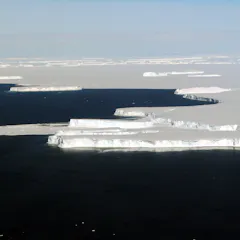
Last summer one of Antarctica’s floating ice shelves calved an iceberg the size of Delaware – but scientists say other less dramatic changes reveal more about how and why Antarctica is changing.
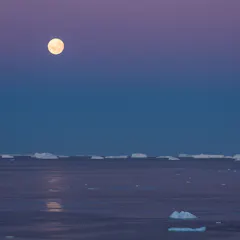
Warm waters run very deep.
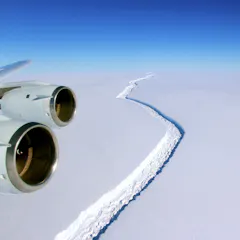
A huge iceberg is set to break free from Antarctica. While the iceberg isn’t hugely concerning, it could herald the breakup of the entire Larsen C ice shelf, which could trigger more sea-level rise.

Polar ice isn’t all the same - it can be divided roughly into “land ice” and “sea ice”. What matters most for sea levels is how much ice slides off the land and melts in the sea.
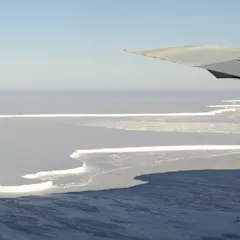
Researchers find that ice around Antarctica shrank quickly last decade, raising concerns over this buttress against melting land-based ice and future sea-level rise.
Top contributors
-

Postdoctoral Scholar, Jet Propulsion Laboratory, California Institute of Technology
-
Professor, Scripps Institution of Oceanography, University of California, San Diego
-
Professor of Polar Geodesy and ARC Laureate Fellow, University of Tasmania
-
Senior Scientist, Earth and Space Research
-
Professor of Applied Mathematics, The University of Melbourne
-
Leader, Sea Ice Section, Antarctic Climate Program, Australian Antarctic Division
-
Deputy Vice-Chancellor Academic, Professor of Applied Mathematics, University of Otago
-
Graduate Student Researcher, University of California, San Diego
-
Physical Oceanographer, Antarctic Climate and Ecosystems Cooperative Research Centre, University of Tasmania
-
Lecturer in Palaeontology, University of Exeter
-
Assistant Professor of Geophysics and Hydrologic Science and Engineering, Colorado School of Mines
-
Postdoctoral research fellow at Sorbonne University and University of Cape Town, University of Cape Town
-
PhD Candidate in Cryospheric Remote Sensing, Durham University
-
Associate Professor, UNSW
-
Senior Research Scientist, CIRES, University of Colorado Boulder