
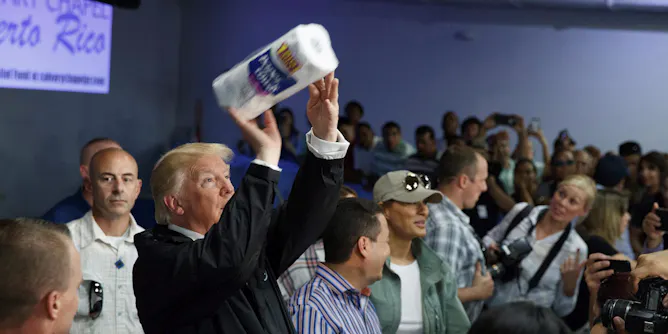
As Trump fumes about the Hurricane Maria death toll, it’s clear that politics and political considerations often play an important role in how death toll estimates are communicated to the public.
Articles on Hurricane Maria
Displaying 21 - 40 of 61 articles
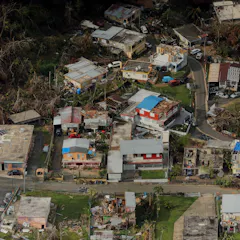
Thousands died after Hurricane Maria, but it did not have to be that way. Early evidence should have led the government to a much stronger response.
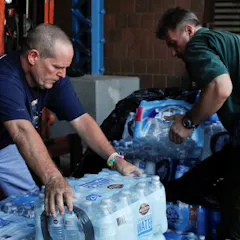
If you would like to assist from afar, let the professionals procure goods and services.
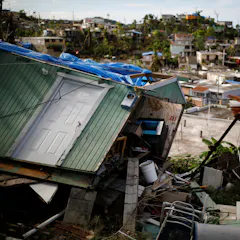
While the hurricanes last year dealt devastating blows to Puerto Rico, its challenges predate the storms and continue on today. They also offer new opportunities.
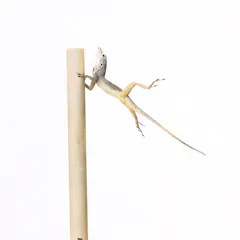
In the wake of two hurricanes in the Turks and Caicos Islands, researchers document for the first time that catastrophic storms can be agents of natural selection, influencing how species evolve.
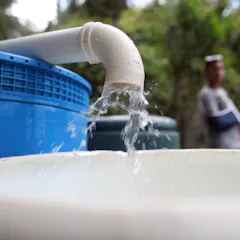
Many countries collect and store rainwater for use during drought or dry seasons. But this technique is rarely used in the Caribbean, where hurricanes can leave people without water for months.
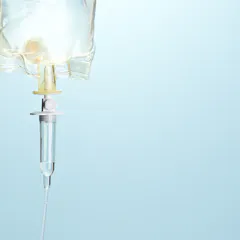
The US is currently short on 182 drugs and medical supplies. The problem isn’t new, but it’s frustrating health care workers.
A survey shows that most Puerto Ricans didn’t highly rate the official information coming out of the island. With the Institute of Statistics in trouble, the situation is likely not to improve.
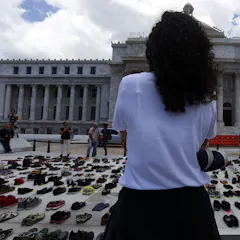
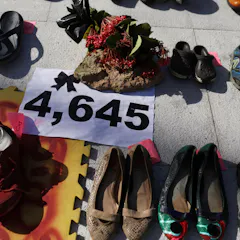
The government said 64, journalists said 4,645. What went wrong?
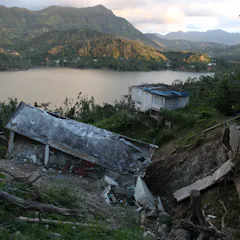
The Caribbean braces for another hurricane season even as many nations remain crippled by the catastrophic damage of 2017. Here, experts assess the region’s difficult and costly storm recovery.
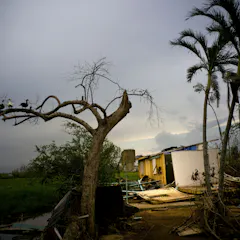
Official reports state that just 64 people died in Puerto Rico after Hurricane Maria. The latest estimates put the real number at 4,645. How did the count go so wrong?
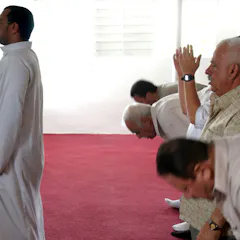
A scholar talks to Muslims in Puerto Rico and comes back with an understanding of their rich history and their struggles.
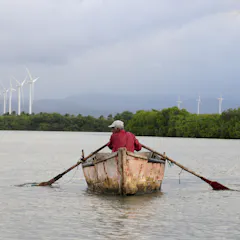
The 2017 hurricane season showed that Caribbean nations urgently need more resilient power grids. But the effects of climate change – including more severe storms – complicate the shift to renewables.
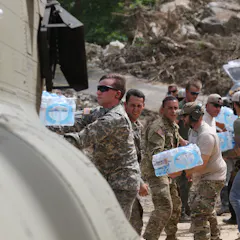
Compared to its foreign disaster missions, the US military mobilized slowly after Maria. But in numbers, capacity and logistics coordination, its work in Puerto Rico was on par with other aid efforts.
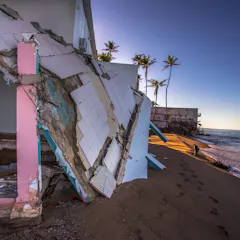
Crypto billionaires enjoy their Caribbean playground but poorer locals with little knowledge of the tech are excluded.
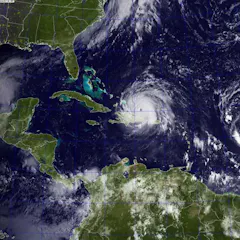
New research suggests politics and risk perception may explain why the US and Caribbean see climate change so differently, though both places are ever more vulnerable to powerful hurricanes.
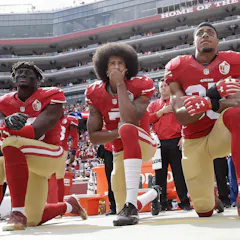
Much of the discussion about “Take a Knee” has overlooked the issues of justice and social exclusion, and especially environmental matters. That’s something to think about during the Super Bowl.
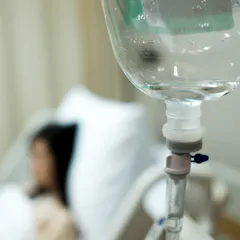
Thanks to Hurricane Maria, some US hospitals are experiencing a saline shortage. In times of emergency, medical supply chains break down too easily.
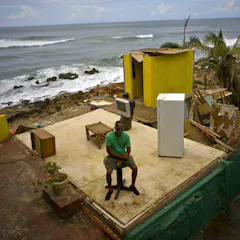
The U.S. government continues to wage a fight against scientific information. Without it, the public can do little to address environmental and economic inequality.
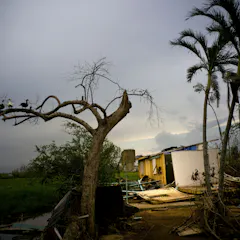
The governor of Puerto Rico has ordered a recount of the official death toll for Hurricane Maria. The real number is likely higher by the hundreds. What happened?
Top contributors
-

Associate Professor of Human Development and Family Studies, Demography and Public Policy, Penn State
-
PhD candidate in African & African Diaspora Studies, The University of Texas at Austin
-
PhD Candidate, Institute for Resources, Environment and Sustainability (IRES), University of British Columbia
-
Furman Public Policy Scholar, New York University
-
Posdoctoral Researcher in Local Energy Systems, University of Oxford
-
Assistant Professor of Emergency and Disaster Health Systems, University of Maryland, Baltimore County
-
Assistant Professor of Climate Adaptation, University of Washington
-
Research Fellow, American University School of Public Affairs
-
Associate Professor of Landscape Architecture and Urban Planning, Texas A&M University
-
Lecturer in Urban Development Planning, University of Manchester
-
PhD Candidate in Disaster Risk Reduction, UCL
-
ARC Future Fellow and Associate Professor in Climate Science, ARC Centre of Excellence for 21st Century Weather, The University of Melbourne
-
Research Professor, Centro de Investigaciones Sociales, University of Puerto Rico - Rio Piedras
-
Research Fellow, Cardiff University
-
Professor of Health Law and Bioethics, Case Western Reserve University