

The holy month of Ramadan will begin at sunset on February 28 in 2025. The last day will be either March 29 or March 30.
Articles on Hunger
Displaying 241 - 260 of 276 articles

For decades, experts worried that there wasn’t enough protein to feed the world’s population. They were wrong.
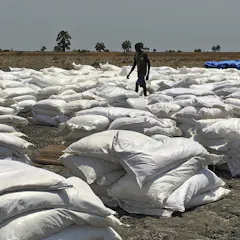
At a time when poverty and hunger levels are declining around the world, famine is recurring, driven by conflicts and natural disasters. But timely action by governments and aid groups can save lives.

Recycling leftovers from supermarkets does not address the roots of food poverty and removes responsibility from the government.
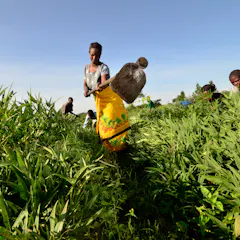
Cassava is a key food source in tropical countries, but yields have been flat for decades. New genetic research is identifying many options for boosting production of this valuable staple crop.
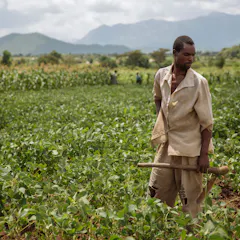
How can we feed a growing world population while protecting the environment? One key strategy is to improve yields on small farms, which produce much of the food in the world’s hungriest countries.

The black soldier fly, Hermetia illucens, could help solve global food shortages by feeding livestock. It can even be used to make diesel fuel.

Talking about food is a productive way to understand a complex world. The dinner table is a place where the shame of poverty is most acutely experienced.
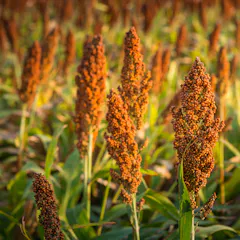
Pulses – or grain legumes – are indigenous foods that can play a massive role in tackling food security on the African continent.

Ghana’s school feeding programme has reached millions of children in the past 11 years. It does important work, but needs more support to grow and become sustainable.
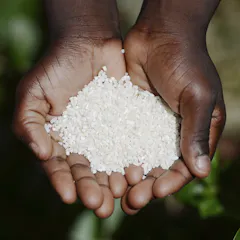
There are a number of efforts on the African continent aimed at helping people overcome food insecurity. Even though some progress has been made, the situation remains bleak.

Is there such a thing as brain food?

People living in rural parts of South Africa lack diversity in their eating because a starch based diet is perceived as cheaper and is very common.

Some of the most vulnerable people in society are being kept alive by food banks.

About one in seven Americans report going hungry at some point during the year, a fact apparently far from the minds of the presidential candidates.

Australians eat a lot of water. Nearly 500 L is required to produce the food each of us eats every day.

One in six children in Australia report going to bed hungry – these children are more likely to have mental health problems and be bullied regularly.

Genetically modified animals can help to feed the world’s burgeoning population, but there is still a lot of misinformation concerning its safety.

Students are going hungry on college campuses. The latest survey shows that four in 10 University of California students do not have access to nutritious food.

Our bodies have a complex system to control food intake, driven by hormones. Hormone levels also change when we gain and lose weight.
Top contributors
-

Professor of Social Development Studies, University of Johannesburg
-
Professor in Food Security; Head of the Department of Agricultural Economics, Extension and Rural Development, University of Pretoria
-
Professor of Economics, Baylor University
-
researcher, University of Cape Town
-
Assistant Professor of Public Health, Indiana University
-
Network and Research Manager: ARUA – UKRI GCRF FSNet Africa, University of Pretoria
-
Principle dietitian at the Nutrition Information Centre, Stellenbosch University
-
Associate Professor of Nutrition Science, Purdue University
-
Professor Emeritus of Food Security, Tufts University
-
Senior Lecturer in Nutrition and Dietetics, University of Wollongong
-
Professor of Nutritional Sciences, University of Toronto
-
Professor of Economics, University of Michigan
-
Professor and Head of Division Human Nutrition at the Faculty of Medicine and Health Sciences, Stellenbosch University
-
Research Program Coordinator, Food Insecurity, University of Toronto
-
Research associate at African Centre for Cities, University of Cape Town