
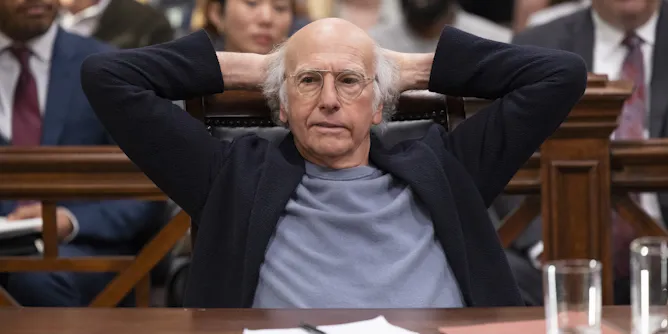
Larry David has called time on the misanthropic cult TV comedy classic after 12 seasons and 120 episodes.
Articles on Humour
Displaying 21 - 40 of 116 articles

Ever find bloopers funnier than the show? I research psychology, and here is the science behind your laughter.

This morning, breakfast television shows will be reporting obscure, although mildly believable, announcements from organisations and brands – but keep you wits about you!

Satire and humour have always been sites for popular engagement with the state in Kenya.

Offensive jokes encourage us to laugh at something we are not supposed to laugh at. Something Trump-supporting politicians are using effectively.

Laughter is one of the most ubiquitous and pleasurable things humans do, which is why companies online want to know what we find funny.

Dad jokes can help make you a better parent. But that’s only one reason why dad jokes work.
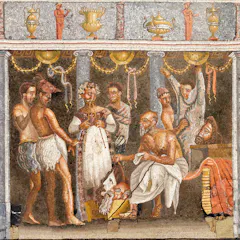
Collecting choice Latin lines is easy – the difficulty is trying to work out what they add up to. And women, in particular, come off badly in this collection of Latin’s greatest hits.

A clinical psychologist explains what has the potential to trigger our usually well-meaning laughter.

Some comedians put race at the centre of their comedy, giving audiences a chance to release some tension. But how far is too far? Where is the line between a lighthearted joke and deep-rooted racism?

It’s the 20th anniversary of Best Australian Political Cartoons – and it has been quite a year. From Putin to Dutton to Albanese, our cartoonists have been hard at work skewering the powerful.

‘America’s finest news source’ The Onion wants the US Supreme Court to answer some difficult questions: is satire protected speech, and if so, how do we define it?

Could laughter be a survival mechanism?
We need to value the recognition of great Canadian comic writing and ensure it’s judged equitably.

Irony is linked to the ability to say one thing while thinking another – which means it’s also intrinsic to being human. What does new research into artificial intelligence and irony reveal?

At its best, comedy can bridge, unite and heal, rather than divide, bully and perpetuate the very ills that it is uniquely equipped to help us solve.

What might our future look like? Together, these speculative fiction stories offer a First Nations response to this burning question.

Humour is now part of the modern election campaign. Facebook and TikTok have become joke battlegrounds.

Religion has been a laughing matter since the middle ages.
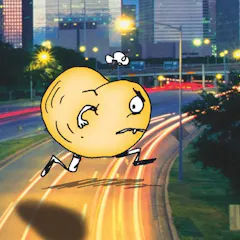
A teacher was fired this month for reading his favourite picture book, I Need a New Butt, to kids. It’s an example of how US conservatives are focusing on school boards as weapons in the culture wars.
Top contributors
-

Professor of English, Flinders University
-
Lecturer in Creative Writing, Flinders University
-
Lecturer in Psychology, Aberystwyth University
-
Senior Lecturer in History, Edge Hill University
-
Professor of Film Studies, Bangor University
-
Postdoctoral Research Fellow - Creative Arts Research Institute - Griffith University, Griffith University
-
Professor and Chair, Department of Journalism, Stellenbosch University
-
Professor in Professional Education and Leadership, School of Social Sciences, University of Stirling., University of Stirling
-
Associate Professor of Developmental Psychology & Psychopathology, University of Leeds
-
Lecturer in Sociology, Cardiff University
-
PhD Candidate, University of Leeds; Independent Social Research Foundation
-
Senior Lecturer in Psychology, Edith Cowan University
-
Kidman Chair in Australian Studies and Director, JM Coetzee Centre for Creative Practice, Adelaide University
-
Lecturer in Journalism, Swansea University
-
Lecturer, College of Business and Law, RMIT University