

Jon Stewart insists he is just a comedian, but his comic barbs have always had a political edge.
Articles on Humour
Displaying 61 - 80 of 116 articles
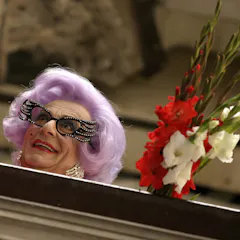
Public taste has changed and that is that. It’s not just the references that date in topical satire. Audiences are powerful, and if they feel insulted they can shut down a comedian.

Humour can diffuse tension, foster creativity and help build a team.

There is no writer working today with better grasp of the contemporary Australian vernacular.
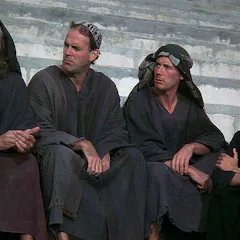
As parody goes, this infamous Monty Python film is a pretty gentle, even, respectful sort. It is now more likely to be criticised for breaching the boundaries of ‘political correctness’.
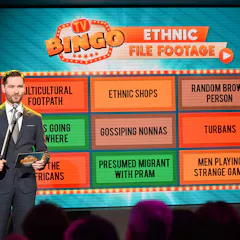
Today’s screen satire frequently preaches to the converted. Fortunately, there are some notable exceptions that can skewer even the most progressive of viewers.

The term ‘political correctness’ is often used to imply that those who resent racist comedy just lack a sense of humour. But First Nations people are using humour to speak back, especially on social media.

Siblings have one of the most enduring relationships which can help them enjoy the funny things in life.
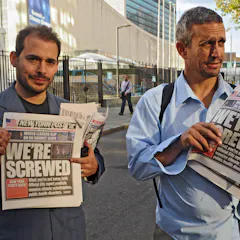
For media activists The Yes Men, hoaxes have emerged as a proven tactic to generate public discourse on social justice issues that are not generally given space and time in mainstream news media.

Comedians are being told to avoid joking about some things – and that’s not funny.

The way you and your partner use humour can shape your relationship, and even break it up.
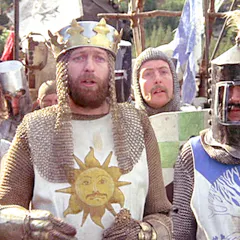
Is anyone still interested in Monty Python? Surprisingly, yes.

Comrade Cheetolino, Mango Mussolini, Agent Orange … just a few of Trump’s fake tan induced nicknames.

The changing aesthetics of protest allow many more voices to be heard.

Why are we so serious about not being too serious? The philosophy of humour has the answer.
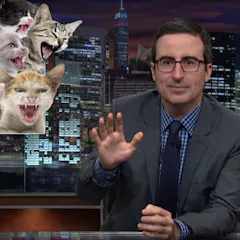
We may be living in a golden age of satire, but comedy has always struggled to communicate across political divides. Much of today’s satire may be preaching to the choir.

Racist ‘jokes’ embed negative stereotypes. Here’s why it’s not humourless to refuse to join in.

Comedy performers suffer more health problems, a new study has found.

These professional entertainers are trained and paid to go round hospitals cheer up children with music and laughter.

A philosopher’s take on what makes jokes funny.
Top contributors
-

Professor of English, Flinders University
-
Lecturer in Creative Writing, Flinders University
-
Lecturer in Psychology, Aberystwyth University
-
Senior Lecturer in History, Edge Hill University
-
Professor of Film Studies, Bangor University
-
Postdoctoral Research Fellow - Creative Arts Research Institute - Griffith University, Griffith University
-
Professor and Chair, Department of Journalism, Stellenbosch University
-
Professor in Professional Education and Leadership, School of Social Sciences, University of Stirling., University of Stirling
-
Associate Professor of Developmental Psychology & Psychopathology, University of Leeds
-
Lecturer in Sociology, Cardiff University
-
PhD Candidate, University of Leeds; Independent Social Research Foundation
-
Senior Lecturer in Psychology, Edith Cowan University
-
Kidman Chair in Australian Studies and Director, JM Coetzee Centre for Creative Practice, Adelaide University
-
Lecturer in Journalism, Swansea University
-
Lecturer, College of Business and Law, RMIT University