
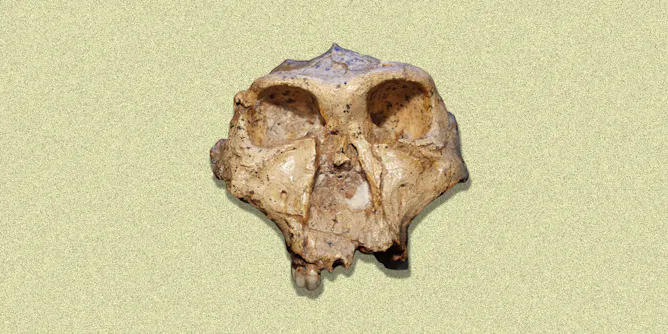
The way we classify humanity’s ancient relatives is a mess. But there’s a simple fix.
Articles on Humans
Displaying 1 - 20 of 52 articles

Human infant helplessness is not a weakness to be outgrown. It is an evolved trait that may be central to our ability to care for others.
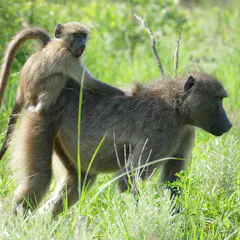
Understanding how female baboons benefit from social bonds helps humans understand their own origins.
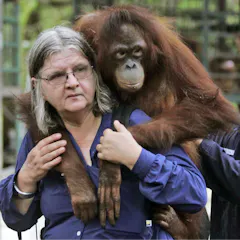
With Jane Goodall and Dian Fossey, Galdikas changed the face of science and opened the world’s eyes to how similar humans are to orangutans and other primates.

Compared to other great apes, human penises are mysteriously large, hinting they act as a signal to mates.

Even though there are 8 billion people on Earth today, a catastrophe could send that number much lower within a few decades.
The technoscientific ambition to improve human beings, as promoted by transhumanists, is the ultimate expression of the political refusal to change our world.
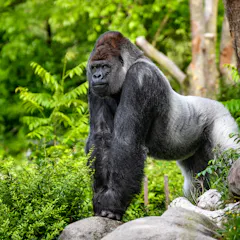
Beyond the jokes and memes, this silly debate provides an opportunity to reflect on human evolution.
Humans evolved late in Earth history. While this timing inspired the conclusion that humanlike life is a cosmic improbability, a new study pushes back.

Our understanding of human ancestry has changed dramatically since the discovery of Lucy the ancient hominin 50 years ago. Here is the history of humanity as we know it today.

Try to read this article without yawning.

It’s a question of evolution and adaptation.

The meaning of nature has shifted since the word was first used in the 15th century. But is changing the dictionary definition a good idea?
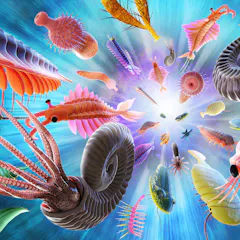
We may have become the most complex living creature in part by accident and replication of error.
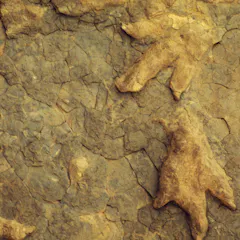
Some footprints last thousands or even millions of years, preserved in sand that turned to rock.
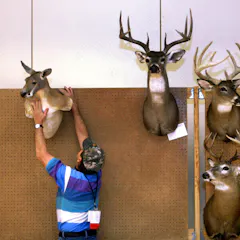
Humans must kill animals in many cases, but they can still modify their behaviours to improve the welfare of animals while they are alive.

Four graphs that show us how humanity’s impact on the planet is growing.
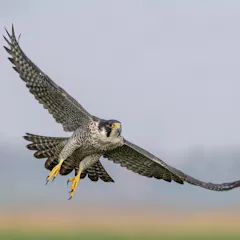
Lockdown wasn’t good news for London’s peregrine falcons.
Our lives are intertwined with animals, insects and birds – we should consider them more when we design our cities.
By learning what parts of the brain are crucial for imagination to work, neuroscientists can look back over hundreds of millions of years of evolution to figure out when it first emerged.
Top contributors
-

Associate Professor of Psychology, Rose-Hulman Institute of Technology
-
Chair of ARC Centre of Excellence for Quantum Biotechnology, The University of Queensland
-
Professor for Biology, Peking University
-
Professor of Clinical Neuropsychology, University of Cambridge
-
PhD Candidate in Anatomical Sciences, University of the Witwatersrand
-
Professor of AI and Public Policy, University of Salford
-
Lecturer of Palaeolithic and African Archaeology, University of Tübingen
-
Associate Professor, University of Wollongong
-
Professor of Wildlife Conservation, University of Oxford
-
Associate Professor of Archaeology, Griffith University
-
Postdoctoral research fellow, Macquarie University
-
PhD candidate in Archaeological Science, University of Wollongong
-
Lecturer in Management, SPRU, University of Sussex Business School, University of Sussex
-
Emeritus Professor, Fenner School of Environment & Society, Australian National University
-
Assistant Professor of Anthropology, The Ohio State University