
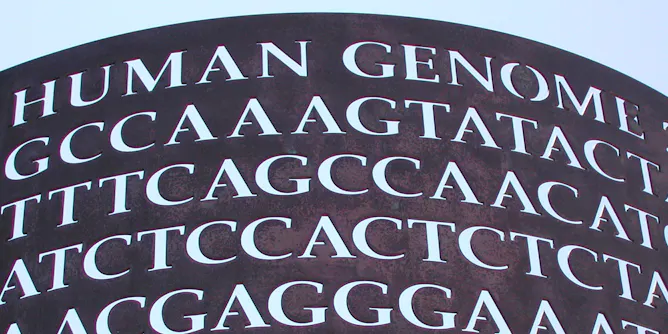
There’s still a lot we don’t know about how various genes are switched on and off. But a new project is seeking to shed light on the complex world of epigenetics.
Articles on Human Genome Project
Displaying 21 - 40 of 50 articles
Hidden among all the other announcements in last week’s State of the Union address by US President Barack Obama was a promise to fund a new “precision medicine initiative”. The president said it would…
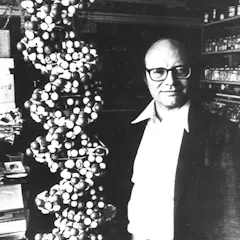
Walter Gilbert won the Nobel Prize in 1980 in Chemistry for his contribution to sequence DNA, or “determination of base sequences in a nucleic acid”. Mohit Kumar Jolly, researcher at Rice University and…
“Arthritis is for old people, right?” This is an outdated view of a spectrum of diseases that affect people of all ages in the population. In the past decade, there has been a revolution in the understanding…

The Human Genome Project was completed in 2003, mapping out all of the genes of the human genome. When the first draft of results were published many were surprised that we had only 24,000 genes. This…

Rapid technological advances mean it’s faster and cheaper than ever to read a person’s entire genetic code, known as the genome. Genomic sequencing has two potential applications in health: the care of…
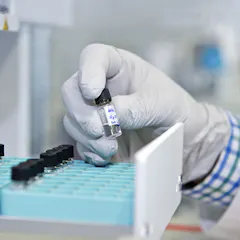
Public investment in the Human Genome Project was expected to deliver a global public good that would help generate scientific breakthroughs. But open access to our genetic blueprint is a precondition…

A leading molecular biologist and her children are visiting Sydney’s Royal Easter Show, but it’s 2053 now and things are slightly different. “Will there be chickens at the Easter Show?” asks Emily, the…
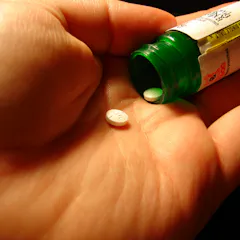
Pharmacogenomics is the study of drugs (pharmakon- the Greek word for poison or drug) and the genome. These two come together to explain why about 50% of medicines don’t work in some people and why they…

Thanks to the Human Genome Project we now have a complete genomic map. But, simply having a map doesn’t give you all the information. For a map to be useful, you still need know where to go, the best way…
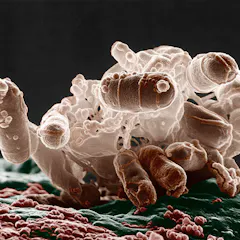
Bacteria are single-celled microorganisms abundant in nature that can’t be seen with the naked eye. In fact, there are approximately five multiplied by 10³¹ bacteria on the earth, constituting 90% of its…

Announcing the completion of the first draft of the human genome in 2000, then-US president Bill Clinton spelt out what this monumental achievement would mean for humankind, “With this profound new knowledge…
The Human Genome Project (HGP) – to put it simply – has changed science. It has contributed to making biology the science of the 21st century, as physics was the science of the 20th century. It has driven…

DNA previously written off as junk actually acts as a lever controlling genetic activity, leading to health or illness, reveals a massive new genetic mapping project. It’s been ten years since the human…
Hundreds of scientists have collaborated to compile the Encyclopedia of DNA Elements (ENCODE), a project that aims to describe…
Imagine a future where doctors take a strand of your hair or a drop of your blood and tell you your DNA predicts a 78% risk of developing heart disease. On the plus side, it also predicts exactly which…

For many decades humans have pursued work to characterise the human genome. Today, publicly available references to genome sequences are available and have been instrumental in effecting recent advances…

Yesterday on The Conversation, Timothy Smith from the Florey Neurosciences Institute argued that in order to improve genetics research, we need free and open access to genetic information. But while the…

A paper published today in Science Translational Medicine calls for the open sharing of clinical trial data among the medical research community. Researchers argue data sharing would lead to faster, more…

You’ve probably heard of BRCA1 and BRCA2 – the genes that, when mutated, markedly increase the risk of developing breast cancer. We’ve also known for a while that a handful of other genes also increase…
Top contributors
-

Honorary Fellow, Department of Pathology, The University of Melbourne
-
Chair Precision Medicine, Monash University
-
Professor of Genomics, The University of Melbourne
-
Head, Molecular Medicine Laboratory, WEHI (Walter and Eliza Hall Institute of Medical Research)
-
Professor in Functional Genetics, University of Aberdeen
-
Chair, The Conversation Media Group
-
Clinical Project Manager for the Melbourne Genomics Health Alliance, WEHI (Walter and Eliza Hall Institute of Medical Research)
-
Professor of Molecular Bioscience and Deputy Vice-Chancellor (Research), University of Sydney
-
MRC Special Training Fellowship in Biomedical Informatics, University of Birmingham
-
Adjunct Professor, Murdoch University
-
Executive Director, Melbourne Genomics Health Alliance
-
Senior Lecturer in Microbiology & Infectious Diseases, Western Sydney University
-
Research Scientist in Mathematics, Informatics and Statistics, CSIRO
-
Ph.D. Candidate in Chemical Biology, Harvard University
-
Associate Professor of Law, Bond University