

New research on the size relationship between brains and wisdom teeth suggests that bigger brains aren’t necessarily the driving force in human evolution.
Articles on Human evolutionary biology
Displaying all articles
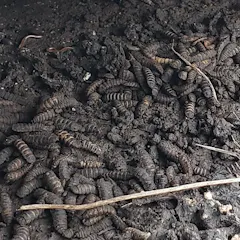
New research highlights the prevalence of maggots as an easily obtained, nutrient-rich supplement of ancient hominin diets.
Light helps explains the evolution of our skin colour, why some of us have curly hair, and the size of our eyes. And light still shapes us today.

New 700,000-year-old fossils from island east of Bali hint at ancient shrinking of extinct miniature humans.
A mysterious century-old law of genetics may explain the puzzling genetic legacy of our extinct Neanderthal cousins.
The story of human evolution is inextricable from the story of gynaecology.

Ancient humans chose to sleep less, which had evolutionary benefits. For modern humans, sleeping less is futile and detrimental, but fitness may be a powerful ally in today’s epidemic of sleep loss.
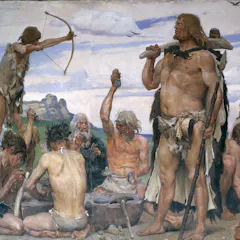
From Aristotle to Darwin, inaccurate and biased narratives in science not only reproduce these biases in future generations but also perpetuate the discrimination they are used to justify.
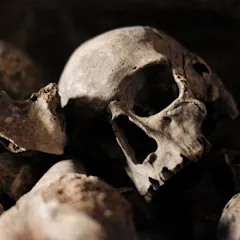
New genetic research shows humans’ famed ability to adapt our behaviour and develop new tools and techniques has not always been enough to survive when times have grown tough.

Listen to the first episode of Discovery, a new series available via The Conversation Weekly podcast, telling the stories of fascinating new research discoveries from around the world.

If COVID symptoms are less severe, people with the Omicron variant may be less likely to test and isolate.

Early humans called Denisovans lived in a remote mountain cave between 100,000 and 60,000 years ago, and possibly longer still, raising intriguing questions about their relationship to modern humans.

Genetic studies show mingling between populations has been the norm throughout human history.

A new study of centuries-old Mesoamerican statues lends weight to the idea that many human facial expressions are universal.

Recognizing the influence of evolution on behavior and gender norms suggests ways to reduce gender inequality in leadership in the real world.

Human genes are one of the main reasons we can’t grow wings. And even if humans did have wings, they wouldn’t necessarily allow us to fly.
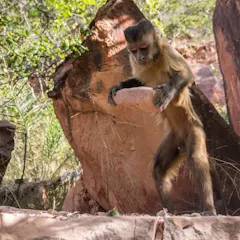
Capuchin monkeys in Brazil use big stones to crush the shells of nuts they want to eat. An experiment in the field investigated how these monkeys prepare to use new, unfamiliar tools.
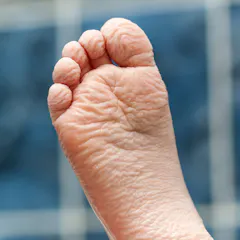
The truth is scientists aren’t exactly sure why our fingers and toes get wrinkly in the bath. But here’s what we know, and what we suspect.

Hidden forces are always at work in the world, and people always want to control them, a cognitive anthropologist explains. Enter the human universal of shamanism.
Top contributors
-

PhD Candidate in Human Evolutionary Biology, Harvard University
-
Professor of Anthropology, UCL
-
Assistant Professor of Biology, Penn State
-
Postdoctoral fellow, Australian National University
-
Professor of Forensic Genetics, University of Technology Sydney
-
Emeritus Strategic Professor in Palaeontology, Flinders University
-
Associate Professor, School of Behavioural and Health Sciences, Australian Catholic University
-
Group Leader, Genomics and Bioinformatics, Australian Centre for Ancient DNA, Adelaide University
-
Emeritus Professor, infectious disease ecology, Griffith University
-
PhD Student in Anthropology and Integrative Conservation, University of Georgia
-
Professor, University of Wollongong
-
Associate Professor of Anatomy, Howard University
-
PhD Candidate, Creative Writing, The University of Melbourne
-
Jenny Graves is a Friend of The Conversation.
Distinguished Professor of Genetics and Vice Chancellor's Fellow, La Trobe University
-
Associate Professor of Science & Medicine, Bond University