

The vast majority of people around the world are lactose intolerant. But American propaganda and scientific biases have made milk and dairy products a staple in global diets.
Articles on Scientific racism
Displaying 1 - 20 of 25 articles
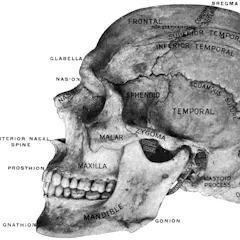
Craniometry, the study of skull measurements, was widely taught in medical schools in the nineteenth and early twentieth centuries.

An executive order critiques the idea that race is a human invention. But that’s exactly what modern science supports.
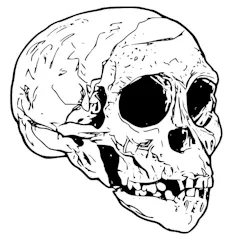
The history of human origins research is intimately intertwined with the prevalent socio-political landscape.

The US has a long history of misusing genetics and biology in immigration policy, the effects of which are still keenly felt today.

A recent summit in Canada tackled the challenge of how science can be more inclusive and better engage Indigenous communities.
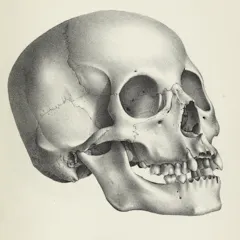
Marked with numbers, demographic information and provenance – though not name – these skulls tell a story of racist hierarchies but also diversity in the early United States.
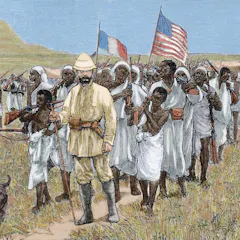
The name Africa was given to the continent by European explorers, exploiters, slavers and colonists. It ignores the indigenous people and their accomplishments.

The exhibit offers a close look at the problematic history of palaeoanthropology.
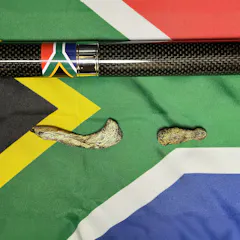
Experts insist there is no scientific reason for allowing these fossils to travel to space.

Hopefully more curators and custodians of repositories of human skeletal remains will attempt to redress some of the wrongs of the past.
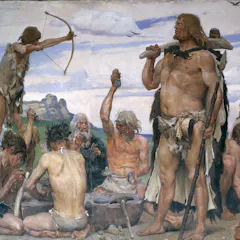
From Aristotle to Darwin, inaccurate and biased narratives in science not only reproduce these biases in future generations but also perpetuate the discrimination they are used to justify.
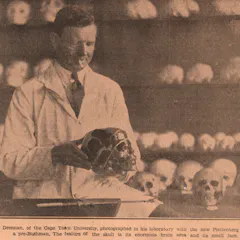
Scientists themselves seemed to be unaware that their lack of comment on the absurdity of apartheid was a statement in itself.
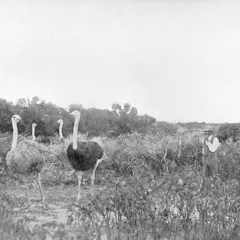
This book is a history of individuals, ideas and institutions that were at the fulcrum of important scientific developments.
Proposed legislation would identify and protect African American cemeteries. But it wouldn’t cover the remains of thousands of Black people in museum collections.
As editor of the magazine for 24 years, Du Bois featured articles about biology, evolution, archaeology in Africa and more to refute the rampant scientific racism of the early 20th century.

Genetic studies show mingling between populations has been the norm throughout human history.
There are some moves towards recognising and redressing archaeology’s colonial history.

Modern western science must be stripped of the epistemological and methodological privileges it enjoys.

The belief that ancient Egyptians needed help from supernatural beings to built the Giza pyramids relies, unavoidably, on racism and colonial attitudes.
Top contributors
-

Professor, Department of Archaeology and Human Evolution Research Institute, University of Cape Town
-
Associate professor, University of Cape Town
-
Professor of History, UMass Amherst
-
Associate Professor at the Wits Institute for Social & Economic Research, University of the Witwatersrand
-
Assistant Professor of Sociology, University at Buffalo
-
Chief Curator of Art & Social History, Iziko Museums of South Africa
-
Smuts Professor of Commonwealth History, University of Cambridge
-
Associate Professor of Anatomy, Howard University
-
Distinguished Professor of Curriculum Studies, Stellenbosch University
-
Professor of Biological Anthropology, University of Cape Town
-
Director, Palaeo Institute, University of Johannesburg
-
Professor in Biological Anthropology, Division of Clinical Anatomy and Biological Anthropology, University of Cape Town
-
Professor, University of Oxford
-
Professor of Forensic Genetics, University of Technology Sydney
-
Senior Research Officer Khoe and San Studies, University of Cape Town