

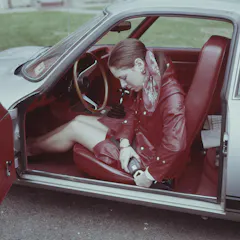
When it comes to transportation, there’s a hidden danger in choosing what feels safer.
Articles on Human behavior
Displaying 1 - 20 of 38 articles
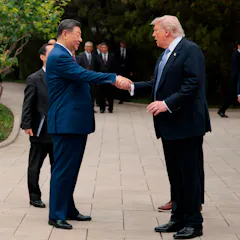
The handshake is one of the most ancient and familiar gestures. It has carried many meanings – signalling trust and alliance, but also grief and deception.
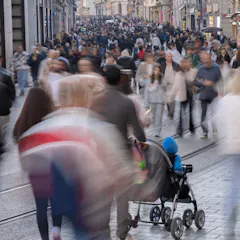
Urban digital twins pull together tremendous amounts of data to realistically model cities, but they’ve been missing a critical ingredient: people.

A study of more than 400,000 people found 1% had never had sex – which was linked to a range of genetic, environmental and other factors.
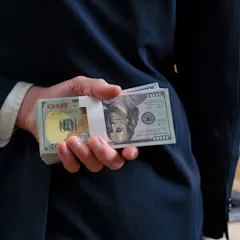
If you want to get involved in shady business, find someone who’s loyal − but not ethical.
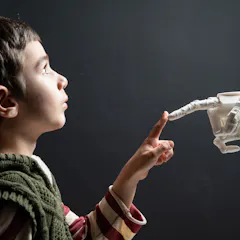
Social robots can be useful tools to help students learn about programming, but here’s why they won’t be replacing classroom teachers anytime soon.

How much does human behavior influence climate change? Can it be changed, and how? In June, climate change experts and behavioral scientists came together to answer these important questions.
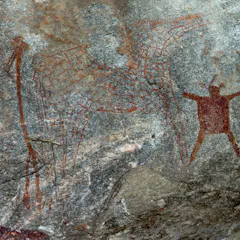
A new study doubles the age of ancient DNA in sub-Saharan Africa, revealing how people moved, mingled and had children together over the last 50,000 years.

New research shows that though we are good at making healthy choices for those we care for, we are often subsequently less good at taking care of ourselves.
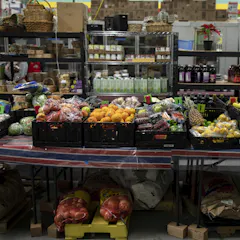
Behavioral economics, long employed in grocery stores to guide customers to certain products, could be employed by food banks and pantries to encourage healthier choices.
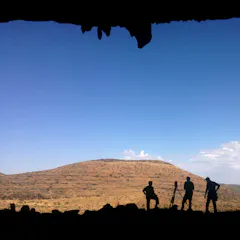
Researchers unearthed the 105,000-year-old artefacts from a spiritual site in southern Africa. Although far from the coast, the area is associated with stories of a great water snake.
Public health recommendations have always been a hard sell. Resistance to new behaviors – like the mask-wearing and social distancing advised during the COVID-19 pandemic – is part of human nature.
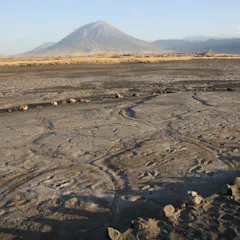
The footprints of over 20 different prehistoric people, pressed into volcanic ash thousands of years ago in Tanzania, show possible evidence for sexual division of labor in this ancient community.

Faced with uncertain and anxious times, brains send out instructions to start stockpiling supplies – whether you’re a person facing a pandemic, or a rodent prepping for a long winter.
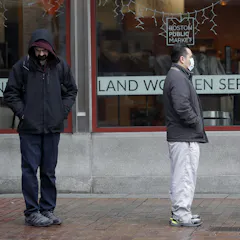
Using a survey taken from March 10 – March 16, social scientists tried to untangle the complicated connection between feelings of vulnerability and behavior change in response to the coronavirus.
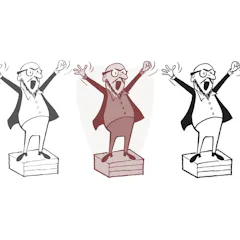
People who act holier than thou aren’t necessarily better than the rest of us. In fact, their moral grandstanding may be driving society apart.
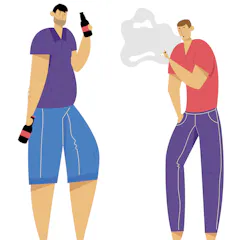
It’s incredibly difficult to will away bad habits. But two simple strategies can make things easier.
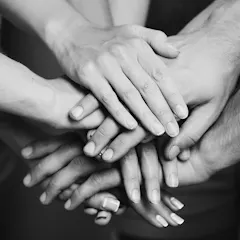
Where do the cooperative skills that hold together human societies come from and why don’t our selfish instincts overwhelm them? Evolutionary game theory suggests that empathy is a crucial contributor.
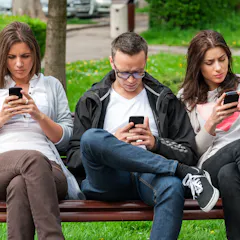
Americans are spending almost three and a half hours on their phones and tablets every day, twice the amount just five years ago. A behavioral scientist offers a few tips on how to take control.
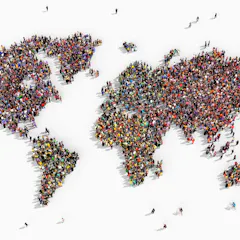
Ninety percent of psychology studies come from countries representing less than 15 percent of the world’s population. Researchers are realizing that universalizing those findings might not make sense.
Top contributors
-

University Professor, Harvard University
-
Professor of Computer Science, Games, Analytics and Business Intelligence, University of Southern Denmark
-
Dwight F. Benton Professor of Marketing, University of Michigan
-
Postdoctoral Scholar in Psychology, University of Chicago
-
Emeritus Professor of Sociology, University of Nevada, Las Vegas
-
BehaviourWorks Australia, Monash Sustainable Development Institute, Monash University, Monash University
-
Professor of Communication & Director of the School of Communication, The Ohio State University
-
Associate Professor of Quantitative Psychology, University of Montana
-
Professor and Associate Director of the School of Human Evolution and Social Change , Arizona State University
-
Professor of Psychology and Education, USC Dornsife College of Letters, Arts and Sciences
-
Ph.D. Candidate, USC Dornsife College of Letters, Arts and Sciences
-
Emerita Professor of Religious Studies, San Diego State University
-
Ph.D. candidate in Experimental Program, University of Montana
-
Emerita Provost Professor of Psychology and Business, USC Dornsife College of Letters, Arts and Sciences
-
Harvard University