Law professor Cass Sunstein, on why behavioural science is always nudging us
The Conversation20.5 MB(download)
Governments and businesses are using "nudges" to influence our choices, but how? On this podcast episode, Cass Sunstein, a Harvard professor who wrote the book on nudges, unpacks behavioural science.
What happens when an entire society succumbs to childlike behavior and discourse?
Elantseva Marina
Our social institutions and politics suffer from a collective arrested development – and our relationship to technology has only exacerbated this trend.
We’ll say someone’s brainwashed only when we disagree with their beliefs or actions.
lolloj/Shutterstock.com
Forty years ago, Rebecca Moore’s two sisters helped plan the Jonestown massacre. But she refuses to say they were brainwashed, arguing that it prevents us from truly understanding their behavior.
Trump and Putin shake hands at the conclusion of their joint news conference.
AP Photo/Pablo Martinez Monsivais
It was long thought that humans everywhere favor pointing with the index finger. But some fieldwork out of Papua New Guinea identified a group of people who prefer to scrunch their noses.
Big data makes it a bit easier to guess your next move.
blackboard1965/shutterstock.com
Government initiatives to prod people to make better decisions got a lot of attention after Richard Thaler won a Nobel in economics for his working on nudging.
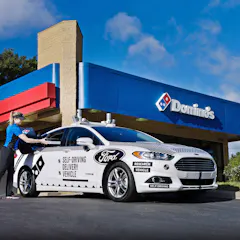
Ford and Dominos have teamed up to deliver pizza by driverless cars in a public test in Michigan.
Handout
Daphna Oyserman, USC Dornsife College of Letters, Arts and Sciences and Oliver Fisher, USC Dornsife College of Letters, Arts and Sciences
A high school science test, a Psych 101 course, long job applications: Sometimes it’s hard to be motivated to succeed. As it turns out, how you respond to difficulty and ease can make all the difference.
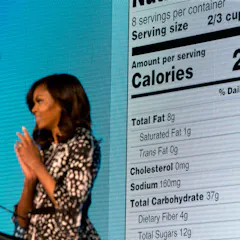
We can encourage people to make healthy adjustments to their diets with simple behaviour techniques.
Anas Maarawi/Flickr
A lot of money is spent by food producers and retailers to try and influence the type of food we buy and eat. But what can be done to encourage healthier choices?
What if people don’t tell pollsters the truth?
Liar image via www.shutterstock.com.
The polls convinced many that Clinton was headed to the White House. But the polls were misleading – and one behavioral scientist thinks emotion led respondents to mislead pollsters on purpose.
Charles Manson, pictured during his trial.
AP Photo
A professor’s extra credit question goes to show how, as humans, we do care for each other. The challenge is: how do we apply it to more pressing problems of the world?