

Rolleston near Christchurch is rapidly expanding, with more fast-tracked development coming. It’s a far cry from the ‘town of the future’ planned in the 1970s.
Articles on housing development
Displaying 1 - 20 of 23 articles
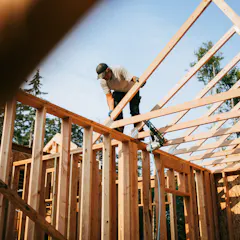
Rule changes to allow larger granny flats follow a well-established pattern in New Zealand: modest reforms to address big and complicated problems.

Access to finance is a significant barrier for Māori communities wanting to develop housing on collectively owned land. Community initiative Whare Ora shows what can be done.

A new report highlights the extent that housing developers fail to deliver on their ecological commitments.
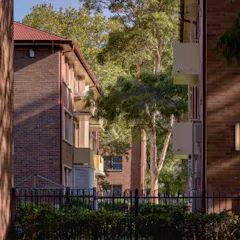
Our research shows decent homes could be lost – and the social and environmental costs of demolition should not be ignored.

The simplicity of green belt policy means these protected countryside spaces have stood the test of time, but they haven’t adapted to changing needs or pressures.
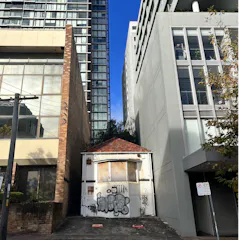
Healthy planning debates shape our cities for the better and should not exclude anyone based on crude characterisations of their motives.
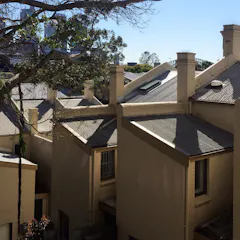
Pattern book housing has been proposed as a way to speed up housing supply in New South Wales. It certainly worked in the past.

An approach to building homes collectively, inspired by German baugruppen, has been adopted in Australia with positive results.
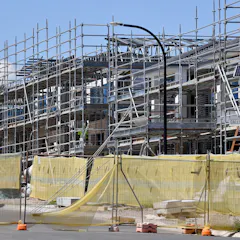
Bypassing planning regulations is likely to have impacts on social inequity and wellbeing that could prove very costly for both governments and people.

Ontario Premier Doug Ford’s plan to allow developers to build projects on parts of the Greenbelt was under the auspices of providing additional housing. But it would never have been affordable.

Having a small backyard in outer suburban developments doesn’t make up for everything else that’s missing in these new neighbourhoods.

Inner-city resistance to higher-density housing has diverted most of Sydney’s population growth, driven largely by non-white migrants, to the outer suburbs. The result is a racially divided city.
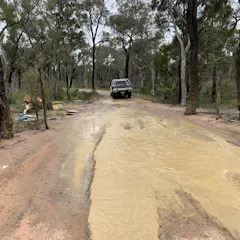
Local Aboriginal Land Councils are some of the largest private landowners in NSW. Making it easier for them to develop their land will benefit Indigenous communities and the rest of the public.
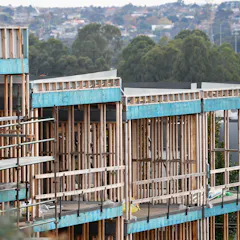
Build-to-rent developments have been touted as a way to deliver affordable housing on a large scale. But, to date, the sector has not been focused on housing for people on lower incomes.
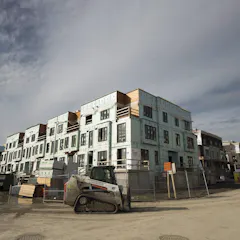
Poorly regulated housing is leading to more greenhouse gas emissions through energy loss, increased energy requirements and greater exposure to weather extremes.
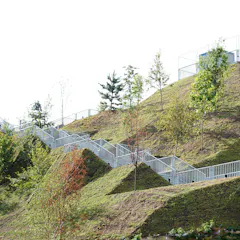
Pop-up spaces can be successful, they just need to be better thought through and created with urban ecology in mind rather than economics.
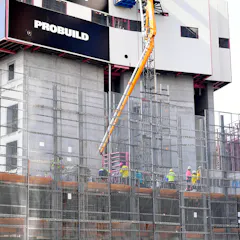
The rise of build-to-rent development will affect a lot of Australians. Despite the rosy promises, tax, design, planning and tenancy reforms will be needed to avoid the potential pitfalls.

Most local councils, developers and nonprofit providers want mandatory affordable housing requirements applied to all development. The current system of voluntary negotiations just isn’t working well.

Electric trains use seven times less carbon dioxide than cars. With careful planning, railways could drastically cut emissions from a sector that now accounts for a quarter of the carbon in our air.
Top contributors
-

Teaching Assistant Professor, University of Pittsburg and Visiting Associate Professor, The University of Osaka, University of Pittsburgh
-
Research fellow, University of Southern Queensland
-
Professor of Architecture, University of Lincoln
-
Associate Professor in Property, The University of Melbourne
-
Adjunct Associate Professor in Urban Planning, Western Sydney University
-
Senior Lecturer in Urbanism, University of Sydney
-
Scientia Senior Lecturer, Cities Institute, UNSW
-
Professor in Environmental & Landscape Planning, University of Manchester
-
Associate Professor, Auckland University of Technology
-
Associate Professor of Urban Development, Bond University
-
ARC DECRA Fellow at the Centre for Urban Research, RMIT University
-
Lecturer in Architecture, Atlantic Technological University
-
Associate professor, Adelaide University
-
Associate Professor, School of Planning, University of Waterloo
-
Research Active Lecturer, Discipline of Psychology, Charles Darwin University, Charles Darwin University