
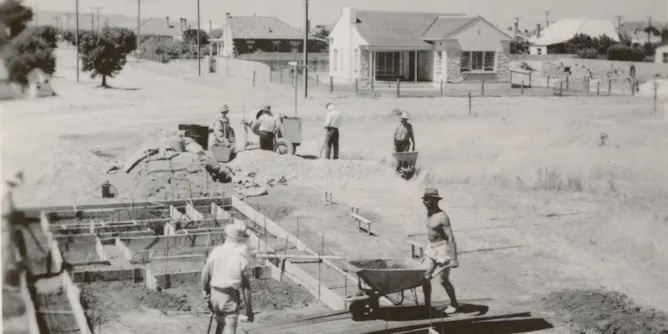
When Australia faced a housing crisis 80 years ago, the government was urged to promote the building of more climate-responsive homes. So why are so many homes today still not made for our climate?
Articles on Housing design
Displaying 1 - 20 of 34 articles
We know what needs to be done, but it depends on the political will to act. And some states and territories have failed to adopt actions to improve housing quality that were agreed in 2022.

By 2050, 25% of the UK population will be over 65, yet only 9% of the country’s current homes meet basic accessibility standards.
Pattern book housing has been proposed as a way to speed up housing supply in New South Wales. It certainly worked in the past.

A new report outlines a comprehensive strategy for Australia to reduce the carbon footprint of our homes while making them more comfortable and affordable.
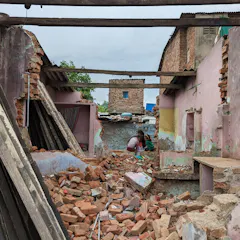
The goal of a ‘slum-free India’ would benefit residents of informal settlements more if the housing being built drew on the features of their old neighbourhoods that made their lives better.

Throughout last winter, 81% of homes in a new study were colder than the recommended minimum – the coldest fell to a minimum hourly average of 5 degrees. Cold homes can have deadly consequences.
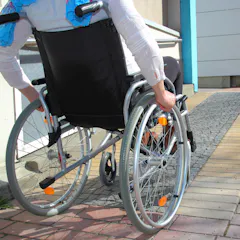
A serious disability is one of the most common reasons people apply for social housing. The long wait for a suitable home just adds to the daily challenges they face.

Housing standards in Australia have slipped behind the rest of the world. But momentum is growing to revive past ambitions to build the best homes we can.
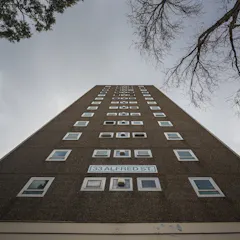
Much of our public housing stock is ageing and substandard. But we can learn from outstanding examples of retrofit projects that have transformed existing blocks into high-quality housing.
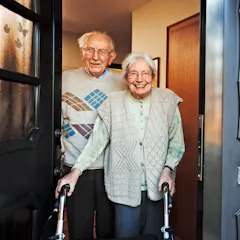
In a study of people receiving community care, home modifications liberated them to live at home safely and independently. Hours of care were cut by 42% and quality of life improved by 40%.
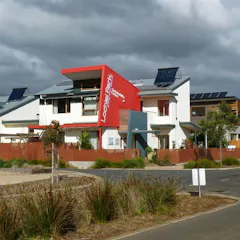
There has never been a better time for public money to go into improving the performance of Australian housing. We could have cut household bills and emissions, as well as saving construction jobs.

How many of us have recently wished we could partition parts of our home, even to have a small second house? Being able to do this on existing blocks would help meet the many needs of families today.
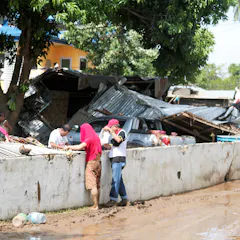
Months after Typhoon Washi tore through the Philippines in 2011, relocated residents were moving into newly built housing. They soon began modifying and extending homes that didn’t meet their needs.

While a majority of householders over 55 have thought about downsizing, only one in four have done it. What’s stopping them? Most simply can’t find a home in the right place that meets their needs.
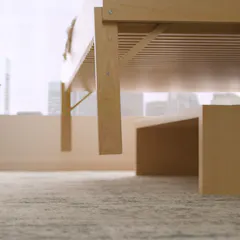
With space at a premium, robotic furniture can transform a room in seconds. How will this affect our sense of belonging and feeling at home, when everything can change with a voice command?
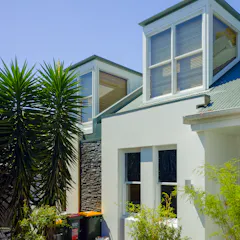
Australians’ need for smaller and more diverse dwellings is growing. The planning system is not providing enough of this housing, and self-serving opposition to it should be resisted.

The research has been done. The evidence is in. We know how to create cities that are sustainable, liveable and affordable. But we have yet to apply that knowledge widely across Australian cities.

Almost half of apartment residents in Australia are families, but few high-rise dwellings were built with them in mind. Many find these apartments present barriers to building social connections.
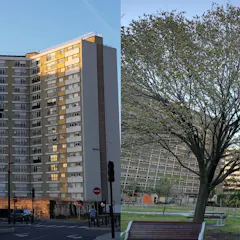
Whether in Melbourne or in Paris, African immigrants face social and cultural challenges, which public housing can either add to or help overcome.
Top contributors
-

Associate Professor in Architecture, Adelaide University
-
Associate Professor in Property, Construction and Project Management, RMIT University
-
Professor of Housing Research, Adelaide University
-
Lecturer in Humanitarianism and Development, Deakin University
-
Adjunct Senior Research Fellow, Monash University
-
Chair Professor of Architecture, UNSW
-
Senior Research Fellow, City Futures Research Centre, UNSW
-
Senior Lecturer - Energy, Queensland University of Technology
-
Senior Lecturer, Queensland University of Technology
-
Senior Lecturer in Urban and Environmental Planning, Griffith University
-
Professor, Rehabilitation, Ageing and Independent Living Research Centre and Occupational Therapy Department, School of Primary and Allied Healthcare, Monash University
-
Professor of Economic Geography, Institute for Culture and Society, Western Sydney University
-
Research assistant, Western Sydney University, UNSW
-
Senior Research Fellow, City Futures Research Centre, UNSW Sydney, UNSW
-
Professor, City Futures Research Centre, UNSW