

AIDS and HIV are still major health threats, fueled by poverty and discrimination as much as by the virus responsible for the infection.
Articles on HIV
Displaying 301 - 320 of 434 articles

When it comes to sexual health, public information has tended to focus on the young. Time for a change.

The stories of HIV positive women in Tanzania often go unheard outside the communities in which they live.

Ignoring those at ‘high risk’ of HIV in order to sustain the idea of the ‘good’ gay man will only perpetuate the virus.

The annual surveillance report of sexually transmissible infections and blood borne viruses in Australia has found notifications of sexually transmissible infections are on the rise in Australia.
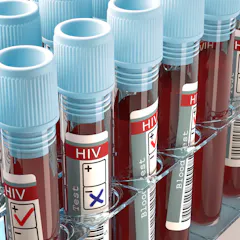
HIV diagnosis is devastating for patients and their families. But the infection is no longer a death sentence, and should not be prosecuted as such say experts.

When people migrate they can end up worse off when it comes to getting access to health care. Analysing migration trends can help drive local public health policy towards the correct targets.

Two musicals set in working class mining communities – one in the UK and the other in South Africa – have diametrically opposed messages: one of hope; the other, despair.

Studies have suggested that women using a particular kind of injectable contraceptive are more susceptible to HIV infection. Research in mice offers new insights.

Efficacy is estimated to be as high as 99% in men who have sex with men who take Truvada daily.
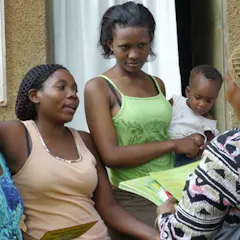
Many women across the world feel unable to refuse sex or request condom use. Empowering them could help bring down HIV rates.

Curing HIV – or at least achieving long-term remission – is possible, under the right circumstances.

Three new studies conducted in South Africa provide insights into the engine that drives HIV transmission in the country.

Worldwide, around 30 million people enter and leave prison each year. Of these people, around 4.5 million have hepatitis C, almost 1 million have HIV and 1.5 million have hepatitis B infections.

Activists, health-care workers and scientists in South Africa were faced with a horrific epidemic but went on a ruthless crusade to turn it around.
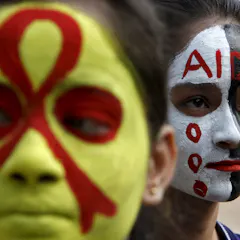
The 90-90-90 strategy is an attempt to get the HIV epidemic under control by adopting a ‘test and treat’ approach. This is part of the plan to eliminate AIDS by 2030.

There are good reasons for drawing attention to “the end of AIDS” in Australia. But this needs to be read with caution.

Many men are still acquiring HIV during gay sex but it’s a complex issue not easily explained by niche activities such as chemsex parties.

In the the wake of the Orlando massacre, many people directly affected by this homophobic hate crime are prevented from offering help due to homophobic regulations.

Consensual same-sex conduct is a crime in 38 African countries. The media in those countries are very much in cahoots with their rulers. But they’re getting their comeuppance from Twitter.
Top contributors
-

Associate Professor, Public Health Ethics, School of Population Health, UNSW
-
Professor of medicine and deputy director of the Desmond Tutu HIV Centre at the Institute of Infectious Disease and Molecular Medicine, University of Cape Town
-
Distinguished Professor, Infectious Disease and Oncology Research Institute, Faculty of Heath Sciences, University of the Witwatersrand, Executive Director Perinatal HIV Research Unit, Chief Scientific Officer, South African Medical Research Council
-
Melbourne Laureate Professor, University of Melbourne; Director, The Peter Doherty Institute for Infection and Immunity
-
Principal Research Fellow, Australian Research Centre in Sex, Health and Society, La Trobe University
-
Doctoral Researcher, School of Public Health and Public Health Technical Advisor, Anova Health Institute, University of the Witwatersrand
-
Assistant Professor of Public Health, University of Iowa
-
Honorary Research Associate, Centre for Infectious Disease Epidemiology and Research, University of Cape Town
-
Ezintsha, Faculty of Health Sciences, University of the Witwatersrand, University of the Witwatersrand
-
Associate Professor, Monash University
-
Research Director at The Health Economics and HIV and AIDS Research Division (HEARD), University of KwaZulu-Natal
-
Dean Faculty of Health Sciences and Professor of Vaccinology at University of the Witwatersrand; and Director of the SAMRC Vaccines and Infectious Diseases Analytics Research Unit, University of the Witwatersrand
-
Research Scientist, African Population and Health Research Center
-
Professor of Gender Studies, Chair in Sex Media and Sex Cultures, Linköping University
-
Scientia Professor of Medicine and Director, Kirby Institute, UNSW