
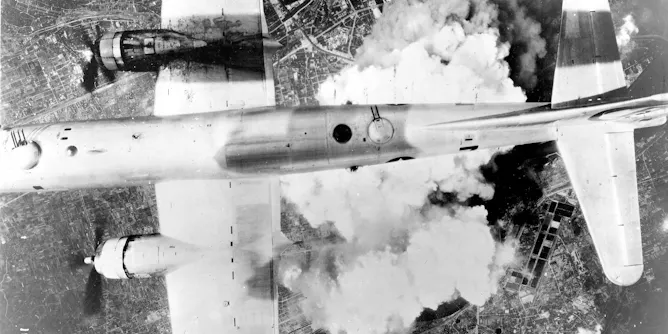
80 years after the bombings of Hiroshima and Nagasaki, many of Orwell’s predictions have come true.
Articles on Hiroshima and Nagasaki atomic bombs
Displaying 1 - 20 of 29 articles

The voices of the Hibakusha offer not only memory, but also moral clarity in an age of growing peril.
In the wake of the US attacks, the international community asked itself how it could ensure that such horrors were never repeated.
In August 1945, atomic bombs were dropped on the Japanese cities of Hiroshima and Nagasaki. Ever since, survivors have struggled with discrimination as well as illness.
Like the Japanese atomic survivors who were awarded the 2024 Nobel Peace Prize, Godzilla has a message to share.

Christopher Nolan’s historical drama took home seven Oscars, but the film conspicuously avoids Oppenheimer’s intimate involvement in how his diabolical weapon was used – and where.

For all its praise, the film furthers the dominant narrative of the bombs as a morally fraught but necessary project, with American anxieties playing a starring role.
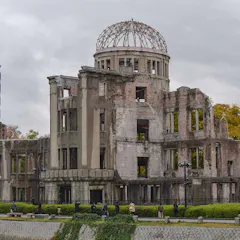
World heritage sites play an essential role in advancing Unesco’s goals, but more foresight is needed to imagine and enable promising strategies that address the needs of future generations.
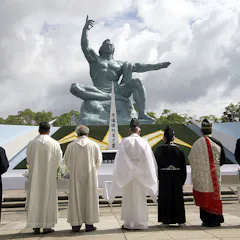
As Japanese victims struggled to process the nuclear attack, many turned to religion. The way they understood the horror still has consequences today.
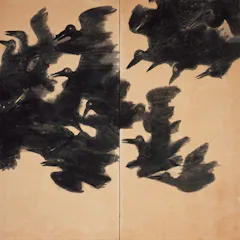
Maruki Iri and Maruki Toshi were witness to the direct aftermath of the nuclear bomb on Hiroshima. The art they created is striking.

British newspapers were very quick to see the horrific potential of this new weapon.
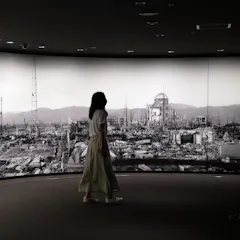
What if there was another nuclear incident in the US? A disaster management scholar looks back at the history of nuclear events to assess the risk.

As Pope Francis becomes the first pontiff in the nuclear era to call for total disarmament, all of us – whether secular or religious – can engage through creative and proactive moral responsibility.
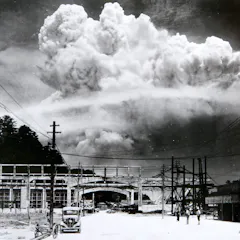
With the risk of a nuclear conflict seeming higher than ever, how much do EU citizens really know about nuclear weapons and their use? A new survey provides striking answers.
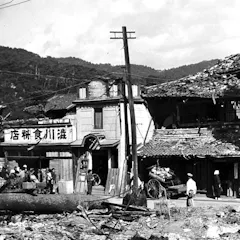
Though it causes great personal pain, Hiroshima’s last remaining orphans still want the world to hear their stories, 75 years on.

According to most physicists, there is no safe dose of radiation. So why would the EPA consider saying otherwise? Who stands to gain if the EPA declares low-dose radiation harmless?

When the United States dropped atomic bombs on Hiroshima and Nagasaki in 1945, it unleashed one of the most devastating events in history, which still has implications today.
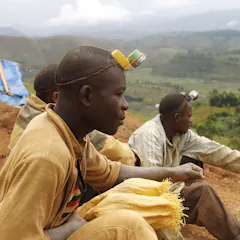
The mine that produced the uranium that made the Hiroshima bomb has since been closed. But its troubling legacy continues to haunt the Democratic Republic of Congo and the local community.

What are the implications of North Korea’s claims to have detonated a thermonuclear weapon?
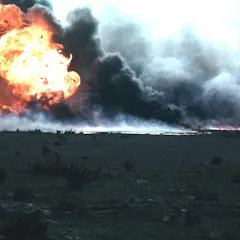
Acts perpetrated during the course of warfare have, through the ages, led to significant environmental destruction.
Top contributors
-

Affiliated Researcher, The Open University
-
University Professor Department of Health Policy & Management, University of Georgia
-
Carole Sargent is a Friend of The Conversation.
Literary Historian, Georgetown University
-
Honorary Principal Fellow, School of Population and Global Health, The University of Melbourne
-
Scientist-in-Residence and Adjunct Professor, Middlebury College
-
Researcher in Security and Defence, the Policy Institute at King's, King's College London
-
Assistant Professor of History, Mississippi State University
-
Pro Vice-Chancellor Research and Professor of International Studies, La Trobe University
-
Professor of Archaeology, Linnaeus University
-
Professor in Human Rights and International Law, University of Newcastle
-
Emeritus Professor of International Law, Western Sydney University
-
Professor of History, Claremont Graduate University
-
Lecturer, National Centre for Australian Studies, Faculty of Arts, Monash University
-
Senior Lecturer in the Politics of Japan, University of Kent
-
Senior Research Fellow, Institute of Commonwealth Studies, School of Advanced Study, University of London