

Some 80 years ago, Nagasaki residents faced the seemingly impossible task of rebuilding a devastated city. A similar challenge faces those in Gaza today.
Articles on Hiroshima
Displaying 1 - 20 of 47 articles

As numbers of atomic bomb survivors decline, can such deeply personal, traumatic memories truly be passed on to someone who did not live through them?

If the nuclear bomb was born out of fear, then ensuring it is never used again requires replacing fear with trust.

The voices of the Hibakusha offer not only memory, but also moral clarity in an age of growing peril.
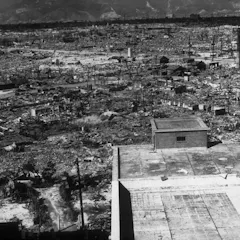
In the wake of the US attacks, the international community asked itself how it could ensure that such horrors were never repeated.
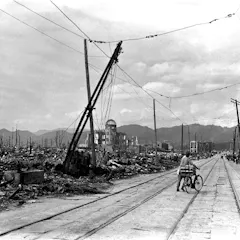
In August 1945, atomic bombs were dropped on the Japanese cities of Hiroshima and Nagasaki. Ever since, survivors have struggled with discrimination as well as illness.

Nihon Hidankyo is not alone in winning the Nobel peace prize for its efforts to achieve a world free of nuclear weapons.
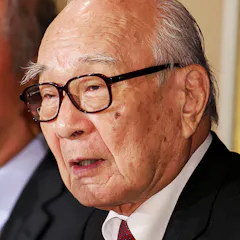
The 2024 Nobel peace prize has been awarded to Japanese anti-nuclear group, Nihon Hidankyo.

Christopher Nolan’s historical drama took home seven Oscars, but the film conspicuously avoids Oppenheimer’s intimate involvement in how his diabolical weapon was used – and where.
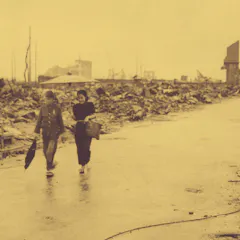
A classic of modern Japanese literature, Black Rain has come to exemplify ‘atomic bomb literature’.

The United States and Russia, the two biggest nuclear powers, have no imminent plans for talks on a nuclear deal. That should change, writes a former US diplomat.
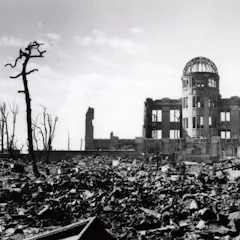
The heads of the some of the most powerful countries in the world would be wise to listen to the devastating testimony of Hiroshima survivors.
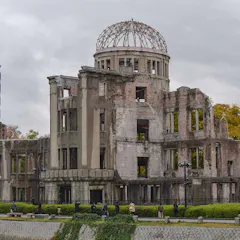
World heritage sites play an essential role in advancing Unesco’s goals, but more foresight is needed to imagine and enable promising strategies that address the needs of future generations.
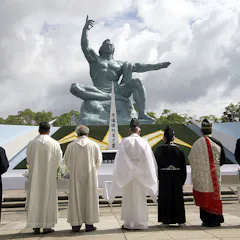
As Japanese victims struggled to process the nuclear attack, many turned to religion. The way they understood the horror still has consequences today.
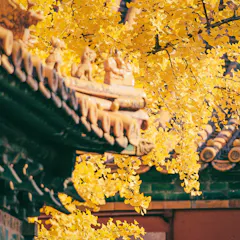
Maidenhair trees, Ginkgo biloba, can live for over 1,000 years and grow 35m tall. While they’re beautiful to look at, they’re also notorious for their vomit-smelling seeds.
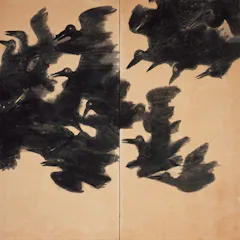
Maruki Iri and Maruki Toshi were witness to the direct aftermath of the nuclear bomb on Hiroshima. The art they created is striking.
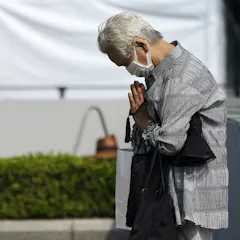
The hibakusha (survivors) of the 1945 bombings have been among the most tireless campaigners for the treaty. The Japanese government, however, has not supported it.

Seventy-five years after the atomic bomb was dropped on Hiroshima and Nagasaki, the people of Délı̨nę remain affected by Canada’s role in the attack. A documentary presents their stories.
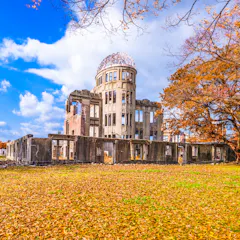
The threat of nuclear war has not diminished, despite the lessons learned from the Hiroshima and Nagasaki bombings in 1945.

British newspapers were very quick to see the horrific potential of this new weapon.
Top contributors
-

Affiliated Researcher, The Open University
-
Assistant Professor of History, Mississippi State University
-
Senior Lecturer, Japanese Studies, University of New England
-
Lecturer in Contemporary Literature, La Trobe University
-
Senior Lecturer, School of Geography, Politics and Sociology, Newcastle University
-
Professor of History, Claremont Graduate University
-
University Professor Department of Health Policy & Management, University of Georgia
-
Associate Professor in English and American Literature, Nottingham Trent University
-
Professor of Physics, Massachusetts Institute of Technology (MIT)
-
Emeritus Professor of International Law, Western Sydney University
-
Herman Feshbach Professor of Physics, Nobel Laureate, Massachusetts Institute of Technology (MIT)
-
Carole Sargent is a Friend of The Conversation.
Literary Historian, Georgetown University
-
Adjunct Professor of Political Science, Villanova University
-
Professor of History, University of Maryland, Baltimore County
-
Pre-doctoral researcher, University of Cambridge