
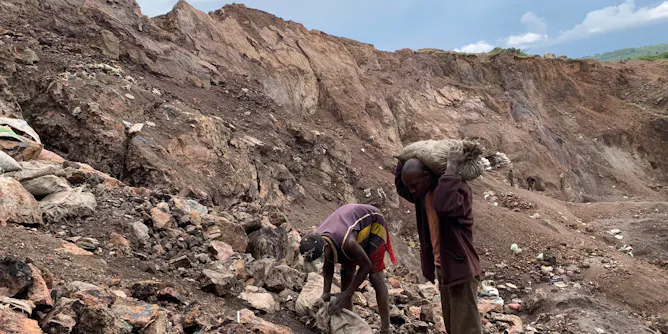
The amount of undeclared uranium from the DRC’s cobalt mines could – if processed – produce enough material for 600-1,500 nuclear weapons.
Articles on Atomic bombs
Displaying 1 - 20 of 28 articles
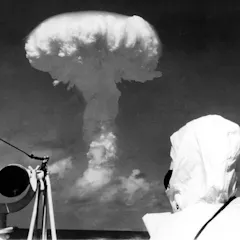
Communities and servicemen have long argued they were harmed by fallout from above-ground nuclear weapons tests – but the UK government has always denied this.

80 years after the bombings of Hiroshima and Nagasaki, many of Orwell’s predictions have come true.

If the nuclear bomb was born out of fear, then ensuring it is never used again requires replacing fear with trust.

For all its praise, the film furthers the dominant narrative of the bombs as a morally fraught but necessary project, with American anxieties playing a starring role.
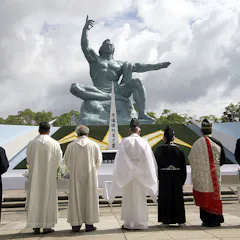
As Japanese victims struggled to process the nuclear attack, many turned to religion. The way they understood the horror still has consequences today.
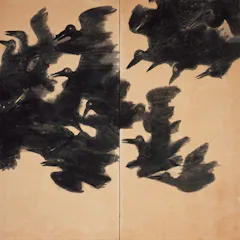
Maruki Iri and Maruki Toshi were witness to the direct aftermath of the nuclear bomb on Hiroshima. The art they created is striking.
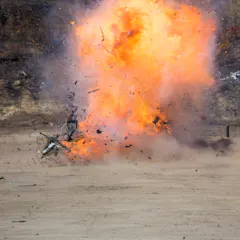
What happens when a bomb explodes? This unique ‘blast lab’ found out.
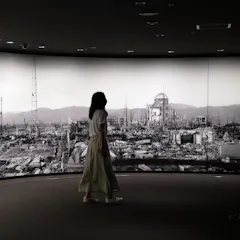
What if there was another nuclear incident in the US? A disaster management scholar looks back at the history of nuclear events to assess the risk.
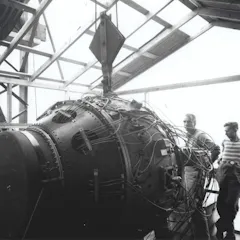
Seventy-five years ago, the first atomic bomb exploded and a new world dawned.
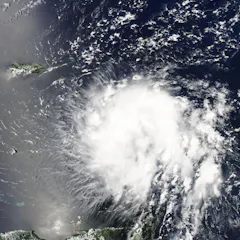
At best, nuking a hurricane will do nothing, and at worst it will spread radioactive fallout around the world.

The crucial phase of our discovery of black holes took place in a suitably dark period of human history – World War II.

When the United States dropped atomic bombs on Hiroshima and Nagasaki in 1945, it unleashed one of the most devastating events in history, which still has implications today.
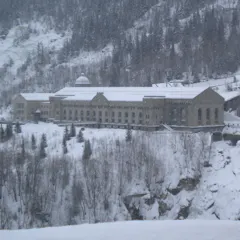
Feb. 28 marks the 75th anniversary of Operation Gunnerside. A stealthy group of skiing commandos took out a crucial Nazi facility and stopped Hitler from getting the atomic bomb.
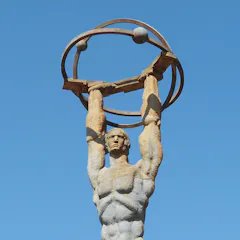
By figuring out fission, physicists were able to split uranium atoms and release massive amounts of energy. This Manhattan Project work paved the way both for atomic bombs and nuclear power reactors.

The Maralinga atomic tests were devastating to life and land in Central Australia. Black Mist Burnt Country brings together dozens of artistic responses in a powerful, but somewhat incoherent memorial.

On September 27, 1956, an atomic mushroom cloud rose above the Maralinga plain - the first of seven British bomb tests. Why was Australia so keen to put UK military interests ahead of its own people?
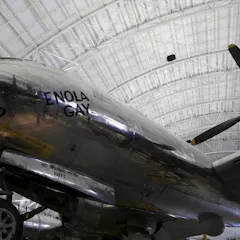
The Soviet Union tested its own atomic bomb in 1949, to the profound shock of the US. This heated up the Cold War dramatically and thrust the Congo to the centre of American geopolitical strategy
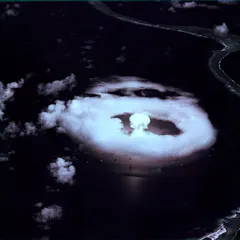
In the summer of 1946, the U.S. government detonated the first of many atomic bomb tests in the Marshall Islands. Seventy years of radiation exposure later, residents are still fighting for justice.

Hiroshima and Nagasaki were but two cataclysms among many: in the literal sense, they were unremarkable.
Top contributors
-
 Timothy J. Jorgensen is a Friend of The Conversation.
Director of the Health Physics and Radiation Protection Graduate Program and Professor of Radiation Medicine, Georgetown University
-
Assistant Professor of History, Mississippi State University
-
Associate Professor in English and American Literature, Nottingham Trent University
-
Professor of Nuclear Physics, Michigan State University
-
Professor in Human Rights and International Law, University of Newcastle
-
Professor and head of professional development GRS, James Cook University
-
Professor of History, Claremont Graduate University
-
Adjunct Professor of Political Science, Villanova University
-
Affiliated Researcher, The Open University
-
Professor of Physics, Michigan State University
-
Associate Professor of International Relations, The University of Queensland
-
Lecturer in Contemporary Literature, La Trobe University
-
Visiting assistant professor, Universidade Federal do ABC (UFABC)
-
Professor of Religious Studies, DePaul University
-
Senior Lecturer in Geotechnical Engineering, University of Sheffield