

What does the Seychelles experience tell us about variants, vaccine efficacy and herd immunity?
Articles on Herd immunity
Displaying 41 - 60 of 122 articles

A scholar of the Rwandan genocide argues that while a genocide and a pandemic are very different, the experiences of Rwanda’s survivors may provide lessons on how to heal from pandemic trauma.
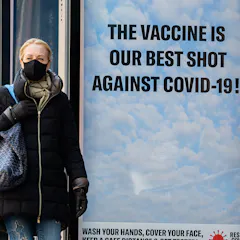
Vaccination rates for COVID-19 have been lower than desired for herd immunity, or when enough people become immune for new infections to stop. What will life look like without it?

The vaccination levels needed to cross the line might not be achievable at all, even in the long term.
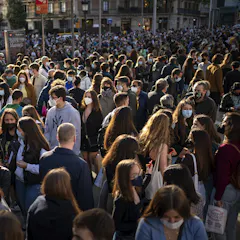
It’s quite likely this virus will never be eliminated from the world. But even so, getting vaccinated enormously reduces your risk of severe outcomes like hospitalisation and death.
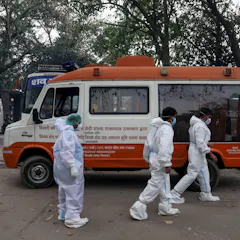
Stories of reaching herd immunity were certainly premature.

Surveys suggest people trust companies more than government and the media, showing they have an important role in helping end the pandemic.

The government should be explicit about what proportion of the population will need to be vaccinated to warrant border reopening. Australians could then measure progress towards that goal.
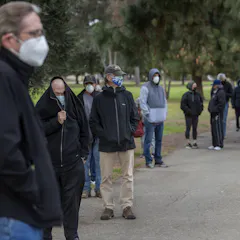
No one likes a long line. But privileging the rich and powerful – as has often been the case – may undermine trust in the vaccine rollout.

We can learn about the spread of diseases through populations by studying naturally occurring instances of herd immunity. Avian cholera in the Canadian Arctic provides a useful case study.

With a third of adults saying they likely won’t get the vaccine, the US has a herd immunity math problem.

One university is showing how the vaccine corps concept can speed up vaccination rates, including launching a large-scale vaccination site staffed by hundreds of students and volunteers.
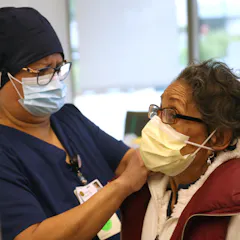
Getting a vaccine is proving difficult for many older people now, but the mad rush for the vaccine won’t last long. Many people don’t want to get one at all, and that will impede herd immunity.
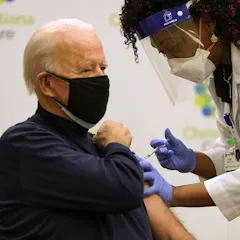
The COVID-19 vaccine rollout has fallen far short of President Trump’s promises. President Biden says he can fix that. Can he?
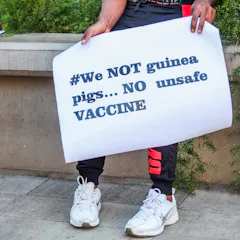
Vaccine hesitancy has resulted in multiple vaccine-preventable disease outbreaks. Research on vaccine hesitancy in South Africa is limited. But growing evidence suggests that it’s becoming a problem.
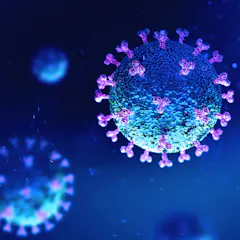
New variants will push the number needed to reach herd immunity up.

Two in five Americans say they don’t want a COVID-19 vaccine, which is a problem. Finding out what Americans do want from a vaccine might help.
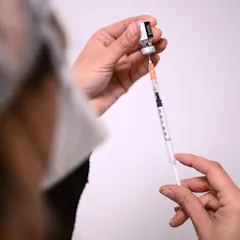
Australia’s expedited plan to start dishing out COVID jabs in mid-late February will call for NASA-like logistical organisation. And ideally, no more clusters of infections to distract frontline workers.
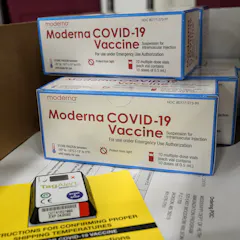
Researchers say around 70% of the US needs to get the coronavirus vaccine to stop the pandemic. But questions around the vaccines and regional differences add some uncertainty to that estimate.
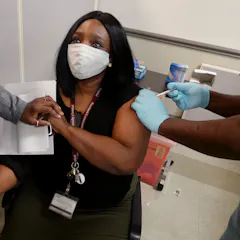
Black people are skeptical about the new vaccines for many reasons. If public health leaders told the full story, maybe there’d be a higher chance that Black people would want to take the vaccine.
Top contributors
-

Professor of Mathematics and Statistics, University of Strathclyde
-
Head of School of Population Health and Professor, Infectious Diseases Dynamics and Interventions, UNSW
-
Associate Professor of Health Law, Policy and Management, Boston University
-
Professor, School of Public Health, University of Sydney
-
Distinguished Professor, Professor of Immunology, RMIT University
-
Professor of Infectious Disease and Epidemiology, James Cook University
-
Senior Lecturer; MD, Victoria University
-
Principal Lecturer, Microbiology and Biomedical Science Practice, Fellow of the Institute of Biomedical Science, University of Brighton
-
Professor and Director of Doherty Epidemiology, The University of Melbourne
-
Postdoctoral Fellow in Virology, University of Colorado Boulder
-
Professor of Pathology, Microbiology and Immunology, University of South Carolina
-
Associate Professor, Epidemiology, Deakin University
-
Assistant Professor of Philosophy & Disability Studies, Georgetown University
-
Associate Professor, Computing & Information Systems; Director, Melbourne Data Analytics Platform, The University of Melbourne
-
Honorary Enterprise Professor, School of Population and Global Health, and Department of General Practice and Primary Care, The University of Melbourne