

Variant-specific vaccines would undoubtedly increase immunity. But waves of new variants would engulf the population faster than these vaccines could ever be deployed.
Articles on Herd immunity
Displaying 21 - 40 of 122 articles
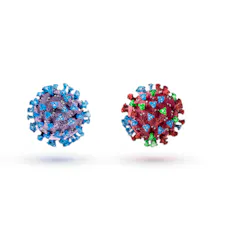
People are buzzing with questions about the omicron variant and whether it could help usher in herd immunity. A team of virologists deciphers the latest findings.

Even with a variant like Omicron that may be more transmissible than earlier variants, vaccines remain the most effective tool for protection against COVID-19 and for ending the pandemic.

A panel of experts answer questions about vaccines, omicron and other COVID-related issues in a discussion with The Conversation.
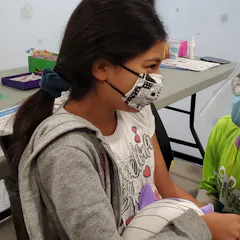
The participation of five-to-11-year-old children in vaccination programs will make 90 per cent of the population eligible to get vaccinated against COVID-19.

Vaccination campaigns like the ones that eventually eliminated polio and measles in the United States required decades of education and awareness in order to achieve herd immunity in the U.S. population.

Regulators are currently reviewing the safety and efficacy data of the Pfizer vaccine for five to 11 year olds before deciding whether to approve its use in this age group.

Voluntary modifications to behaviour – such as mask wearing when it’s not mandatory – are probably helping to keep the virus in check.

Subtly shifting the crafting and delivery of public health messaging on COVID-19 vaccines could go a long way toward persuading many of the unvaccinated to get the shot.

A critical care doctor brings a frontlines perspective to the frustration of dealing firsthand with vaccine hesitancy and discusses the limitations of science and medicine.

Australia could again fall into the trap of false economies by opening up too soon.
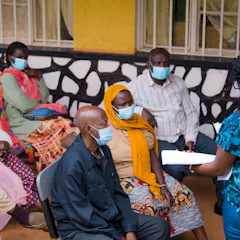
In Africa, it’s more rational to prioritise vaccine access, rapid rollout and community engagement, than pushing the narrative of vaccine-induced population immunity.

But herd immunity is not our only option. If we don’t vaccinate children, we may have to settle for lesser protection of the population.
CC BY-NC-ND15.8 MB (download)
Governments should drop the idea of herd immunity. It risks leaving people feeling disillusioned by vaccination campaigns.
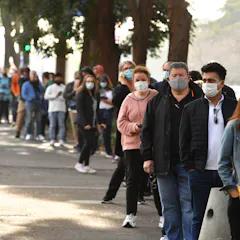
Once we achieve herd immunity, people who are not vaccinated benefit indirectly from the immunity of those around them. But it’s not easy to say exactly when we’ll reach this threshold for COVID-19.
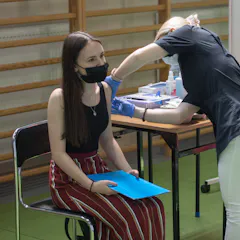
New Zealand’s approval of Pfizer’s COVID-19 vaccine for 12-15 year olds will bring the number of people eligible for the jab to 85% of the population, raising the chance of reaching collective immunity.

Vaccines have successfully curtailed viral diseases for decades. But as COVID-19 vaccination hesitancy shows, mistrust and misinformation continue to put lives at risk.

It is unlikely that we will reach full herd immunity for COVID-19. However, we are likely to reach a practical kind of herd immunity through vaccination.

Many developed countries have approved the use of the Pfizer vaccine in children as young as 12, even though they are a low-risk group.

As vaccine eligibility is expanded to adolescents and young adults, understanding who might be more likely to be vaccine hesitant, and why, can help inform public health strategies
Top contributors
-

Professor of Mathematics and Statistics, University of Strathclyde
-
Head of School of Population Health and Professor, Infectious Diseases Dynamics and Interventions, UNSW
-
Associate Professor of Health Law, Policy and Management, Boston University
-
Professor, School of Public Health, University of Sydney
-
Distinguished Professor, Professor of Immunology, RMIT University
-
Professor of Infectious Disease and Epidemiology, James Cook University
-
Senior Lecturer; MD, Victoria University
-
Principal Lecturer, Microbiology and Biomedical Science Practice, Fellow of the Institute of Biomedical Science, University of Brighton
-
Professor and Director of Doherty Epidemiology, The University of Melbourne
-
Postdoctoral Fellow in Virology, University of Colorado Boulder
-
Professor of Pathology, Microbiology and Immunology, University of South Carolina
-
Associate Professor, Epidemiology, Deakin University
-
Assistant Professor of Philosophy & Disability Studies, Georgetown University
-
Associate Professor, Computing & Information Systems; Director, Melbourne Data Analytics Platform, The University of Melbourne
-
Honorary Enterprise Professor, School of Population and Global Health, and Department of General Practice and Primary Care, The University of Melbourne