
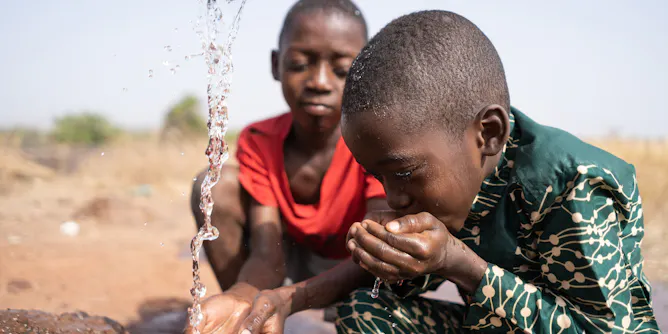
Newborn babies are particularly vulnerable to hot conditions. They have a limited ability to control their body temperature.
Articles on Heat stress
Displaying 21 - 40 of 52 articles
A survey conducted in Texas state prisons finds that many lack basic resources like cold water, ice and air conditioning to help incarcerated people and staff keep cool during heat waves.

Summer sports camps and pre-season training often have kids running hard in high heat and humidity. The combination can be deadly.
New research on young, healthy humans found the body begins overheating when exposed to temperatures and humidity lower than previously believed.
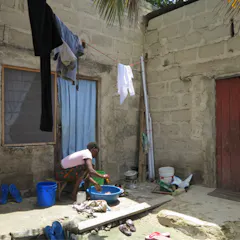
Informal settlements in Dar es Salaam are highly vulnerable to the health effects of heat.
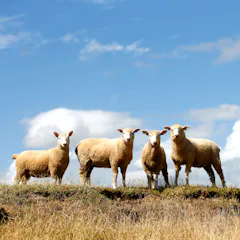
New Zealand can expect more days above 25°C, the threshold for heat stress in livestock, and fewer frost days, which will affect crops like kiwifruit that need winter chilling.
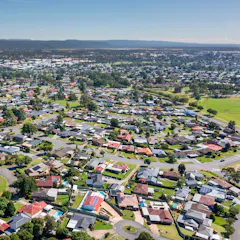
Such a dramatic rise in extreme heat days is not inevitable. If global warming is limited to 1.5°C this century, Western Sydney will have fewer than 17 days of 35°C per year.

Dogs can only sweat on their paw pads, which is not a lot of use when it comes to shedding body heat.
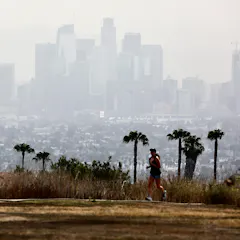
Southern California is on the front line of climate change, and recent survey data shows that residents are feeling its effects in many ways.
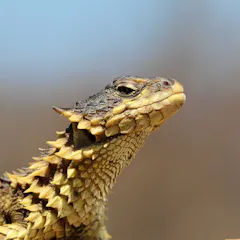
By quantifying an animal’s glucocorticoid levels, scientists can learn crucial information about physiological stress and chances of survival.

African livestock keepers need help: without proactive interventions, increasing temperatures will reduce meat and milk production.
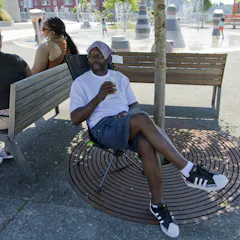
Left untreated, heat stroke can be fatal, and the elderly are the most at risk.
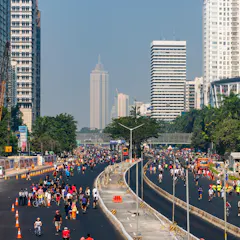
The way we build our cities is adversely affecting our health, and, in particular, our hearts. Thinking of urban planners as health professionals could change that
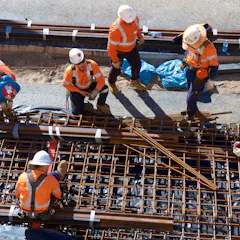
As the climate changes and heatwaves become more frequent and severe, it’s vital we do more to understand who is most vulnerable and how we can reduce their risk.

Cities occupy just 3% of the Earth’s surface, yet more than half the world’s population live in urban environments. We need nation-wide plans to keep our cities cool so no one gets left behind.
Absolute temperatures are expected to rise more slowly in the tropics than in higher latitudes and polar regions, but the combination of heat and rising humidity will make life more challenging.
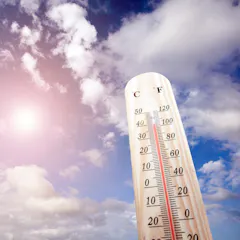
The “winners” evolved in the warm, subtropical regions. Those that evolved in cooler temperate ecosystems – the “losers” – risk becoming extinct.
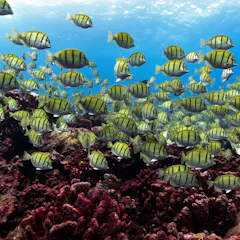
Reef fish vanish during marine heat waves, but may bounce back quickly on reefs that have few other environmental stressors.

People tend to pay attention when things get personal, so you need to know how climate change is damaging things in your life.
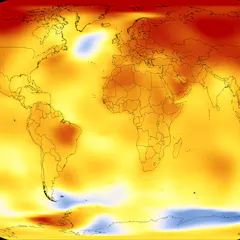
Already heat-stressed countries will see the largest absolute increases in humid-heat and have the least ability to adapt.
Top contributors
-

Postdoctoral Researcher in Kinesiology, Penn State
-
Senior Lecturer in Environmental Geography, King's College London
-
Professor of Physiology, Kinesiology and Human Performance, Penn State
-
Ph.D. Candidate in Exercise Physiology, Penn State
-
Purple House Medical Advisor. Honorary ANU., Australian National University
-
Geographer-climatologist and Postdoctoral Fellow, Penn State
-
Senior Researcher, Urban Transformations Research Centre, Western Sydney University
-
Adjunct Senior Lecturer, School of Architecture and Built Environment, University of Newcastle
-
PhD researcher in behavioural epidemiology and urban health, University of Cambridge
-
Lecturer - Climate (Honorary), The University of Melbourne
-
Professor and Head of School of Architecture and Built Environment, University of Newcastle
-
PhD Research Candidate, Urban Climates Research, UNSW
-
Associate Professor, ARC Centre of Excellence for Weather of the 21st Century, Monash University
-
Associate Professor, University of Pretoria
-
Senior research associate, Northumbria University, Newcastle