

Platforms like Facebook, Twitter and WhatsApp are reframing democracy and the way citizens engage and organise in the digital space.
Articles on Hate speech
Displaying 61 - 80 of 156 articles

Antisemitism today does not always appear in the form of traditional hate speech. It manifests in GIFs, memes, vlogs, comments and reactions on social media platforms.

The new ‘Screenomatic’ model can protect students and academics, while still providing useful feedback.

All actors in the electoral processes in Nigeria must work together to ensure peaceful elections.

To predict - and prevent - election-related violence, it’s important to first understand the key drivers of conflict.
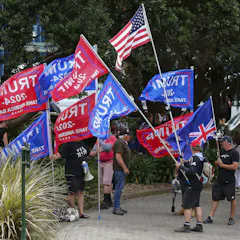
New Zealand has a high concentration of extremist alt-right groups relative to similar countries. The challenge now is to head off hate crime and violence.

A study asked university teachers to share some of their students’ anonymous survey feedback. The results reveal insults and hate speech many lecturers deal with each year.
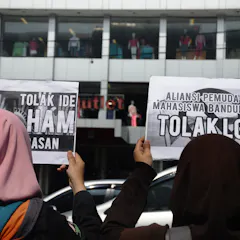
As Western and Indonesian academics continue to engage in co-operation, we should find common ways of counteracting discrimination, including discriminatory practices against the LGBT community.
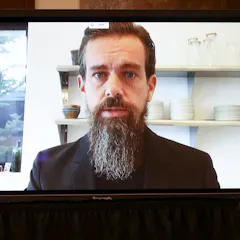
The social media giant’s co-founder has been distinguishing himself from people like Mark Zuckerberg who seem set to stay in traditional companies.

Will recent acts of violence against Muslims in Canada lead us to see what we should have seen earlier — that anti-Muslim works are hate speech that encourage violence against Muslims?

Australia’s piecemeal approach to regulating hate speech online isn’t working. The UK has introduced a possible better way forward.
Critics say only links to real or threatened violence should justify the proposed criminalisation of hate speech. But New Zealand law already regulates all kinds of non-violent speech.
We found LGBTIQ+ groups are exposed to an unacceptable level of discrimination and intimidation, including death threats, targeting of Muslims and threats of stoning or beheading.
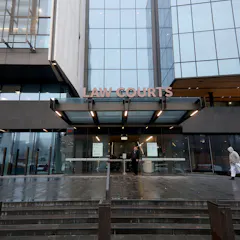
Proposed new hate speech laws would tighten legal definitions but broaden their potential application.

Our research tried to identify patterns linking antisemitic incidents to particular dates, local trends or global events. The aim was to be better prepared to counter them.

The First Amendment to the US Constitution protects Americans’ freedom of speech, so much so that even the most hateful speech has the right to be quoted.
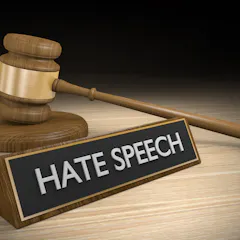
In a country where judicial review is not constitutionally guaranteed, hate speech legislation could shackle freedom of expression and limit citizens’ rights to express themselves.

Scholars who study dangerous speech have identified common themes that can lead to violence.
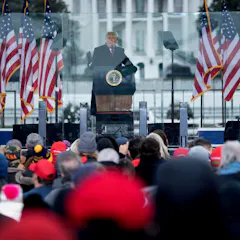
In his January 6 speech in Washington DC, Donald Trump urged his supporters to force their way onto Capitol Hill, is a perfect compendium of his inflammatory populist rhetoric.

Millions of supporters of Donald Trump flocked to the far-right social media platform, where hate speech and calls for violence thrive. The US Capitol insurrection could be the platform’s undoing.
Top contributors
-

Professorial Fellow, University of Canberra
-
Associate Professor, Griffith Criminology Institute, Griffith University
-
Professor in Faculty of Law and Justice, UNSW
-
Spécialiste de la politique américaine, Sciences Po
-
Lecturer, Information Technology and the Law, Daystar University
-
Associate professor, Uppsala University
-
Professor Emeritus of Communication and Rhetorical Studies, Syracuse University
-
Associate Professor in Political and Legal Theory, University of East Anglia
-
Associate Professor, Criminology, Department of Social Science, York University, Canada
-
Deputy Executive Dean and Associate Dean (Academic), Faculty of Humanities, Arts and Social Sciences, The University of Queensland
-
Associate Professor, Educational Technology, Université Laval
-
Associate Professor in Convergent and Online Media, University of Sydney
-
Lecturer, Graduate School of Business and Law, RMIT University
-
Senior Lecturer, Faculty of Law, Te Herenga Waka — Victoria University of Wellington
-
Professor, UCL