
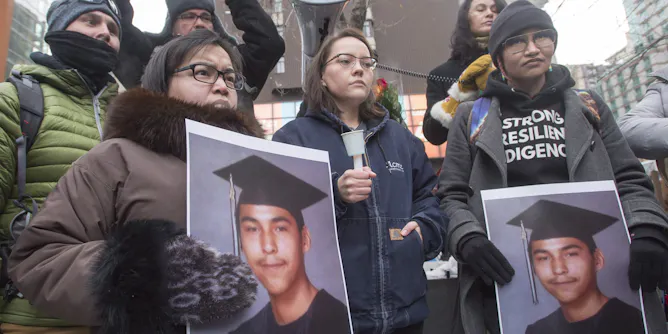
Social media posts since Gerald Stanley’s acquittal have been saturated with vitriolic rants and myths. If reconciliation is to be more than an aspiration, settlers must acknowledge our culpability.
Articles on Hate speech
Displaying 121 - 140 of 156 articles

Cyberbullying has become destructive and feels unstoppable. Here is a five-step technique for dealing with it.
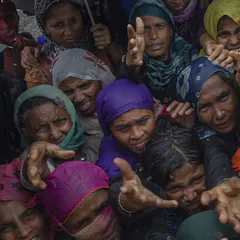
Facebook is unwittingly helping fuel a genocide against the Rohingya people in Myanmar. Does Cuba’s internet model provide lessons to manage social media amid political chaos?

As Canadians, we shouldn’t blame U.S. President Donald Trump for the rise of hatred here. He may have emboldened the so-called alt-right in Canada, but it was flourishing long before his election.
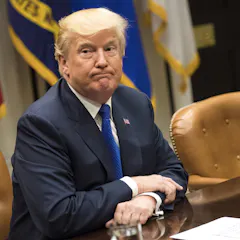
The world’s loudest hater of ‘fake news’ is also a brazen peddler of insidious misinformation.

Many are calling for government to step in to stop bots and the spread of fake news on sites like Facebook and Twitter. A media expert explains why this is a slippery slope.

There has been a 600 per cent increase in online hate speech since Nov. 2015. The solution to stop the tide lies in both anti-hate laws and self-awareness education for audiences.

In a suburban hair salon, a Muslim woman suddenly feels unwelcome in the country she has loved for 40 years.

Schools and universities have a responsibility to protect students from hate speech while also exposing them to views that disrupt their ways of thinking and ideas of the world.
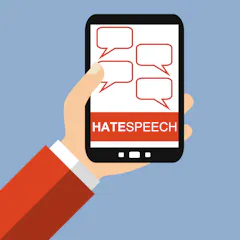
Kenya has published hate speech guidelines that target WhatsApp groups administrators, holding them responsible for offensive content.

After violence in Charlottesville, internet firms are erasing bigoted content. But should private companies serve as unaccountable regulators and be responsible for policing complex social issues?
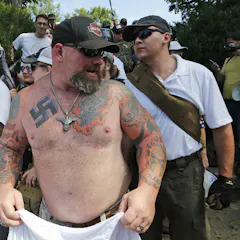
Given recent events, you might have had an inkling that extremist views have been resonating. Researchers from the Center for Peace Studies and Violence Prevention have the hard data to back it up.

The growing incidence of racism on social media in South Africa suggests that there are consequences. Whether there ought to be criminal sanctions remains an ongoing debate.

Incitement to hatred law in England and Wales currently protects many identities, but not disability.

Inflammatory speech has often found fertile ground in Kenya’s election campaign period. As the country approaches another political cliff-hanger, law enforcement agencies have their work cut out.
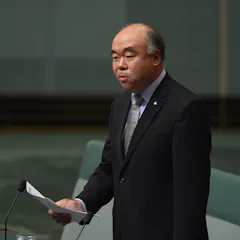
Neither Galaxy Research nor the Institute of Public Affairs think-tank discussed the most interesting data they garnered from polling on free speech and reform to Section 18C.
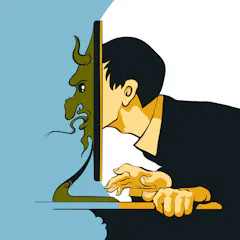
The ability to say offensive things online on a daily basis without consequences led to new, and more toxic, norms for civic behavior.
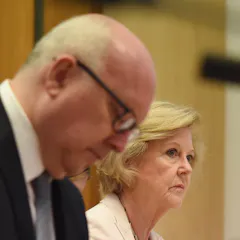
A minor change, substituting ‘vilify’ for ‘offend’ and ‘insult’, would bring Section 18C more in line with similar laws in other democracies without undermining its effectiveness.

In reelection bid, Merkel’s not just up against a xenophobic, nationalist party in Germany. In the wake of Trump’s election, liberal democracies around the world hope she’ll defend them, too.

The Politically Incorrect forum is bringing its racist vitriol to a website near you.
Top contributors
-

Professorial Fellow, University of Canberra
-
Associate Professor, Griffith Criminology Institute, Griffith University
-
Professor in Faculty of Law and Justice, UNSW
-
Spécialiste de la politique américaine, Sciences Po
-
Lecturer, Information Technology and the Law, Daystar University
-
Associate professor, Uppsala University
-
Professor Emeritus of Communication and Rhetorical Studies, Syracuse University
-
Associate Professor in Political and Legal Theory, University of East Anglia
-
Associate Professor, Criminology, Department of Social Science, York University, Canada
-
Deputy Executive Dean and Associate Dean (Academic), Faculty of Humanities, Arts and Social Sciences, The University of Queensland
-
Associate Professor, Educational Technology, Université Laval
-
Associate Professor in Convergent and Online Media, University of Sydney
-
Lecturer, Graduate School of Business and Law, RMIT University
-
Senior Lecturer, Faculty of Law, Te Herenga Waka — Victoria University of Wellington
-
Professor, UCL