

A messy room isn’t usually created by one great act of mess-making. It results from hundreds of tiny behaviours.
Articles on Habits
Displaying 1 - 20 of 38 articles
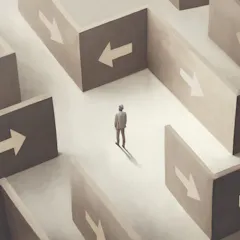
Habit helps take the mental load off figuring out how to get somewhere. But relying on the familiar can make it harder to adapt to changes to your route and to find better ones.
There are simple changes you can make right now.
Our romances tell us a lot about how we live our lives and vice versa. They can help us make informed choices about changing and breaking habits or developing new ones.

Meaning rarely comes from dramatic resolutions. Psychology shows it grows from small repeated actions – and you can start with just a few minutes a day.
And how you can use psychology to help you break out of the habits you want to lose.

A philosopher argues that true leisure is when we can reflect on our real priorities, cultivate friendships and decide what kind of life we want to live.
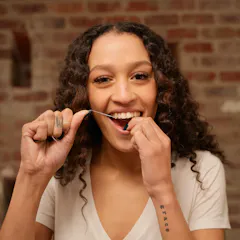
Habits are more like planting seeds than flipping switches. They take time, care and patience to grow.

Although we aren’t consciously aware of our ‘automatic memory,’ it influences almost all of our thoughts, behaviour and feelings.

If humans are ‘bundles of habits,’ can we take control of them?
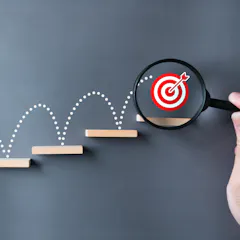
Resolutions are like goals and putting time into planning your resolution can increase your success. Using scientific strategies can increase your chances of sticking with your resolution.

A streak can motivate you to keep on keeping on with behaviors ranging from praying to running to sharing pictures on social media. Here’s what goes into making them so compelling.

The ‘fresh start effect’ explains why the beginning of a new school year often leads to a boost in motivation – even if you aren’t a student.
Fighting misinformation doesn’t have to involve restricting content or dampening people’s enthusiasm for sharing it. The key is turning bad habits into good ones.

A researcher who studies ways to help students become better readers and writers describes how to create a homework habit using a loop: cue, routine, reward.

There’s so much to process in our daily lives, we need habits to get us through and give the brain a break.

Research shows the key to changing your diet is focusing on changing eating habits and food behaviours, one at a time.

Understanding what the brain does when you’re trying to change your behaviour can help you stick with new habits – or kick old ones to the kerb.

Making small changes to your everyday habits may be easier to stick with over the long run.

About half the population of people taking regular medicines don’t take them as prescribed. Here are some tips to help you remember.
Top contributors
-

Emerita Provost Professor of Psychology and Business, USC Dornsife College of Letters, Arts and Sciences
-
Associate Professor of Clinical Psychology, Curtin University
-
Associate Professor, Healthy Ageing, Adelaide University
-
Chancellor and Professor of English, Indiana University Kokomo
-
Professor of Psychology, Indiana University
-
Professor of Marketing, Clemson University
-
Emeritus Professor of English, Assumption College
-
Professor of Social Psychology, University of Bath
-
Associate professor, marketing, Brock University
-
Assistant Professor in Clinical Psychology, University of Cambridge
-
Professor of Environmental Psychology, Cardiff University
-
Research Associate, University of Bath
-
Postdoctoral Research Fellow, The University of Queensland
-
Adjunct Professor, Department of Obstetrics and Gynecology, Faculty of Medicine, Dalhousie University, Mount Saint Vincent University
-
Research Fellow in Behaviour Change, Monash University