

As many head back to work, fresh starts can open the door to change. But maintaining lasting momentum depends on what we build after the novelty wears off.
Articles on Goals
Displaying 1 - 20 of 34 articles

Feeling stuck at work is commonly seen as a problem to be solved. But studies of adult development show it can signal a mismatch between internal growth and external circumstances.

Planning health and fitness goals for 2025? Here’s how to make home exercise equipment work for you (and keep it from becoming useless household clutter).

Setting specific, hard-to-reach goals seems to help people maintain motivation, while preventing them from feeling as drained by mental tasks.

Long-term goals can be hard to stick to if the benefits are only way off in the future. Research suggests ways to focus on the here and now to help you ultimately achieve your more far-off targets.
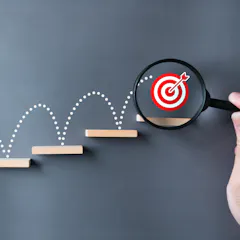
Resolutions are like goals and putting time into planning your resolution can increase your success. Using scientific strategies can increase your chances of sticking with your resolution.

A streak can motivate you to keep on keeping on with behaviors ranging from praying to running to sharing pictures on social media. Here’s what goes into making them so compelling.

The ‘fresh start effect’ explains why the beginning of a new school year often leads to a boost in motivation – even if you aren’t a student.

Traditional report cards sent home every few months are fine for most students. But for kids with behavioral issues, a daily report card can be a better option.

Advising managers to ‘focus on clear objectives’ with remote workers overlooks the importance of relationships as the basis for understanding performance.

Workplaces, in addition to providing critical organizational resources, can encourage employees to undertake a voluntary workplace well-being streak, or employees can commit to their own.

New Year’s resolutions can help us aim for a better future, but time management is the real key to actually achieving those resolutions.

Research shows that people with more flow in their lives had a higher sense of well-being during the COVID-19 pandemic. Scientists are beginning to explore what happens in the brain during flow.

After more than a year of idealizing life without COVID-19, people are starting to reenter ‘normal’ life. Clinical psychology provides guidance on how to prepare for your post-pandemic reboot.

Behavioural psychology aims to help us understand why we make the choices we do.

A year of social disconnections, deaths, job losses and political violence may lead some people to feel overwhelmed and sad. A psychologist suggests ways to find and sustain hope.

How to avoid being in the quarter of people who fail to keep their resolutions.

You might feel you’ve failed after ‘only’ recording 9,000 steps when your goal was 10,000. In reality, 9,000 steps might be an achievement. Is it time to ditch specific goals in favour of open goals?

New Year’s resolutions are usually an opportunity to think about long-term goals. The uncertainty and restrictions of COVID-19 make 2021 a good year to focus on ways to help yourself in the short-term.

There are many ways to be happy, but we can also find comfort in the knowledge that our constant dissatisfaction is what makes us human.
Top contributors
-

Professor of Psychology & Mental Health, Edith Cowan University
-
Assistant Professor of Marketing, San Diego State University
-
Professor Emeritus of Organizational Behavior, University of Virginia
-
Professor of Operations Research, Brock University
-
Professor of Psychology, Cornell University
-
Senior Lecturer in Employment Relations and Human Resource Management, Te Herenga Waka — Victoria University of Wellington
-
Senior Lecturer in Sports Bioemechanics, Leeds Beckett University
-
Professor of Management and Sociology, Vanderbilt University
-
Research Coordinator in Health Promotion, University of British Columbia
-
PhD Candidate in Psychology, University of Oregon
-
Dean of Faculty, Rutgers University - Newark
-
Senior Lecturer and Course Coordinator Sports Science and Football, Edith Cowan University
-
Professor, University of British Columbia
-
Consultant and Senior Lecturer in Old Age Psychiatry, King's College London
-
Associate Professor of Behavioural Science, University of Nottingham