

Sea levels could rise by two metres by 2100, sparking a refugee crisis unlike anything the world has ever seen.
Articles on Greenland
Displaying 121 - 140 of 150 articles
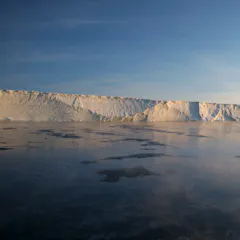
Climate scientist predict that the combined effect of ice loss in Greenland and Antarctica will be more extreme weather, with impacts on agriculture, infrastructure and human life itself.
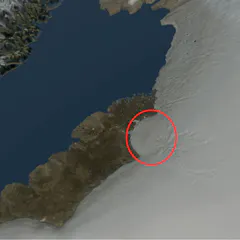
Meteorite impacts have fundamentally shaped the history of our planet.
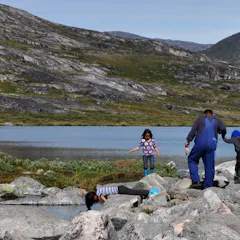
The general health of Greenlandic children is now as good as that of their European peers – perhaps even better.
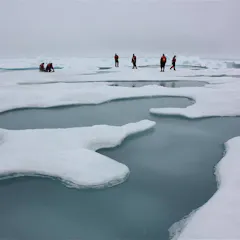
Climate change is transforming the Arctic, with impacts on the rest of the planet. A geographer explains why he once doubted that human actions were causing such shifts, and what changed his mind.

With all eyes on China’s intentions in the Arctic, Singapore is flying under the radar. But the tiny Asian nation is also pursuing its own interests in the Arctic.
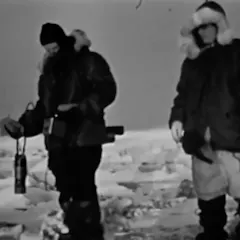
In what came to be known as the Thule incident, an American bomber crashed in Greenland, spreading radioactive wreckage across 3 square miles of a frozen fjord. Denmark was not happy.
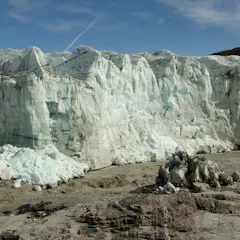
The ice sheet is melting and permafrost is thawing. What’s happening in Greenland will speed up climate change across the world.
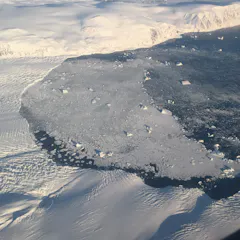
Greenland’s ice is largely responsible for the accelerating pace of sea-level rise. A new analysis shows that, while Greenland accounted for just 5% of the rise in 1993, that figure rose to 25% by 2014.

Researchers have found a small piece of a “lost continent” buried underneath the lava on Mauritius.

An object lesson in seasonal geopolitics.

A glaciologist develops a lightweight method for probing the depths of Greenland’s ice sheet to answer a crucial question: How fast is it melting?
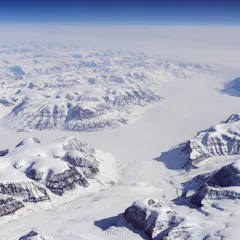
Scientists say they’ve found fossils showing life existed on Earth 3.7 billion years ago. How good is the evidence? And what does it mean for the search for life elsewhere in our solar system?
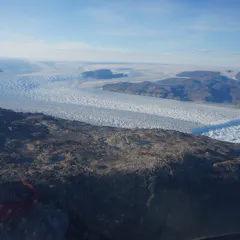
Could sea levels really rise by several metres this century. Probably not, although this century’s greenhouse emissions could potentially set the stage for large rises in centuries to come.
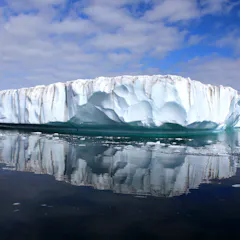
The Paris agreement has given us some solid targets to aim for in terms of limiting global warming. But that in turn begs a whole range of new scientific questions.
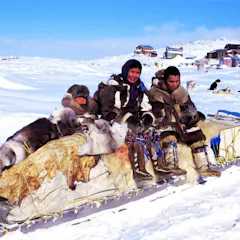
A genetic study of Inuits in Greenland has shed light on how this population has adapted to eating a high-fat diet.

To create accurate models that predict how ice sheets and oceans will react to changing climate, modelers need precise current data. One researcher heads to the ends of the earth to collect just that.
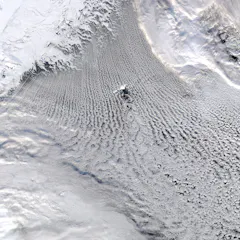
Loss of sea ice near Greenland and Iceland portend a colder future for Europe.
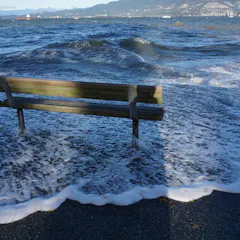
Since 1993, satellites have been used as well as tidal gauges to monitor sea level. A new calibration of this satellite record now shows that the rise in sea level is gathering pace.
First the No victory in the Scottish referendum, now the debate about how much extra power should be extended north of the border. While the commission tasked with coming up with proposals prepares to…
Top contributors
-

Professor of Natural Resources and Environmental Science, University of Vermont
-
Professor of International Security, University of Birmingham
-
Chair Professor, Climate Change Research Centre, UNSW
-
Deputy Lead Scientist, National Snow and Ice Data Center (NSIDC), Cooperative Institute for Research in Environmental Sciences (CIRES), University of Colorado Boulder
-
Senior Lecturer in Politics and International Relations, University of the Sunshine Coast
-
Professor of Glaciology and Earth Observation, University of Bristol
-
Alaska Climate Specialist, University of Alaska Fairbanks
-
Senior Scientist, National Snow and Ice Data Center (NSIDC), Cooperative Institute for Research in Environmental Sciences (CIRES), University of Colorado Boulder
-
Professor of Polar Geodesy and ARC Laureate Fellow, University of Tasmania
-
Professor of International Politics in the Department of Political Science and International Studies, University of Birmingham
-
Professor of Ocean and Climate Change, Australian National University
-
Professor of Intelligence and National Security & Dean of Faculty, University of Hull
-
Professor of Glaciology, Fulbright Scholar, University of Tromsø
-
Senior Lecturer, School of Geography, Planning, and Spatial Sciences, University of Tasmania
-
Non-resident Senior Fellow, United States Study Centre, University of Sydney