
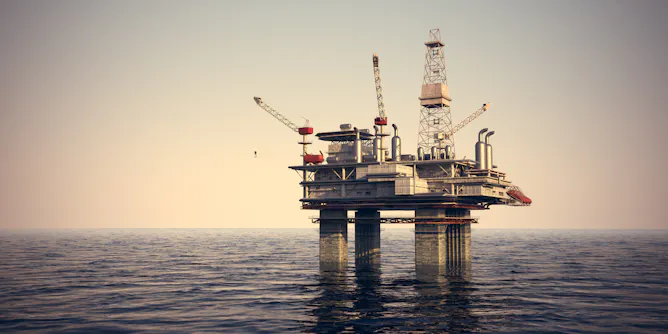
Green hydrogen production is, in effect, a way of bottling renewable energy.
Articles on Green hydrogen
Displaying 1 - 20 of 69 articles
Hydrogen makes it possible to store renewable energy for longer – but has its limitations.
Hydrogen demand around the world is projected to grow significantly by 2050. Some of that supply could come from nature itself.

Many of New Zealand’s geological processes create exactly the kinds of geological settings where natural hydrogen can form and accumulate.

Vast deposits of naturally occurring hydrogen hold promise for a green future. However, policies need to be enacted for the extraction and circulation of hydrogen.

Several big green hydrogen projects have been shelved. An expert explains why Australia’s sky-high ambition for the industry is struggling to reach fruition.

To make green hydrogen, take water and split it into hydrogen and oxygen. It sounds simple – but the government’s water-use figures may be a drastic underestimate.
Green hydrogen is made from water and renewable energy and could be produced quite cheaply in Zambia using the hydropower and solar-based national grid.
Without accounting for land use, Australia’s emissions have only decreased 3% since 2005 – not the 27% cut you might have heard.
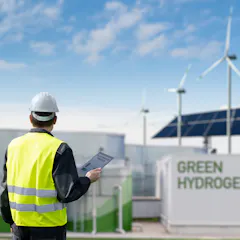
Researchers warn that South Africa and Chile should avoid taking out huge loans to set up green hydrogen industries.

With the right leadership, Australia can turn green hydrogen’s stumbles into a global triumph for heavy industry.

Campaigners in Namibia are demanding that the government and industry halt the expansion plans on Shark Island, and meaningfully engage with reconciliation.
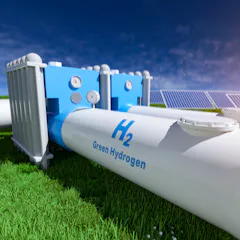
Chemical engineering specialists have mapped out the risks for South Africa in setting up a multi-billion dollar green hydrogen industry.

If New Zealand decided to use green hydrogen to decarbonise industries such as fertiliser and methanol production, it would need to triple the installed capacity of renewable power plants.

The green talent in short supply includes wind and solar farm technicians and engineers, solar panel installers, green energy auditors, hydrogen fuel cell specialists, and data scientists.

Large-scale gas development could leave investors unable to recoup their money, because of a global shift towards renewables and green hydrogen.
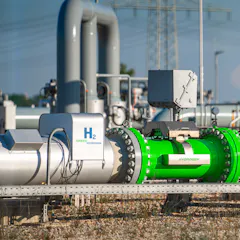
The European Union gave South Africa grants of €32 million to set up a green hydrogen industry. But the real cost to do this will be €20 billion. More funds are needed.
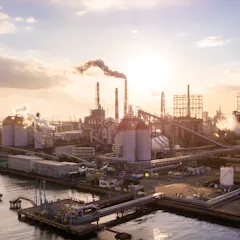
Repurposing fossil fuel infrastructures to supply clean fuels might make more immediate economic and environmental sense than mass electrification of transport and industry.
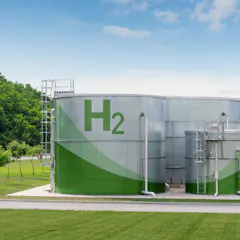
Hydrogen is expected to play an important role in New Zealand’s energy strategy. But the government and industry need to focus on its best uses for decarbonisation.
There’s already demand for critical minerals and solar panels. But what about green hydrogen?
Top contributors
-

Senior Lecturer, Africa Energy Leadership Centre, University of the Witwatersrand
-
Professor Emeritus, Macquarie Business School, Macquarie University
-
Professor in Geosciences, University of Canterbury
-
Senior lecturer in Civil and Environmental Engineering, Monash University
-
ARC ECR Industry Fellow in Civil and Environmental Engineering, Monash University
-
Senior Lecturer in Chemical and Renewable Energy Engineering, University of Newcastle
-
Adjunct Senior Fellow in Renewable Energy Systems Engineering, University of Canterbury
-
Senior research fellow, Australian National University
-
Professor, Crawford School of Public Policy and Director, Centre for Climate and Energy Policy, Australian National University
-
Professor in Marine Geology, University of Canterbury
-
Professor in Mechanical and Mechatronic Engineering, Stellenbosch University
-
Professor in Civil and Environmental Engineering, University of Canterbury
-
Director, Geoscience Australia
-
Reader in Energy Policy, University of Aberdeen
-
Senior lecturer, Te Herenga Waka — Victoria University of Wellington