
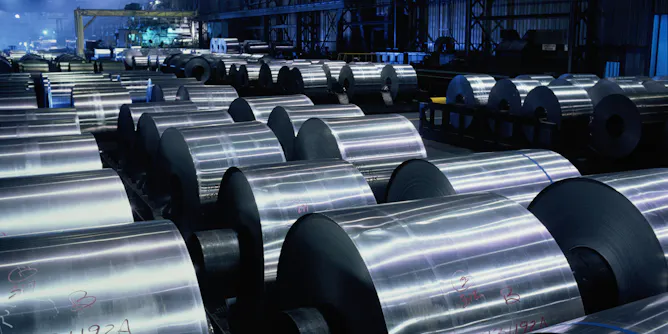
Ghana has spent over 60 years trying to build an aluminium industry.
Articles on Green hydrogen
Displaying 21 - 40 of 69 articles
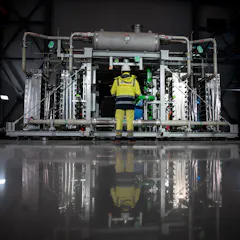
There are two approaches to producing low-emission hydrogen, and public acceptance (or rejection) of each method will be important for hydrogen and its place in the energy transition.
Cultured meats, precision fermentation and other cutting-edge technologies are predicted to disrupt conventional agriculture. Despite the threat, New Zealand is well positioned to ride the wave.

Battery electric trucks offer larger and more certain emission cuts than trucks powered by hydrogen in the quest to reduce Australia’s stubbornly high transport emissions.

Australia has a massive opportunity to reduce global emissions by as much as 9%, all while renewing its heavy industries and economy. But to seize the opportunity, government needs to move fast.

Australia’s move towards net zero emissoions by 2020 is in danger of stalling. If it is not to fail, the nation urgently needs a government plan, aligned with industry and with public support.
Our carbon budget is shrinking fast. We crunched the data to find pathways for G20 nations to act faster

Australia has a lot of wind and sun, but will we actually become a world leader in renewable energy generation?
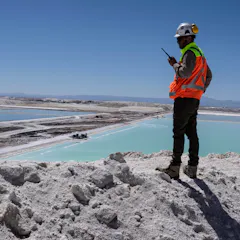
China is a major investor in Latin America’s renewable energy and critical minerals like lithium, but countries like Chile are also taking steps to secure their own clean energy future.

In the late 1980s, well diggers in Mali struck a rich source of naturally-created hydrogen. Now prospectors are scouring South Australia, looking for natural hydrogen.
Currently, most hydrogen is produced using fossil fuels but the falling cost of renewables and growing demand for energy have added momentum for clean hydrogen.

If we put green hydrogen plants next to green iron and steelmaking, we can clean up steelmaking and boost the hydrogen industry.
Two billion to subsidise green hydrogen sounds like a lot. But the world is racing ahead and we’re still at the starting line.
There’s more to sustainability than net zero. Using green ammonia for fuel and as a way to transport hydrogen could add to nitrogen pollution that already exceeds safe planetary boundaries.

The government is considering blending hydrogen into the UK gas network.
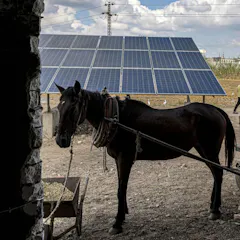
African policymakers need to access science-based information that can directly inform future planning.
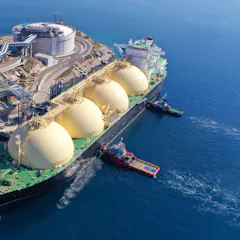
You won’t like this idea – but we may well need oil and gas companies to make green hydrogen and green chemicals a reality
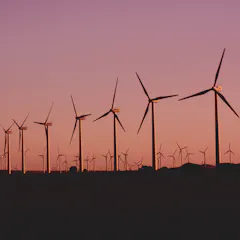
As we enter 2023, Indonesia should focus on taking more radical action to speed up its energy transition – particularly to achieve its climate target of reaching net zero emissions.
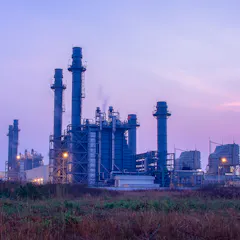
Without energy market reform, expensive gas will have few upsides.
Australia’s emerging green hydrogen industry requires a secure supply of high-quality water. Competing demands for this scarce resource mean careful planning is needed to meet all water users’ needs.
Top contributors
-

Senior Lecturer, Africa Energy Leadership Centre, University of the Witwatersrand
-
Professor Emeritus, Macquarie Business School, Macquarie University
-
Professor in Geosciences, University of Canterbury
-
Senior lecturer in Civil and Environmental Engineering, Monash University
-
ARC ECR Industry Fellow in Civil and Environmental Engineering, Monash University
-
Senior Lecturer in Chemical and Renewable Energy Engineering, University of Newcastle
-
Adjunct Senior Fellow in Renewable Energy Systems Engineering, University of Canterbury
-
Senior research fellow, Australian National University
-
Professor, Crawford School of Public Policy and Director, Centre for Climate and Energy Policy, Australian National University
-
Professor in Marine Geology, University of Canterbury
-
Professor in Mechanical and Mechatronic Engineering, Stellenbosch University
-
Professor in Civil and Environmental Engineering, University of Canterbury
-
Director, Geoscience Australia
-
Reader in Energy Policy, University of Aberdeen
-
Senior lecturer, Te Herenga Waka — Victoria University of Wellington