
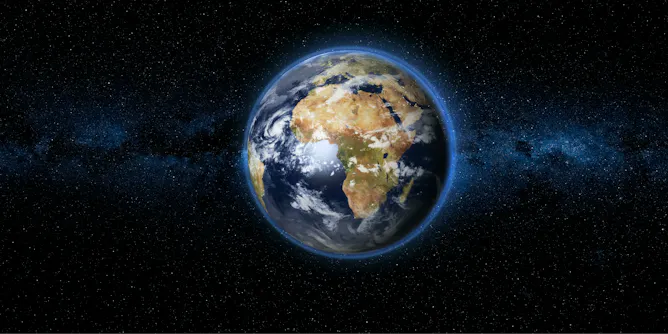
The Earth spins around its axis every day – but gravity keeps us firmly in place.
Articles on Gravity
Displaying 61 - 80 of 120 articles
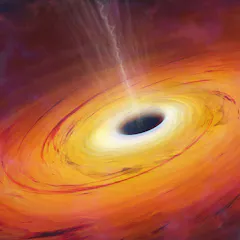
The 2020 Nobel Prize in physics was awarded to three scientists – an Englishman, an American and a German – for breakthroughs in understanding the most mysterious objects in the universe: black holes.
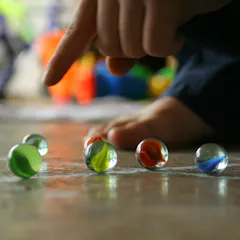
There is a reason why it’s easier to roll marbles down rather than up a hill. And the answer (to this and to gravity itself) is all about acceleration.

If gravity was half as strong, you could jump much higher.

How do people in a special airplane flight get to float like there is no gravity – just like astronauts? An aerospace engineer explains.

Martian meteorites allow scientists here on Earth to decode that planet’s geology, more than a decade before the first missions are scheduled to bring rocks back home from Mars.
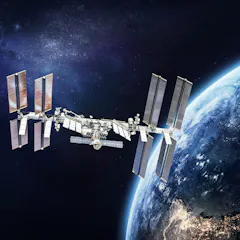
The distance between the ISS and Earth is the same as about 3,850 football fields. To bring the station down, rockets will lower it a bit, and then gravity will send it crashing the rest of the way.
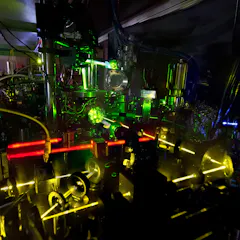
Researchers have made some of the most accurate clocks imaginable in recent years, but the trick is harnessing those clocks to electronics. Using lasers to tune microwaves bridges the gap.

The constant pressure of gravity affects our thoughts and perception, but it’s so constant we haven’t noticed – until now.
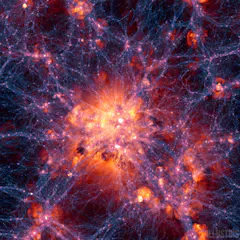
Why do astronomers believe there’s dark matter when it cannot be directly detected? Let’s look at the evidence, and see what dark matter’s presence means for our universe.
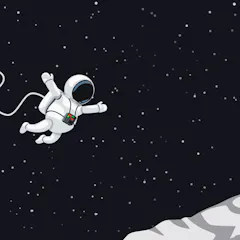
You could jump much higher on the moon than you can on Earth – but you’d be in no danger of shooting off into space.
CC BY-ND49.4 MB (download)
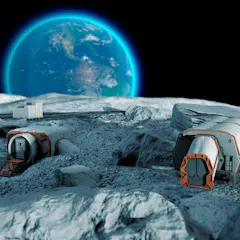
In the fourth episode of our podcast series, we look at the practical, legal and ethical questions about going to set up base on the moon – and mining its resources.
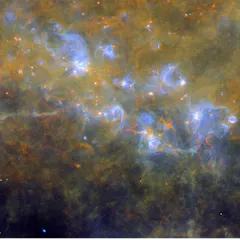
Gravity exists because the universe is full of ‘stuff’ – here’s how it came to be.
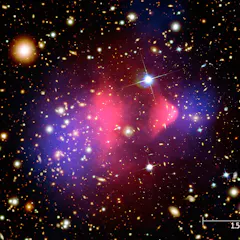
New research suggests we may be able to forget about dark matter if we tweak the laws of gravity according to imaginary bubbles in space.

Mexico’s booming film industry is revisiting its roots in the same desert in which it had its origins way back in 1914.
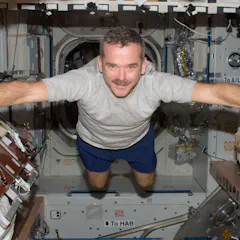
New research has uncovered exactly what happens to the brain when astronauts are in space.

It’s not just Earth: everything in the universe has it’s own pull because of gravity – even you. Here’s how it works.
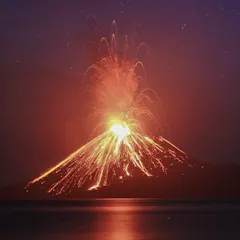
Compared to Earth, more “oomph” is required to bring magma to the surface of Mars, and this is probably why we haven’t seen any recent eruptions on the red planet.
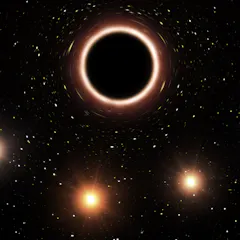
It’s all about the strong gravitational field of the black hole.

If you fall one storey, dust yourself off – you’ll be fine. If you fall seven storeys: sorry, but you’ve probably got about 2 seconds to prepare to meet your maker.
Top contributors
-

Emeritus Professor, ARC Centre of Excellence for Gravitational Wave Discovery, OzGrav, The University of Western Australia
-
Postdoctoral Research Fellow in Astrophysics, University of Portsmouth
-
Reader in Astrophysics, Keele University
-
Professor of Gravitational Astrophysics and Cosmology, University of Glasgow
-
Professor of Physics, Simon Fraser University
-
Academic Faculty in Physics & Astronomy, Georgia State University
-
Senior Lecturer and ARC Future Fellow, Monash University
-
First Year Physics Coordinator, The University of Melbourne
-
Professor, The University of Queensland
-
Associate Dean of Innovation and Engagement, Swinburne University of Technology
-
South African Research Chair in Physical Cosmology, Department of Mathematics and Applied Mathematics, University of Cape Town
-
SANDALS Instrument Scientist, Science and Technology Facilities Council
-
Space Plasma Physicist, Imperial College London
-
Ph.D. Candidate in Public Policy, RAND School of Public Policy
-
Professor of Physics and Mathematics, Queen's University Belfast