
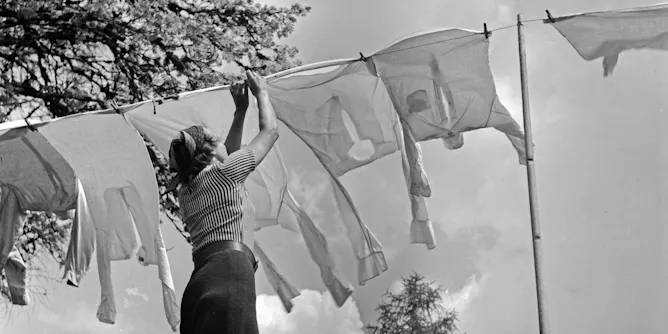
Today’s tradwives rework the ideals of the early 20th-century German housewives’ movement.
Articles on German history
Displaying 1 - 20 of 31 articles

Many couples were forced to undertake dangerous, daring escape attempts to overcome their separation.
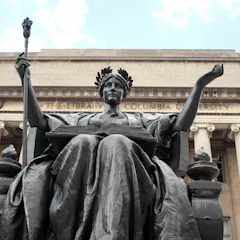
Before the Nazis, German universities were among the best in the world. Step by step, the universities gave up their independence until they were instruments of the state.

Again and again, Bonhoeffer substitutes conventionalised melodrama for difficult history.
Questions about how to represent German Jews, past and present, have complicated plans to rebuild the destroyed temple.
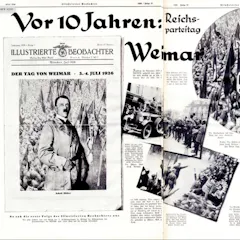
The Nazis routinely shared altered photos in their official publication, the Illustrierter Beobachter, causing readers to question what was real or fake.
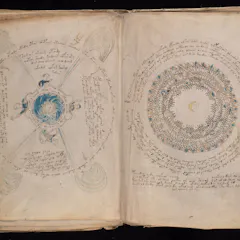
This late-medieval document is written in encoded text that has yet to be cracked. But its numerous illustrations provide clues about its content.
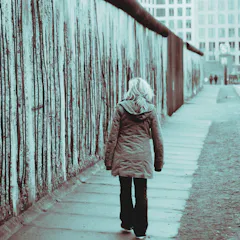
In Kairos, a relationship between a young woman and an older married man captures the difficulties and ambivalences of German reunification.
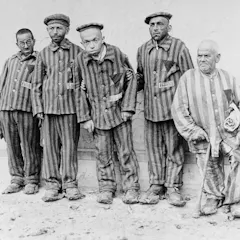
In 2023, International Holocaust Remembrance Day marks 90 years since the Nazis assumed power. Disabled people were the first Holocaust victims; Nazi programs discriminated against and murdered them.
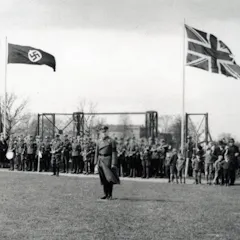
Even after the notorious Kristallnacht pogrom in 1938, some headmasters thought pupil exchanges with Nazi Germany were a good idea.
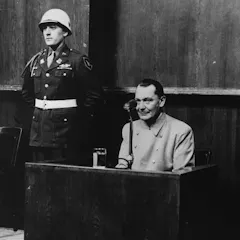
The complex history of prosecuting Nazi war crimes means elderly men and women are on trial for crimes committed decades ago.
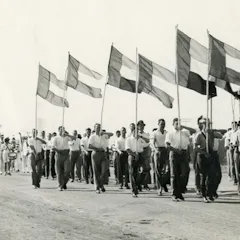
Following the war, the South African authorities were anxious to charge known war criminals, traitors and collaborators. But nothing came of it.

Stuttgart flies under the radar as a tourist destination but it is a treasure trove of Expressionist art and works that exemplify post-war modernity.
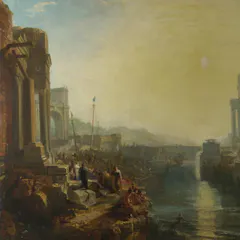
New linguistic research suggest early Germanic language and culture was strongly influenced by the Mediterranean superpower Carthage more than 2,000 years ago.
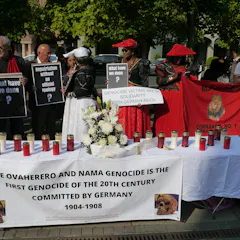
The culture of remembrance in Germany is viewed by many as exemplary. But it has some grave shortcomings.
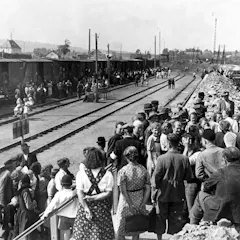
After World War II ended in Europe, millions of ethnic Germans faced an uncertain future. The political repercussions of their expulsion continue even today.

A trove of essays give insight into what attracted everyday women to extremist Nazi ideology.
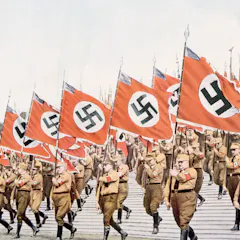
An in-depth study has shown that far from recruiting from the lower middle classes, the Nazi party attracted many people from high-status backgrounds.
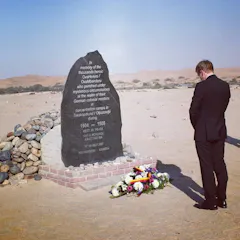
Germany praises itself for having declared a ‘special responsibility’ for Namibia since independence. But the relationship is viewed differently from Windhoek.
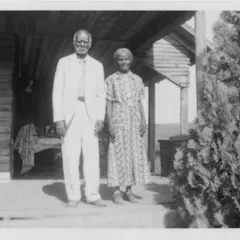
Old injustices don’t simply disappear with time – they tear a nation apart.
Top contributors
-

Extraordinary Professor, Department of Political Sciences, University of Pretoria
-
Professor in Political Science, Arnold Bergstraesser Institute
-
Assistant Professor of German and Global Studies, Michigan State University
-
Professor of History and Director of the Undergraduate Program in Judaic Studies, Fairfield University
-
Associate Professor of Religion, University of Illinois Urbana-Champaign
-
Senior Research Fellow in History, University of Lancashire
-
Professor Emeritus of Modern European History, University of Essex
-
Associate Professor of German Studies, William & Mary
-
Lecturer, University of Leeds
-
Reader in Modern Political History, Loughborough University
-
Professor of Political Sociology and Critical Theory, University of Bath
-
Professor of Anthropology, University of the Western Cape
-
Professor of Linguistics, Western Sydney University
-
Professor of Political Science, Texas Tech University
-
Professor, University of Leeds