
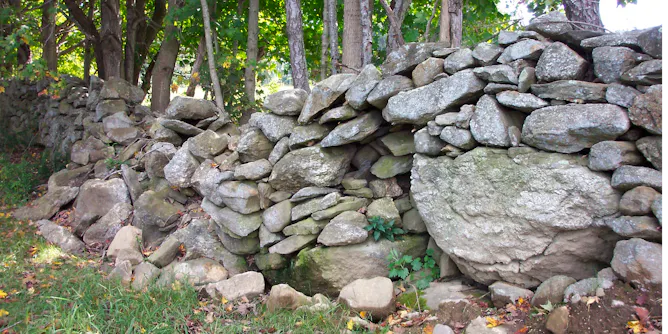
New England has thousands of miles of stone walls. A geoscientist explains why analyzing them scientifically is a solid step toward preserving them
Articles on Geoscience
Displaying 21 - 40 of 63 articles
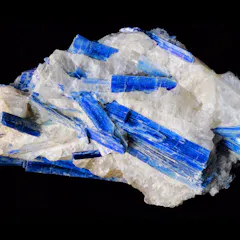
There are a lot of myths about crystals − for example, that they are magical rocks with healing powers. An earth scientist explains some of their amazing true science.
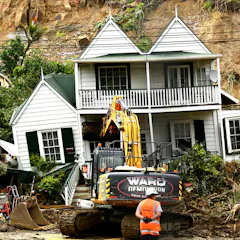
Some New Zealand universities have proposed staff and course cuts in earth sciences. This could leave the country ill prepared to deal with natural hazards and extreme weather.
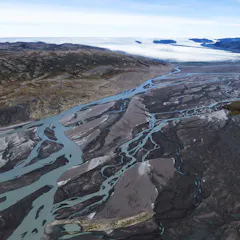
The soil was extracted during the Cold War from beneath one of the U.S military’s most unusual bases, then forgotten for decades.
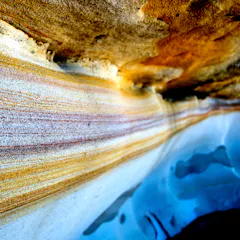
Our activities now affect the entire planet. But there’s a vital debate over when we started disrupting these systems. Was it 1950 – or hundreds and thousands of years earlier?
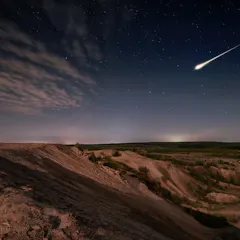
Studying impact craters can broaden our understanding of the Earth’s evolution and life, as well as its possible future.
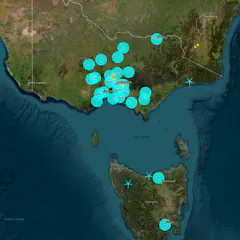
Some people were woken up near midnight by a powerful ground-shake. But did you know earthquakes occur in the greater Melbourne region about once a month – even though we can’t always feel them?
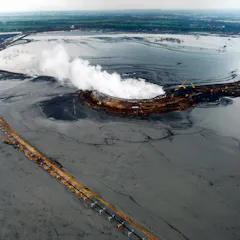
When mud, fluids and gases erupt at the Earth’s surface, they hint at what’s happening underground, allowing scientists to build a more comprehensive 3D view of what’s going on inside our planet.

Southern Australia’s Nullarbor Plain is offering up evidence of Earth’s past landscapes and ecosystems, exceptionally preserved for millions of years.
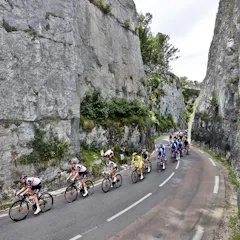
The world’s biggest cycling race is a great way to teach people about geology – and test our own ideas.
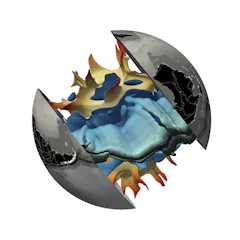
Ancient blobs deep inside the Earth gather together and break apart like continents, according to new research.

Tiny pieces of an asteroid have revealed an unlikely origin for much of the water in Earth’s oceans.
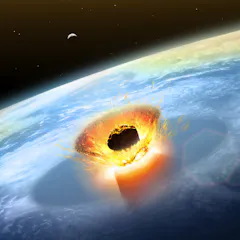
Impact craters are relatively shallow, so these bowl-shaped “dents” in Earth’s rocky crust can be easily buried or erased by erosion.
Using geology and AI, a virtual model of how the Earth’s tectonic plates have evolved can help reveal deposits of copper.
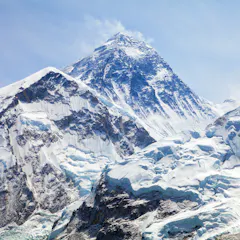
Everest didn’t become the highest mountain overnight. This process was excruciatingly slow; a result of complex interactions between the solid earth, the atmosphere and the biosphere.
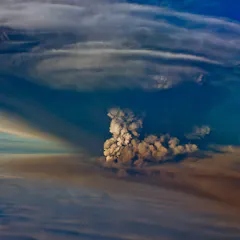
Icelandic authorities have recently raised the threat level of the Grímsvötn volcano.
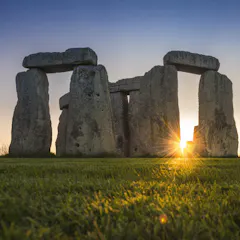
How we traced the origin of the sarsen stones.

Born on July 30, 1920, geologist and cartographer Tharp changed scientific thinking about what lay at the bottom of the ocean – not a featureless flat, but rugged and varied terrain.
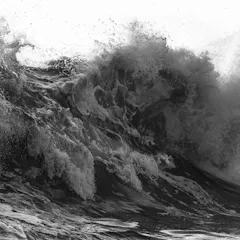
A tricky kind of earthquake that happens in the soft rock of the ocean floor causes much larger tsunamis than their magnitude would predict. New research pinpoints a way to identify the danger fast.
A science researcher’s work gets twisted by a conservative news site; he considers this his wake-up call to educate as many students as possible about the importance of science to our world.
Top contributors
-

Professor in Earth Sciences, Nanyang Technological University, Singapore, and Emeritus Professor of Mineral Physics, University of Cambridge
-
Harold T. Stearns Professor of Earth Science, Wesleyan University
-
Earthquake Scientist, Monash University
-
Professor of Planetary Geosciences, The Open University
-
Professor, Head of Geophysics, Director of Warramunga Array, Australian National University
-
Professor of Physics, Royal Holloway, University of London
-
PhD Student in Geosciences, University of Arizona
-
Professor II at CEED, University of Oslo
-
Lecturer in Geosciences, University of Montana
-
Senior lecturer, Nelson Mandela University
-
Postdoctoral Researcher in Physics, Royal Holloway, University of London
-
Max Steineke Professor, Stanford University
-
Professor of Organic Geochemistry & Meteoritics, Imperial College London
-
Associate Professor of Tectonics, University of Sydney
-
Associate Professor in Geospatial Science, RMIT University